
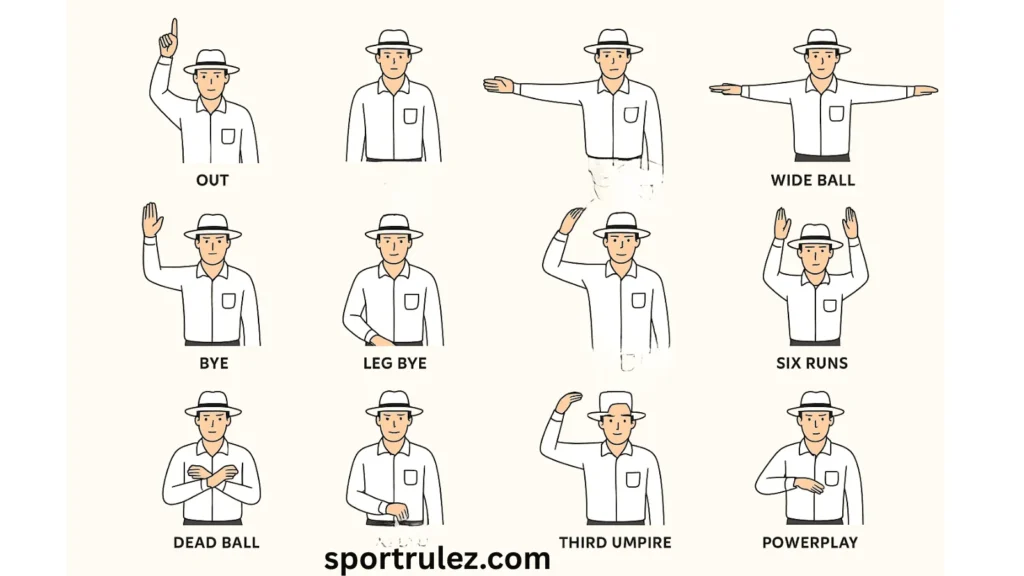
Cricket isn’t just a game of bat and ball — it’s a language of signals, gestures, and silent authority.
From the dramatic finger raise for an “Out” to the sweeping arms of a “Four,” every umpire signal tells a story, born from decades of cricketing tradition and rule evolution.
Understanding umpire signals helps fans follow the action, players respect decisions, and newcomers appreciate the sport’s rhythm.
In this article, we’ll explore every umpire signal in cricket — its meaning, origin, evolution, and importance — according to modern ICC Laws.
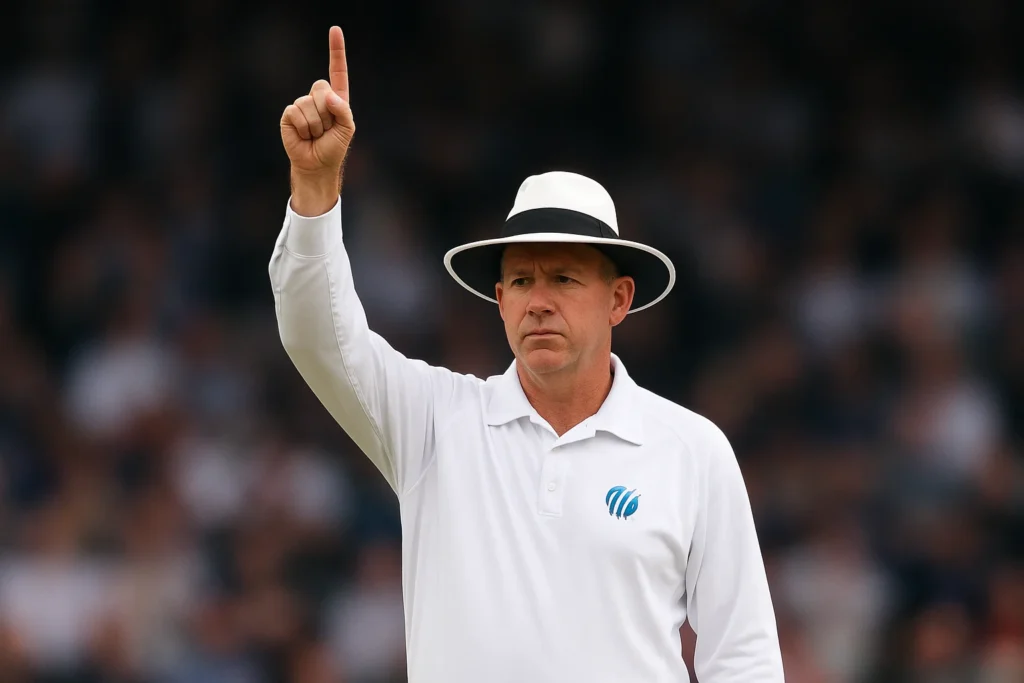
🏏 1. Out Signal
Meaning: The batsman is declared out.
Signal: The umpire raises the index finger vertically above the head.
History & Origin:
This is the oldest and most iconic signal in cricket. In early English cricket (mid-1800s), umpires would shout “Out!” but as crowds grew, verbal calls became hard to hear.
To maintain authority and clarity, the raised finger gesture was introduced — a silent, universal decision recognized in every cricketing nation today.
Modern Use:
Used after a valid appeal by the fielding team and confirmed by the umpire or TV replay system (DRS).
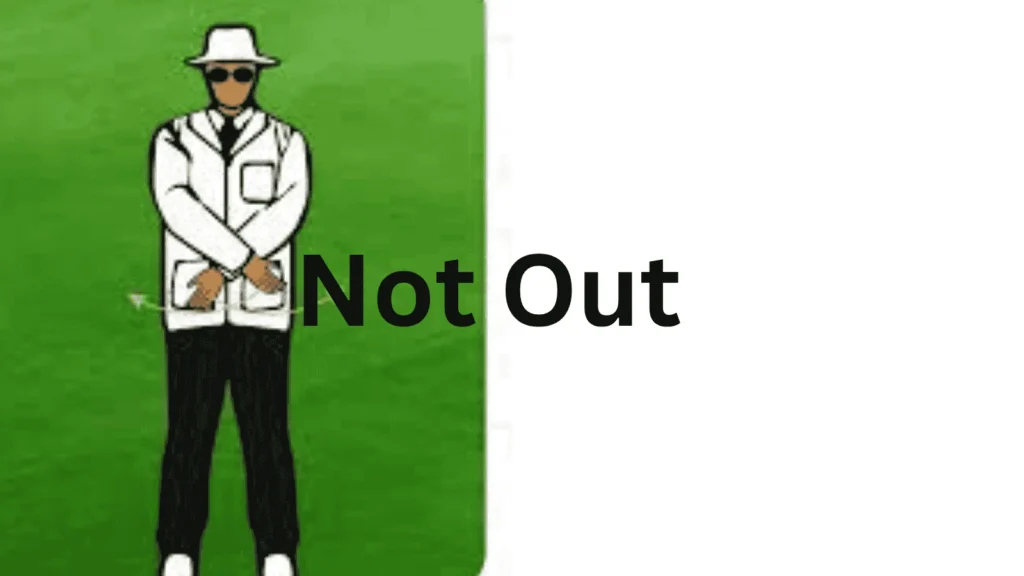
🙅♂️ 2. Not Out Signal
Meaning: The batsman is safe.
Signal: The umpire shakes his head or keeps hands close to the body without raising the finger.
History & Origin:
Introduced as the opposite gesture to the “Out” signal. Early umpires preferred subtlety to avoid confrontation, so the “no signal” or gentle head shake became a neutral yet powerful gesture.
Modern Use:
Used to reject an appeal for dismissal after careful judgment.
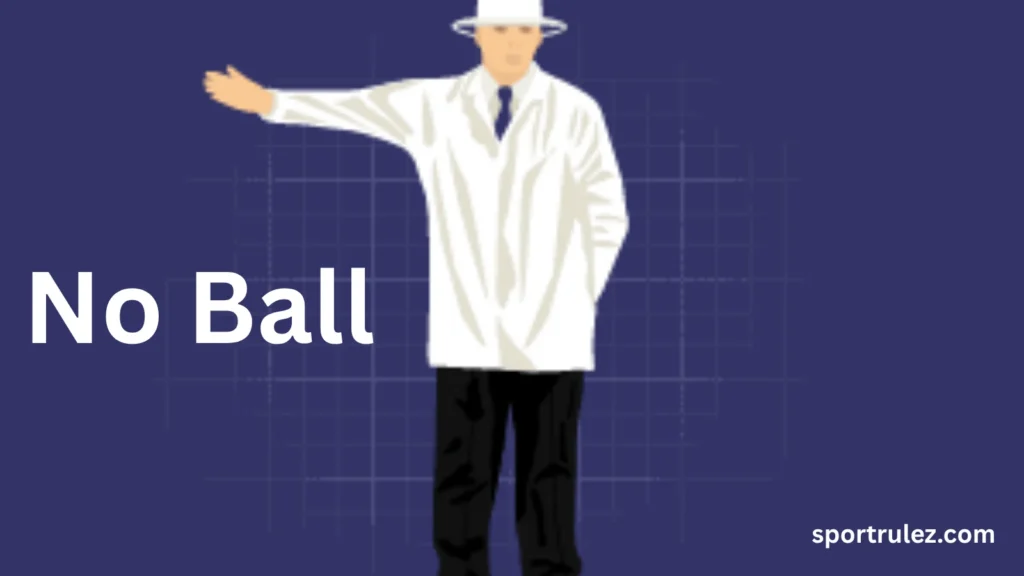
🏏 3. No Ball Signal
Meaning: The delivery is illegal (e.g., overstepping the crease).
Signal: The umpire extends one arm horizontally.
History & Origin:
Originally, umpires would shout “No Ball!” but this often went unheard in large grounds. The arm signal was added in 1948 by MCC to make the call visible to scorers and fielders.
Modern Update:
In limited-overs formats, the third umpire can now signal no-balls automatically using front-foot technology.
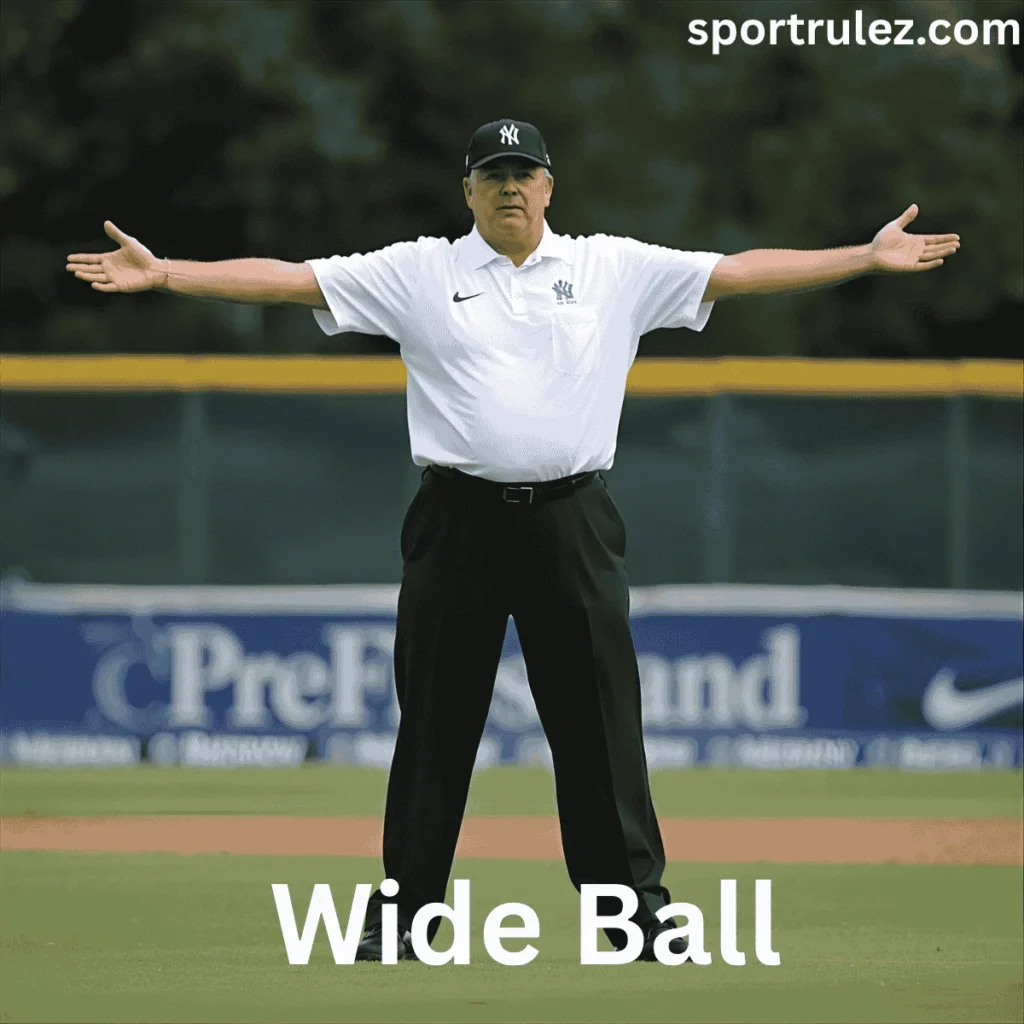
🏏 4. Wide Ball Signal
Meaning: The ball is too wide for the batsman to play a normal shot.
Signal: Both arms extended sideways.
History & Origin:
Developed to visually represent the word “wide.” Before this signal existed, scorers struggled to record wides accurately. The MCC introduced it in 1880 for scorebook clarity.
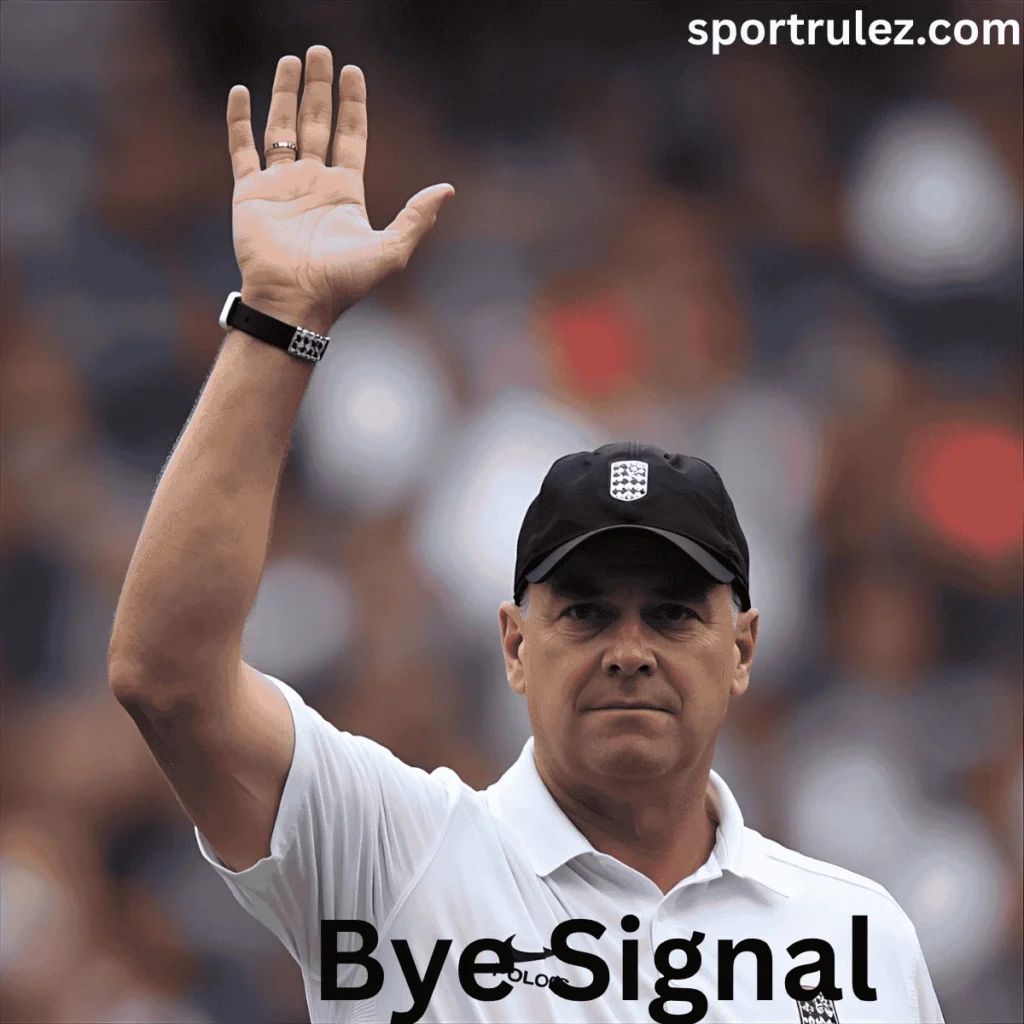
🏏 5. Bye Signal
Meaning: Runs scored without contact between bat and ball.
Signal: One hand raised above the head with an open palm.
History & Origin:
In the 19th century, scorers needed a way to distinguish byes from leg byes. The raised hand was a clear and simple sign visible even from far away.
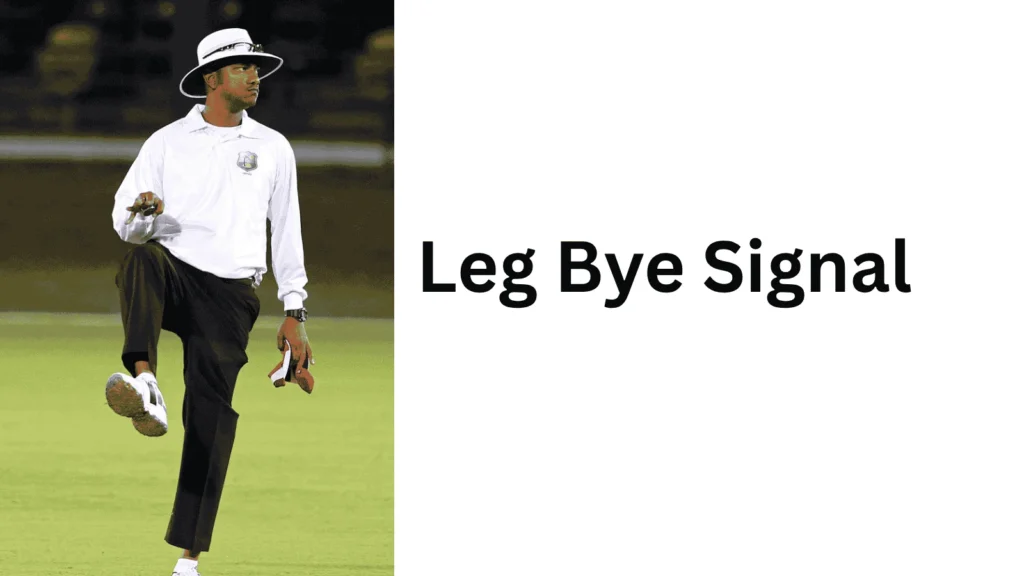
🦵 6. Leg Bye Signal
Meaning: Runs scored after the ball hits the batsman’s pad.
Signal: The umpire taps his raised knee, then raises one hand.
History & Origin:
Added to differentiate leg byes from regular byes in 1900s England. The knee tap was chosen because it directly indicates the ball hitting the pad.
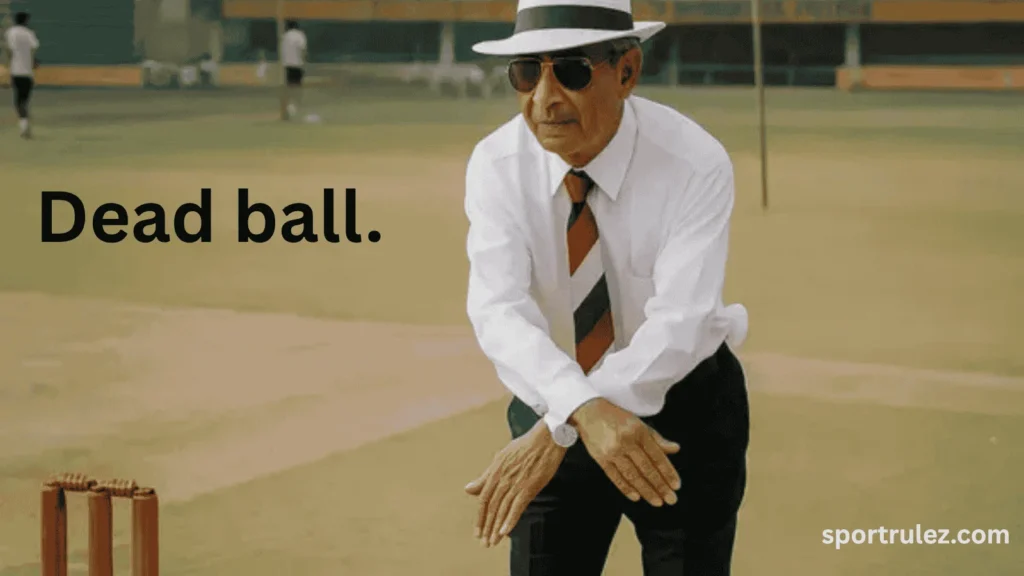
💀 7. Dead Ball Signal
Meaning: The ball is no longer in play.
Signal: The umpire crosses and uncrosses both arms in front of the body.
History & Origin:
Inspired by a “stop” motion, this signal began as a safety measure during interruptions. It was standardized by ICC in 1947 to prevent confusion over active and inactive play.
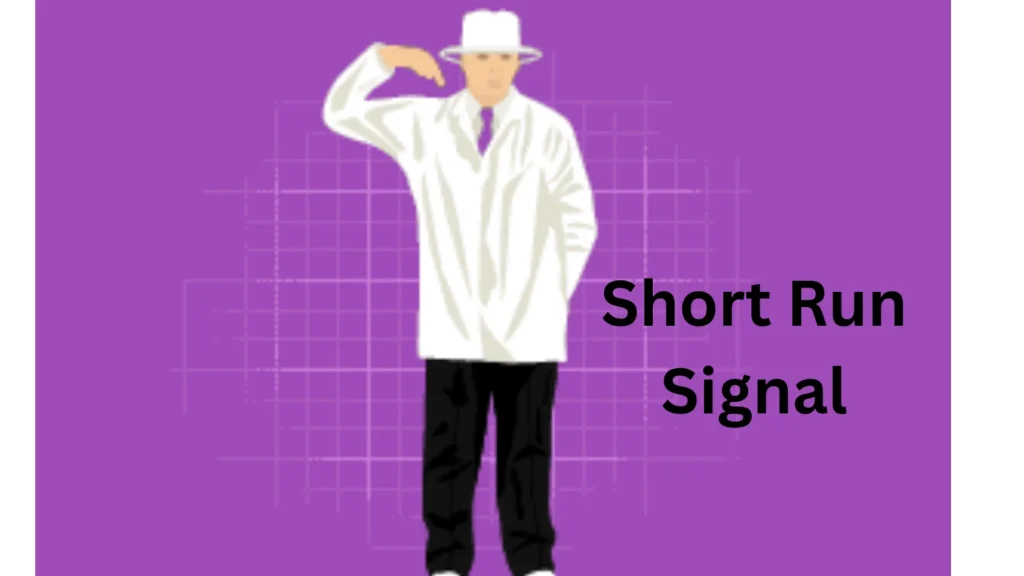
🚫 8. Short Run Signal
Meaning: A batsman didn’t complete a full run.
Signal: Umpire taps his near shoulder with fingertips.
History & Origin:
Before visual signals, scorers often miscounted runs. The shoulder tap was introduced to alert scorers of missed ground touches by batsmen.
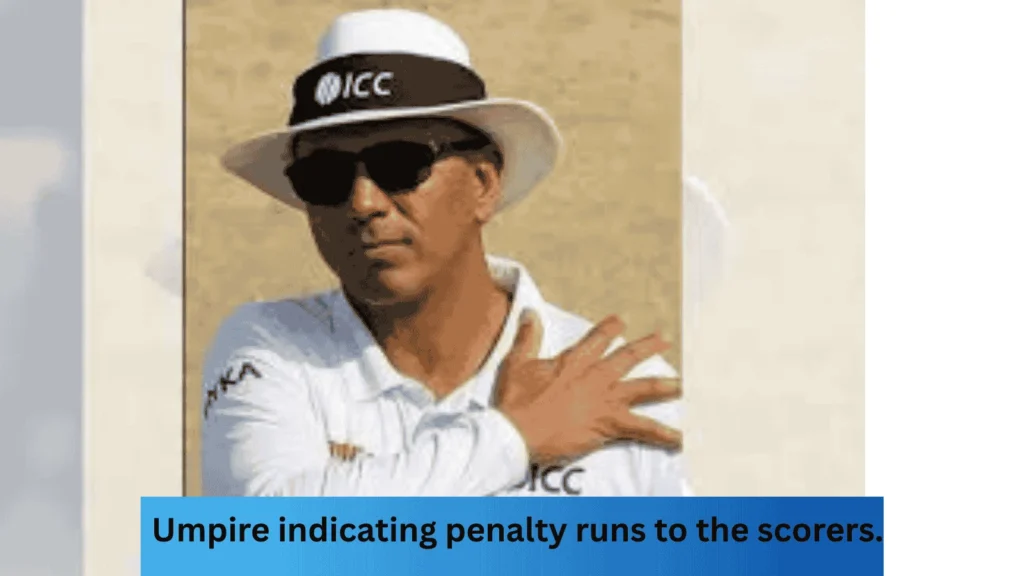
⚡ 9. Penalty Runs Signal
Meaning: Awarded when a side breaches ICC rules (e.g., fielding obstruction).
Signal: The umpire touches the shoulder with one hand while the other arm is raised.
History & Origin:
Introduced in the 1960s to discipline fielding misconduct. The shoulder touch was chosen for simplicity and ease of visibility.
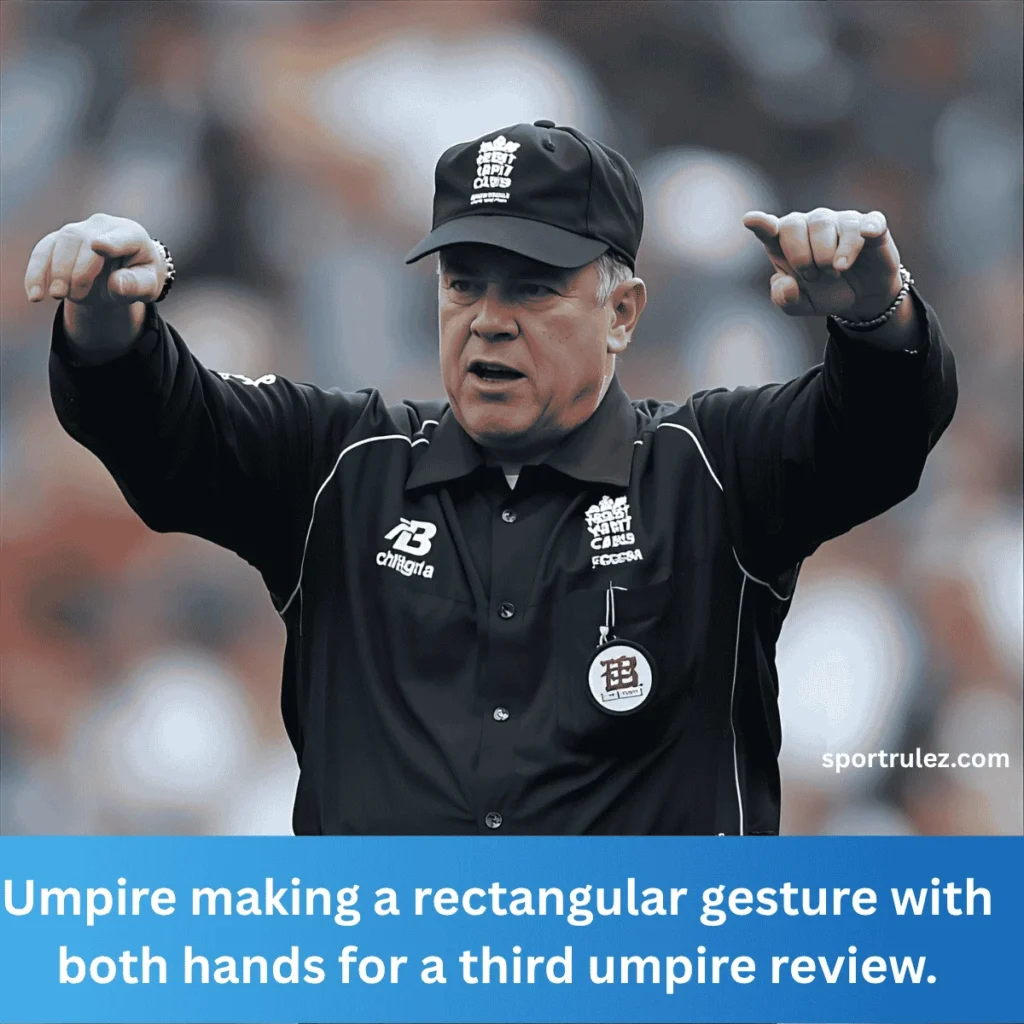
📺 10. Third Umpire Signal
Meaning: Decision referred to the third umpire for review.
Signal: Drawing a rectangle in the air.
History & Origin:
Introduced during the 1992 India vs. South Africa series — the first televised review system in cricket. The rectangle symbolizes a TV screen, making it intuitive for both players and spectators.
🔵 11. Powerplay Signal
Meaning: Fielding restrictions apply during overs.
Signal: Circular motion with one arm above the head.
History & Origin:
Added with the introduction of ODIs and T20s to manage field placements. The circular gesture represents the restricted “fielding circle.”
⏱️ 12. Time Out Signal
Meaning: A batsman took too long to reach the crease (over 3 minutes).
Signal: Both hands placed on the wrist, like checking time.
History & Origin:
This dismissal was created to maintain game flow and prevent delays. It rarely occurs, but the wrist signal mirrors the act of “checking time.”
🧠 13. Referred Decision Signal (DRS)
Meaning: Player reviews an on-field decision.
Signal: Umpire touches the headset or ear, indicating referral to the TV umpire.
History & Origin:
Introduced with DRS in 2008. The gesture reflects communication via earpiece and technology, blending tradition with modern decision-making.
🏁 14. End of Over Signal
Meaning: Indicates completion of an over.
Signal: The umpire holds one hand up and waves it gently.
History & Origin:
Originated in the 19th century when bowlers and scorers relied on visual cues to reset. The wave remains one of the most recognizable gestures in cricket.
⚾ 15. Free Hit Signal
Meaning: A batsman cannot be dismissed (except run-out) on the next delivery after a front-foot no-ball.
Signal: The umpire raises one arm and rotates it in a circle.
History & Origin:
Introduced in 2007 to discourage overstepping. The rotating arm represents a “free swing” — symbolizing batsman freedom.
🧩 Conclusion
Umpire signals are the silent language of cricket — combining clarity, fairness, and history in every gesture.
From old-school finger raises to modern DRS gestures, each signal tells a story of how cricket evolved into a global sport rooted in discipline and respect.
Whether you’re a fan, player, or umpire in training, understanding these signals helps you connect deeply with the game’s spirit.
FAQs about Umpire Signals in Cricket
Q1. How many umpire signals are there in cricket?
There are around 15 to 20 standard umpire signals in cricket, covering everything from runs, wickets, and extras to game interruptions and reviews.
Q2. What are the basic umpire signals in cricket?
The most basic umpire signals include Out, No Ball, Wide Ball, Four, Six, Bye, Leg Bye, Dead Ball, and Over. Each has a unique hand gesture recognized worldwide.
Q3. Why do umpires use hand signals in cricket?
Umpires use hand signals to communicate decisions clearly to players, scorers, and spectators without verbal confusion. These signals ensure uniform understanding across all formats.
Q4. Who introduced umpire hand signals in cricket?
Hand signals were standardized in the early 20th century to make decisions visible in large stadiums. The Marylebone Cricket Club (MCC) later codified these gestures in the official Laws of Cricket.
Q5. What is the signal for a no-ball in cricket?
The umpire extends one arm horizontally to indicate a no-ball. It alerts the batsman and scorer that an illegal delivery has been bowled.
Q6. What is the umpire’s signal for a wide ball?
For a wide ball, the umpire extends both arms horizontally, showing that the delivery is too far from the batsman’s reach.
Q7. How do umpires signal a six in cricket?
When a batsman hits the ball over the boundary without bouncing, the umpire raises both arms straight above the head to signal six runs.
Q8. What is the difference between a four and a six signal?
For a four, the umpire waves one arm back and forth across the chest. For a six, both arms are lifted vertically.
Q9. Do third umpires have separate signals?
Yes. The third umpire communicates decisions like “Out” or “Not Out” through the on-field umpire’s gestures after reviewing TV footage.
Q10. What is the signal for a review (DRS) in cricket?
The umpire forms a square shape with both hands, symbolizing a TV screen, to indicate that a decision is being referred to the third umpire.
Q11. What is the umpire’s signal for byes and leg byes?
For byes, the umpire raises one hand above the head.
For leg byes, he touches the raised knee before lifting one hand.
Q12. What does the umpire signal when play is suspended?
To suspend play, the umpire crosses both arms above the head, signaling bad weather, poor light, or another interruption.
Q13. Are umpire signals the same in all cricket formats?
Yes. Whether it’s Test, ODI, or T20, umpire signals remain consistent globally, ensuring clarity and fairness.
Q14. What is the “soft signal” in cricket umpiring?
A soft signal was an on-field umpire’s initial decision during close catches before TV review, but it was abolished in 2024 to improve fairness in reviews.
Q15. Can an umpire change his signal after giving it?
Yes, if new evidence emerges (like from a third umpire review), the on-field umpire can reverse or correct his signal according to the ICC rules.

Arjun Mehta is a dedicated cricket rules analyst with strong expertise in ODI, T20, and Test match regulations. He focuses on explaining powerplay rules, fielding restrictions, bowling limits, and modern ICC updates in simple language. Arjun’s content helps fans clearly understand match decisions and on-field situations without confusion.