
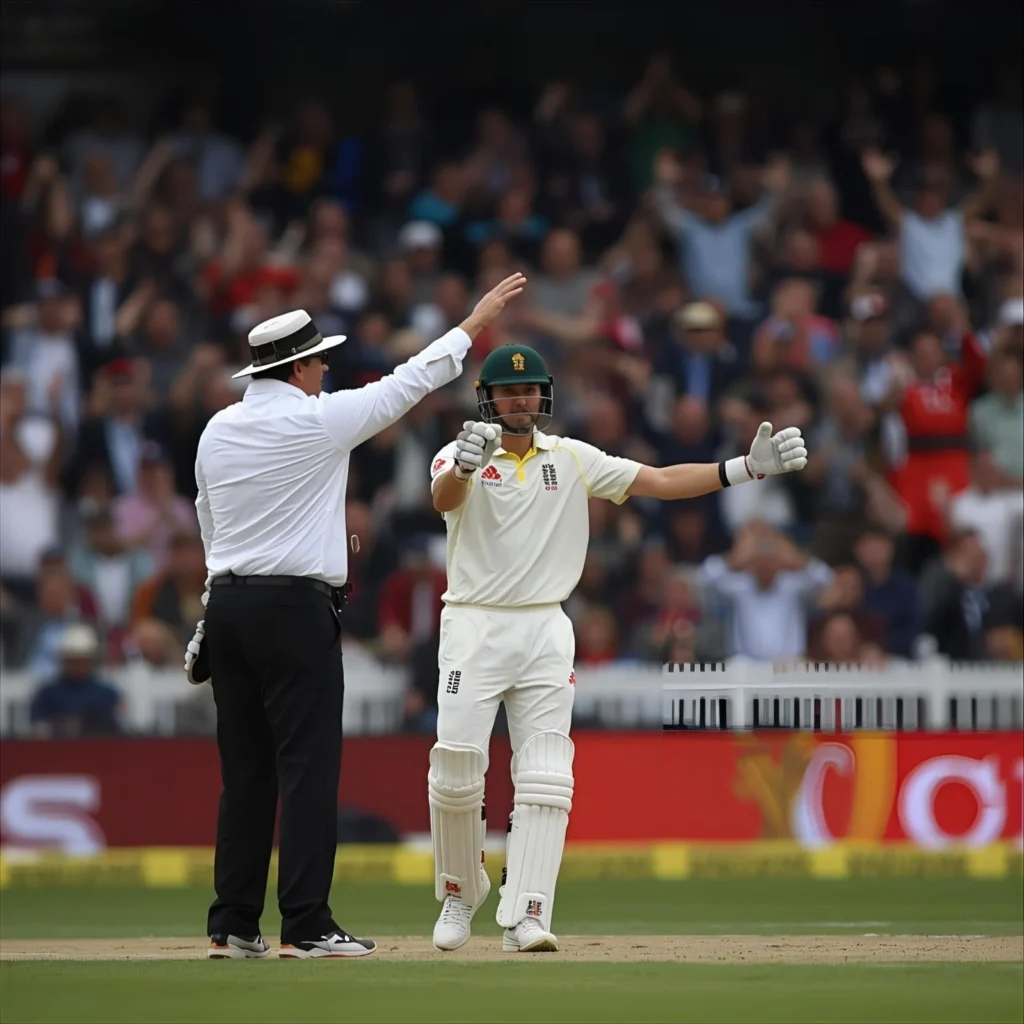
Everything You Need to Know — From Basics to Advanced Rules
Cricket is one of the most popular sports in the world. But many people find it hard to understand the scoring system at first. Do not worry! This guide will explain everything in simple words. Whether you are watching your first match or have been a fan for years, this guide will help you understand exactly how cricket scoring works.
From the basics like runs and boundaries, to tricky rules like the DLS method, penalty runs, and IPL scoring — we cover it all. We also answer the most common questions people search for about cricket scores. Let us get started!
1. How Does Cricket Scoring Work? (The Simple Answer)
Cricket scoring is about one simple goal: score more runs than the other team before you run out of wickets or overs.
Here is how scoring works in cricket in the simplest way:
- Two batters stand on the pitch at the same time.
- One batter hits the ball bowled by the opposing team.
- When the ball is hit, the batters can run between two sets of stumps to score runs.
- If the ball reaches or crosses the boundary rope on the ground, 4 runs are given automatically.
- If the ball flies over the boundary rope without touching the ground, 6 runs are given.
- The team with the most runs at the end wins.
That is the basic idea! Now let us go deeper into each part.
2. What Are Runs in Cricket? (Cricket Scoring Basics)
A run is the basic unit of scoring in cricket. Every time the batting team scores, they add runs to their total. There are several ways to score runs:
2.1 Running Between the Wickets
After the batter hits the ball, both batters can run from one end of the pitch to the other. Each time both players safely reach the other end, one run is scored. They can run 1, 2, or even 3 runs on a single delivery if the ball is hit far enough.
2.2 Boundary Runs
| Type | How It Happens | Runs Scored |
| Four (4) | Ball rolls or bounces to the boundary rope | 4 runs |
| Six (6) | Ball clears the boundary on the full (no bounce) | 6 runs |
| Running Runs | Batters physically run between the wickets | 1, 2, or 3 runs |
2.3 Extras (Runs Not Hit by the Batter)
Sometimes the batting team gets runs without the batter hitting the ball. These are called extras and they come from mistakes by the bowling or fielding team.
| Extra Type | What It Means | Runs Added |
| No-Ball | Bowler steps over the crease line or bowls illegally | 1 run + free hit in limited overs |
| Wide | Ball is bowled too far from the batter to hit | 1 run |
| Bye | Ball passes the batter and wicketkeeper; batters run | Runs completed |
| Leg Bye | Ball hits batter’s body (not the bat); batters run | Runs completed |
| Penalty Runs | Awarded for rule violations or misconduct | 5 runs |
What does “w+1” mean in cricket?
“w+1” is a short way to write scores in cricket.
- w = Wide A wide is a bad ball. The bowler throws the ball too far away from the batsman. It is not a good ball.
- When there is a wide, the batting team gets 1 extra run for free.
- +1 means the two batsmen ran 1 more run by themselves.
So, w+1 means: Wide + 1 run = Total 2 runs from that ball.
The wide gives 1 run, and the batsmen run 1 run, so 1 + 1 = 2 runs.
Easy Example:
Imagine the scorecard shows this in one over:
4, 1, w+1, 6, 0, 2
- 4 = four runs (boundary)
- 1 = one run
- w+1 = wide ball + they ran 1 → 2 runs
- 6 = six runs
- 0 = no run
- 2 = two runs
Because it was a wide, the bowler has to bowl one extra ball again.
Simple Rule:
- Just w = only 1 run (wide, no extra running)
- w+1 = 2 runs total
- w+2 = 3 runs total
- w+4 = 5 runs total (if they hit the boundary on a wide)
Now you know! “w+1” is just a quick and easy way to show that a bad wide ball gave the team 2 runs.
The Big Rule (Very Easy to Remember)
In cricket scorecard, there are two kinds of “w”:
- Big Capital W (like this: W) = Wicket This means one batsman is OUT.
- Small letter w (like this: w) = Wide This means the bowler threw a bad ball that was too far away. The batting team gets 1 extra run for free.
They look almost the same, but the size of the letter tells you the difference!
How We Write When Runs + Wicket Happen Together
When the team scores some runs and a batsman gets out on the same ball, we put the number first and then big W.
Examples:
- 1W = They ran 1 run + one batsman got out. Total: Team gets 1 run, but loses 1 wicket.
- 2W = They ran 2 runs + one batsman got out. Total: Team gets 2 runs, but loses 1 wicket.
- W = Only wicket, no runs at all.
- w+1 = Wide ball (1 extra) + they ran 1 more. No one is out. Total 2 runs.
- w+1W = Wide ball + 1 run + one batsman got out. (This is very rare!)
Real Match Story 1: Run Out While Taking 2 Runs (2W)
In many matches, batsmen try to run fast for 2 runs. They start running… one… two…
But the fielder throws the ball quickly and hits the stumps. One batsman is too slow and gets run out.
In the scorecard, they write 2W.
Simple story example: Two friends are running for 2 runs. They finish the 2 runs safely, but the fielder throws and one friend is run out. The team still gets 2 runs added to the total, but they also lose 1 wicket. Everyone writes it as 2W. This happens very often in T20 and IPL matches.
Real Match Story 2: Wide Ball with Runs or Wicket
Sometimes the bowler throws a very bad wide ball. The batsmen see it is wide and start running. They may run 1 or 2 runs before the ball is dead.
If no one gets out, it is written as w+1 or w+2.
But if somehow a batsman gets out on a wide ball (very rare, like run out on wide), it can be w+1W.
Most of the time, on a wide ball, you only see w or w+1 — no big W, because no one is out.
Quick Table to Remember
| What is written | Meaning | Does team get runs? | Is batsman out? |
|---|---|---|---|
| W | Only wicket | 0 runs | Yes |
| 1W | 1 run + wicket | 1 run | Yes |
| 2W | 2 runs + wicket (run out on double) | 2 runs | Yes |
| w | Wide ball | 1 run | No |
| w+1 | Wide + they ran 1 more | 2 runs | No |
| w+1W | Wide + 1 run + wicket (very rare) | 2 runs | Yes |
Remember this golden rule:
- If you see big W, someone is OUT.
- If you see small w, it is only a wide (extra run, no out).
Now you will never get confused when you look at a scorecard!
Do you want me to explain any other cricket words like “nb+2”, “4”, or “6” in the same easy way? Just tell me! 🏏
3. Cricket Scoring Rules — How It Is Officially Recorded
Cricket has very clear and official rules for how scores are recorded. These rules come from the Laws of Cricket, written by the Marylebone Cricket Club (MCC) and managed by the International Cricket Council (ICC).
3.1 The Role of the Scorers
In every cricket match, there are two official scorers — one from each team. Their job is to:
- Record every single run scored.
- Write down how each batter got out (dismissed).
- Track the number of overs bowled.
- Record all extras like wides, no-balls, byes, and leg byes.
- Keep track of each bowler’s figures (overs, runs, wickets).
After each over, both scorers must agree on the total score. They also cross-check with the on-field umpires to make sure everything is correct.
3.2 What the Scorebook Includes
A traditional cricket scorebook has three main sheets:
- Batting Sheet: Tracks each batter’s runs, how they scored them, and how they got out.
- Bowling Sheet: Tracks each bowler’s overs, runs given, wickets taken, and extras.
- Summary Sheet: Shows the total team score, fall of wickets, and partnership runs.
Today, most professional matches also use digital scoring apps that update in real time.
Read More About: Cricket Ground Dimensions: Boundary Size, Pitch Length & ICC Rules
4. How Does Cricket Scoring Work in Different Formats?
Cricket is played in three main formats. Each one has different scoring rules and match structures. Here is a clear comparison:
| Format | Overs Per Team | Innings Per Team | Typical Run Rate | Key Feature |
| Test Cricket | Unlimited (max 5 days) | 2 innings each | 2.5 to 3.5 per over | Patience, skill, endurance |
| ODI (50 overs) | 50 overs | 1 innings each | 4.5 to 6.0 per over | Balance of attack and defense |
| T20 (20 overs) | 20 overs | 1 innings each | 7.5 to 10+ per over | Aggression and big hitting |
| The Hundred | 100 balls | 1 innings each | 8.0 to 11+ per over | New fast-paced format |
4.1 Test Cricket Scoring
Test cricket is the oldest and longest format. Each team gets two innings to bat. There is no limit on overs, but the match lasts a maximum of five days.
How the winner is decided:
- The team that scores the most total runs across both innings wins.
- If the match is not finished in five days, it is called a draw.
- A team can win by runs (e.g., won by 50 runs) or by wickets (e.g., won by 4 wickets).
Example: Team A scores 350 in the first innings and 280 in the second innings. Team B scores 320 in the first innings and 260 in the second innings. Team A total = 630. Team B total = 580. Team A wins by 50 runs.
4.2 ODI Cricket Scoring
In ODI cricket, each team bats for 50 overs. The team that scores more runs in their 50 overs wins.
Key ODI scoring rules:
- Powerplay overs (1–10): Only 2 fielders allowed outside the 30-yard circle.
- Middle overs (11–40): Up to 4 fielders allowed outside.
- Death overs (41–50): Up to 5 fielders allowed outside.
- Net Run Rate (NRR) is used in tournaments to rank teams when two teams have the same points.
NRR Formula: NRR = (Total runs scored / Total overs faced) minus (Total runs conceded / Total overs bowled)
4.3 T20 Cricket Scoring (Including IPL)
T20 is the shortest and most exciting format. Each team bats for only 20 overs. High scores are common because batters take more risks.
T20 key scoring facts:
- Powerplay: First 6 overs — only 2 fielders allowed outside the 30-yard circle.
- After powerplay: Up to 5 fielders allowed outside.
- If the match is tied, a Super Over decides the winner.
- The highest T20 team score ever is 278/3 by Afghanistan.
4.4 IPL Scoring System
The Indian Premier League (IPL) follows standard T20 scoring rules but also has a points table for the league stage:
| Result | Points Awarded |
| Win | 2 points |
| Loss | 0 points |
| Tie / No Result | 1 point each |
| Super Over Win | 2 points |
In the IPL, Net Run Rate (NRR) is used when two teams have the same number of points on the table. The team with the better NRR advances.
5. Cricket Scoring Explained — The Point System
Cricket does not use a point system during a match in the way football or basketball does. Instead, all scoring is done through runs. However, in league cricket and domestic competitions, a points system is used to rank teams over a season.
5.1 Points in County Cricket (England)
County Cricket uses a detailed bonus points system to reward good performances even in drawn matches:
| Performance | Points Awarded |
| Win | 16 points |
| Draw | 5 points |
| Loss | 0 points |
| Batting Bonus (200–249 runs) | 1 point |
| Batting Bonus (250–299 runs) | 2 points |
| Batting Bonus (300–349 runs) | 3 points |
| Batting Bonus (350+ runs) | 4 points (max) |
| Bowling Bonus (first 5 wickets) | 1 point each wicket |
So even if a match ends in a draw, a team that batted well (300+ runs) and took 5 wickets can still earn up to 9 bonus points. This makes every session of play matter!
5.2 Points in T20 Leagues (IPL, BBL, PSL)
Most T20 leagues use a simple points system: 2 points for a win, 1 point for a tie or no result, and 0 for a loss. The top teams from the league stage qualify for playoffs or knockout rounds.
6. Penalty Runs — When Extra Runs Are Awarded for Rule Violations
Sometimes the umpire awards 5 penalty runs to one team because the other team has broken a rule. These are called penalty runs.
6.1 When Batting Team Gets 5 Penalty Runs
- The ball hits a fielder’s helmet that was left on the ground.
- A fielder deliberately obstructs or distracts a batter (fake fielding).
- The wicketkeeper moves illegally before the ball reaches the batter.
- The fielding team tampers with the ball.
- A fielder uses illegal equipment.
6.2 When Fielding Team Gets 5 Penalty Runs
- A batter deliberately runs short (does not complete the run properly).
- A batter steals runs after the ball is dead.
- A batter uses offensive language or wastes time deliberately.
- A batter obstructs a fielder trying to catch the ball.
Penalty runs are added to the team’s total but are NOT counted as part of any individual batter’s score. They are recorded as extras in the scorebook.
What is “P” in Extras in Cricket?
“P” means Penalty runs.
It is extra runs given to the batting team because the fielding team did something wrong.
Very Easy Explanation:
In cricket, when the other team (fielding side) breaks a rule, the umpire gives penalty runs to the batting team.
These penalty runs are written as P in the Extras section of the scoreboard.
Common Reasons for “P” (Penalty Runs):
- Fake Fielding A fielder pretends to catch the ball or throw it to trick the batsmen. → Batting team gets 5 penalty runs.
- Ball Tampering Fielders change the shape of the ball on purpose. → Penalty runs can be given.
- Throwing the ball at the batsman on purpose (dangerous throw). → Penalty runs.
- Wicketkeeper or fielder standing in the wrong place.
The most common one you will see is 5 penalty runs for fake fielding.
How it looks on the scoreboard:
Extras:
- Byes: 3
- Leg Byes: 2
- Wides: 8
- No Balls: 4
- Penalty (P): 5 ← This is the “P”
Total Extras = 22
Real Simple Example:
Imagine the fielder fakes a catch to stop the batsmen from running. The umpire sees it and says: “5 penalty runs to the batting team!”
In the scorecard, they add P: 5 in the extras box.
Golden Rule to Remember:
- P = Penalty = Extra runs because the fielding team did something naughty or against the rules.
- Usually it is 5 runs.
- These runs are added to the batting team’s total.
- No one gets out because of “P”.
Now you know!
“P” in extras = Penalty runs (mostly 5 runs for bad behaviour by fielders).
7. How to Read a Cricket Score on TV or Online
If you are watching cricket on TV or following it on your phone, you will see a score like this:
INDIA 287/6 (45.3 overs)
Here is what each part means:
| Part of Score | What It Means |
| 287 | Total runs scored by the team |
| /6 | Number of wickets (batters) lost |
| (45.3 overs) | Overs faced: 45 full overs and 3 balls of the 46th over |
| INDIA | The batting team |
7.1 Cricket Scoring Symbols Explained
In a traditional scorebook or live scorecard, you will also see special symbols used to record what happened on each ball:
| Symbol | Meaning |
| . | Dot ball — no run scored |
| 1, 2, 3 | Number of runs scored on that ball |
| 4 | Boundary (four runs) |
| 6 | Six (ball cleared boundary on the full) |
| W | Wicket — a batter got out |
| nb | No-ball |
| wd | Wide |
| lb | Leg bye |
| b | Bye |
| P | Penalty runs awarded |
7.2 Reading a Full Scorecard
A full scorecard shows:
- Each batter’s name, how they got out, who got them out, and their total runs.
- Strike rate: how quickly a batter scored (runs per 100 balls).
- Each bowler’s figures, like 10-2-45-3 which means 10 overs, 2 maidens, 45 runs given, 3 wickets.
- Fall of wickets: which score each wicket fell at.
- Extras total for the innings.
8. Cricket Scoring Example — Step by Step
Let us walk through a simple example of how scoring works in a T20 match.
Match: Team A vs Team B — T20 format
Team A’s Innings
| Over | Balls | Runs Scored | Commentary |
| Over 1 | 4, W, 1, 6, wd, 2 | 14 runs | Good start with a six and a wicket |
| Over 2 | 0, 0, 1, 4, 0, 2 | 7 runs | Slower over, one boundary |
| Over 3 | 6, 6, 1, 0, W, 4 | 17 runs | Two sixes, then a wicket |
| Over 20 | 4, 6, 4, 2, 6, 4 | 26 runs | Brilliant finish |
Final score: Team A 175/6 (20 overs)
Team B needs 176 runs in 20 overs to win.
Team B scores 174/8 in 20 overs — Team A wins by 1 run! That is how close T20 cricket can be.
9. The Duckworth-Lewis-Stern (DLS) Method — Scoring in Rain-Affected Matches
What happens when rain stops a cricket match halfway through? This is where the Duckworth-Lewis-Stern (DLS) method comes in. It is one of the most misunderstood parts of cricket scoring, but we will explain it simply.
9.1 What Is the DLS Method?
The DLS method is a mathematical formula used to recalculate the target score for the batting team in a rain-affected limited-overs match (ODI or T20). It was created by statisticians Frank Duckworth and Tony Lewis, and was later updated by Steven Stern.
9.2 Why Is It Needed?
Imagine Team A scores 280 runs in 50 overs. It then rains and Team B only gets to bat 30 overs. Is it fair to just say Team B needs 280 in 30 overs? No! Because Team B would have to bat much more aggressively and they also have more wickets left per over. The DLS method makes the target fair for both teams.
9.3 How Does DLS Work (Simple Explanation)?
The DLS method considers two key resources for the batting team:
- Overs remaining — how many overs are left to bat.
- Wickets remaining — how many batters are still not out.
Together, these two things decide how many runs a team is likely to score. When rain reduces overs, DLS recalculates the target based on the resources available to the chasing team.
Example: Team A scores 250 in 50 overs. Rain reduces Team B’s innings to 30 overs. The DLS method might set Team B’s target at 192 in 30 overs. This is because Team B loses some resource (overs) but the formula compensates fairly.
9.4 DLS Version in 2025
In 2025, the ICC uses DLS 3.0 with cloud-based data. The algorithm is updated every year based on new match data to keep it as fair and accurate as possible.
10. Super Over — How Tied Matches Are Decided
In limited-overs cricket (T20 and ODI), if both teams score exactly the same number of runs, the match is tied. In this case, a Super Over is used to find a winner.
10.1 How Does a Super Over Work?
- Each team sends two batters to bat for one over (6 balls).
- The team that scores more runs in their Super Over wins.
- If the Super Over is also tied, another Super Over may be played (or boundary count used in some competitions).
10.2 Famous Super Over Moments
2019 World Cup Final (England vs New Zealand): Both teams scored 241 runs each in their full innings. The Super Over also ended in a tie (15 runs each). England was declared the winner on boundary count — they had hit more boundaries during the whole match. This rule was later changed by the ICC as many fans and experts felt it was unfair.
2022 T20 World Cup — India vs Pakistan: A no-ball in the final over gave India a free hit and the batters were allowed to run on the rebound. This confirmed that batters CAN run on free-hit deliveries, adding clarity to scoring rules.
11. The IPL 2019 Final and the Third Umpire’s Role in Scoring
The 2019 IPL Final between Mumbai Indians and Chennai Super Kings is a great example of how technology and the third umpire affect cricket scoring.
11.1 What Happened?
In close IPL matches, the third umpire often has to make key decisions that directly affect the score. These include:
- Checking whether a ball hit the boundary rope or not (boundary vs. 4 runs).
- Deciding if a catch was taken cleanly (out or not out).
- Reviewing if a batter was run out.
- Checking no-balls for height or overstepping.
In the 2019 IPL Final, several third umpire decisions were crucial in deciding tight moments. Mumbai Indians won the match by 1 run, making it one of the closest IPL Finals ever. Every single run — and every correct decision — mattered.
11.2 The Third Umpire’s Tools
The third umpire uses the following technology to make accurate decisions:
- Hawk-Eye: Ball tracking system that shows the path of the ball.
- Hot Spot: Thermal imaging to detect if the ball touched the bat or pad.
- Ultra-Edge (Snickometer): Detects the faintest edge by measuring sound vibrations.
- Real-time HD cameras: Multiple camera angles for run-out and stumping decisions.
12. Scoring in Cricket Explained for Beginners (Dummies Guide)
If you are completely new to cricket, here is the simplest possible explanation of cricket scoring:
Think of It Like This
- Cricket is like baseball in some ways — one team bats, one team fields.
- The batting team tries to score as many runs as possible.
- The fielding team tries to get 10 batters OUT (this is called taking all the wickets).
- Once 10 wickets fall, the innings ends and teams swap.
- The team with more runs wins.
How Can a Batter Get Out?
| Dismissal Type | Simple Explanation |
| Bowled | The ball hits the stumps behind the batter |
| Caught | A fielder catches the ball before it bounces |
| LBW (Leg Before Wicket) | The ball would have hit the stumps but hit the batter’s leg instead |
| Run Out | A batter fails to reach the crease before the fielder breaks the stumps |
| Stumped | The wicketkeeper breaks the stumps while the batter is out of the crease |
| Hit Wicket | The batter accidentally hits the stumps with their bat or body |
| Handled the Ball | Batter touches the ball without permission |
| Obstructing the Field | Batter deliberately stops a fielder |
| Timed Out | New batter takes too long to come to the crease |
| Hit the Ball Twice | Batter hits the ball a second time deliberately |
13. How to Score Cricket in Darts (Cricket Dart Game Scoring)
Many people search for cricket scoring in the context of darts — because there is a popular darts game called Cricket! This is completely different from the sport of cricket, but it uses cricket-inspired scoring.
13.1 What Is Cricket in Darts?
Cricket is a classic darts game played by two players or two teams. The goal is to close (score three times on) the numbers 15, 16, 17, 18, 19, 20, and the Bullseye before your opponent does, and also have a higher or equal score.
13.2 How to Score Cricket in Darts
| Action | What It Means |
| One dart on a number | One mark (shown as /) |
| Two darts on a number | Two marks (shown as X) |
| Three darts on a number | Number is CLOSED (shown as O) |
| Dart in Double ring | Counts as 2 marks at once |
| Dart in Triple ring | Counts as 3 marks (closes the number instantly) |
| Bullseye | Counts as 1 mark; Double Bull = 2 marks |
Once a number is closed by you, any extra darts you throw on that number score points for you — until your opponent also closes it. The player who closes all numbers first AND has the most (or equal) points wins.
Note: This darts game is just called Cricket because of the runs/wickets concept. It has nothing to do with the bat-and-ball sport.
14. Cricket Scoring Technology — How It Works in 2025
Cricket has moved from chalk on a board to artificial intelligence and cloud data. Here is how modern scoring technology works:
| Technology | What It Does |
| Hawk-Eye | Tracks the exact path of the ball for LBW and boundary decisions |
| Smart Bails and Stumps | Record the exact moment of impact for run-outs and stumpings |
| AI Scoreboards | Update live score, run rate, and match predictions instantly |
| DLS 3.0 | Cloud-based algorithm for rain-affected match targets |
| Helmet Sensors | Detect if the ball hits a helmet on the field for penalty run decisions |
| CricViz / ESPNcricinfo | Provide real-time stats, analysis, and scoring probabilities |
| Ultra-Edge | Detects faint bat edges for caught-behind decisions |
| Scoring Apps | Scorers use tablets to record every ball in real time |
All of these tools work together to make sure that every run, wicket, extra, and penalty is recorded correctly and fairly.
15. Famous Scoring Controversies in Cricket History
15.1 The Ben Stokes Overthrow — 2019 World Cup Final
During the 2019 Cricket World Cup Final between England and New Zealand, England batter Ben Stokes was running between the wickets when a fielder’s throw accidentally deflected off his bat and rolled to the boundary. The umpires awarded England 6 runs — 2 for the runs they were running plus 4 for the overthrow boundary.
This was hugely controversial because Stokes did not deliberately hit the ball to the boundary. The ICC later reviewed and clarified the law: overthrows must be measured from the moment the fielder releases the throw, not from when the ball deflects.
15.2 England Win on Boundary Count — 2019 World Cup
After both the full match and the Super Over ended in ties, England were declared World Cup winners because they had hit more boundaries (26) than New Zealand (17) during the entire match. Many cricket fans and experts said this was an unfair way to decide a World Cup. The ICC agreed and later abolished this rule. Now additional Super Overs are played if the first one is also tied.
15.3 Ball Tampering Controversies
Several teams have been penalised 5 runs for ball tampering — illegally changing the condition of the ball to make it swing more in the air. The most famous case involved the Australian team in 2018, which led to bans for key players and a big change in how the ICC enforces ball tampering rules.
16. Scoring System in Cricket — Frequently Asked Questions
Here are answers to the most commonly searched questions about cricket scoring:
Q: How does cricket scoring work?
A: Cricket scoring works by counting runs. Batters score runs by hitting the ball and running between the wickets, or by hitting boundaries (4 runs) or sixes (6 runs). The team with more runs at the end wins.
Q: How does the scoring work in cricket for beginners?
A: The batting team tries to score as many runs as possible. Each time a batter runs from one end of the pitch to the other, 1 run is scored. Hitting the ball to the boundary scores 4 runs automatically. Hitting it over the boundary without bouncing scores 6 runs. The fielding team tries to get 10 wickets (dismissals) to end the innings.
Q: How is cricket scored on TV?
A: A TV cricket score shows the team name, total runs, wickets lost, and overs faced — for example: INDIA 287/6 (45.3). This means India scored 287 runs, lost 6 wickets, and have faced 45 overs and 3 balls.
Q: What is the cricket point system?
A: In match play, cricket uses runs as the scoring unit. In league cricket (like county cricket or IPL), a points table is used: 2 points for a win, 1 for a tie, 0 for a loss. County cricket also has batting and bowling bonus points.
Q: How are batting and bowling points awarded in county cricket?
A: Batting bonus points are earned for reaching run totals: 1 point for 200–249 runs, 2 for 250–299, 3 for 300–349, and 4 for 350+ runs. Bowling bonus points are given for taking the first 5 wickets — 1 point per wicket. Maximum 4 batting and 5 bowling bonus points per innings.
Q: What is NRR in cricket?
A: NRR stands for Net Run Rate. It is calculated by subtracting the runs conceded per over from the runs scored per over. It is used in tournaments to rank teams with the same number of points.
Q: What happens in a tie in cricket?
A: In limited-overs cricket (ODI and T20), a tied match goes to a Super Over where each team bats for one over. The team that scores more runs in the Super Over wins. If the Super Over is also tied, another Super Over is played.
Q: What is a no-ball in cricket?
A: A no-ball is an illegal delivery. It gives the batting team 1 extra run and in limited-overs cricket, the next ball is a free hit — the batter cannot be dismissed (except by a run-out). Common reasons for a no-ball: the bowler’s front foot crosses the crease, the ball is too high (above shoulder height when the batter is standing), or the fielding positions are illegal.
Q: What is a wide in cricket?
A: A wide is when the bowler delivers the ball too far from the batter’s reach. The batting team gets 1 run for every wide. The ball is also rebowled — it does not count as one of the over’s deliveries.
Q: What is DLS method in cricket?
A: The Duckworth-Lewis-Stern (DLS) method is a mathematical formula used to set fair target scores in rain-affected limited-overs matches. It considers the overs remaining and wickets in hand for the team chasing the target.
Q: Can you get more than 6 runs off one ball in cricket?
A: Yes! In rare cases, a batter can score more than 6 runs off one ball. For example, if the ball goes to the boundary AND there are overthrows, additional runs can be added. In theory, a batter could score 7 or more runs off a single delivery.
Q: What is a maiden over in cricket?
A: A maiden over is an over in which no runs are scored off the bat and no extras are conceded. It is a great achievement for a bowler. A maiden over appears in the bowling scorecard as a separate column (M).
Q: How to score cricket in darts?
A: In the darts game called Cricket, players must score three marks on numbers 15 through 20 and the Bullseye to close them. A single counts as 1 mark, a double as 2 marks, and a triple as 3 marks (immediately closing the number). The winner closes all numbers first and has equal or more points.
Q: What is a free hit in cricket?
A: A free hit is awarded after a no-ball in limited-overs cricket. On a free hit delivery, the batter CANNOT be dismissed — except by a run-out. This means the batter can swing freely without fear of losing their wicket.
Q: How does scoring work in cricket IPL?
A: IPL follows T20 cricket scoring. Each team bats for 20 overs. In the league stage, teams get 2 points for a win, 1 for a tie, and 0 for a loss. Net Run Rate breaks ties in the standings. Top 4 teams go to playoffs.
17. Common Scoring Errors and How They Are Fixed
Even with modern technology, scoring errors can happen. Here is how they are handled:
| Error Type | What Happens | How It Is Fixed |
| Umpire signals wrong runs | Score recorded incorrectly | Manual correction allowed before next delivery |
| Boundary confusion | Not clear if ball bounced or flew over | Third umpire checks replay footage |
| Scorer miscount | Wrong total recorded | Team manager requests official review |
| Wrong batter on strike | Runs given to wrong batter | Corrected before the next over |
| Overthrow confusion | Extra runs disputed | Real-time tracking and third umpire decision |
18. Cricket Scoring Records — Amazing Numbers
Here are some incredible scoring records in cricket history that show just how powerful and unique the scoring system is:
| Record | Details |
| Highest ODI team total | England — 498/4 vs Netherlands (2022) |
| Highest Test team total | Sri Lanka — 952/6 vs India (1997) |
| Highest T20 team total | Nepal — 314/3 vs Mongolia (2023) (non-ICC) |
| Highest IPL total | Royal Challengers Bangalore — 263/5 vs Pune Warriors (2013) |
| Most extras in an innings | India — 76 vs Pakistan (2007) |
| Fastest ODI century | AB de Villiers — 31 balls vs West Indies (2015) |
| Highest individual Test score | Brian Lara — 400* vs England (2004) |
| Highest individual ODI score | Martin Guptill — 237* vs West Indies (2015) |
Conclusion — Why Cricket Scoring Matters
Cricket scoring is much more than just counting runs. It is a complete system that measures every single thing that happens in a match — from a dot ball to a six over the boundary, from a bye to a penalty for ball tampering.
Understanding the scoring system helps you:
- Follow the match better when watching on TV or online.
- Understand why certain decisions are made during the game.
- Appreciate the skill and strategy involved in batting and bowling.
- Read scorecards and know what every number means.
- Enjoy the game even more as a fan!
Cricket is a sport that rewards patience, skill, and smart thinking. Its scoring system reflects all of these qualities. From the simple joy of a six to the complex mathematics of DLS, every run tells a story.
Whether you are a lifelong fan or just starting to discover cricket, we hope this guide has made the scoring system clear and easy to understand. Now go enjoy the game!
