
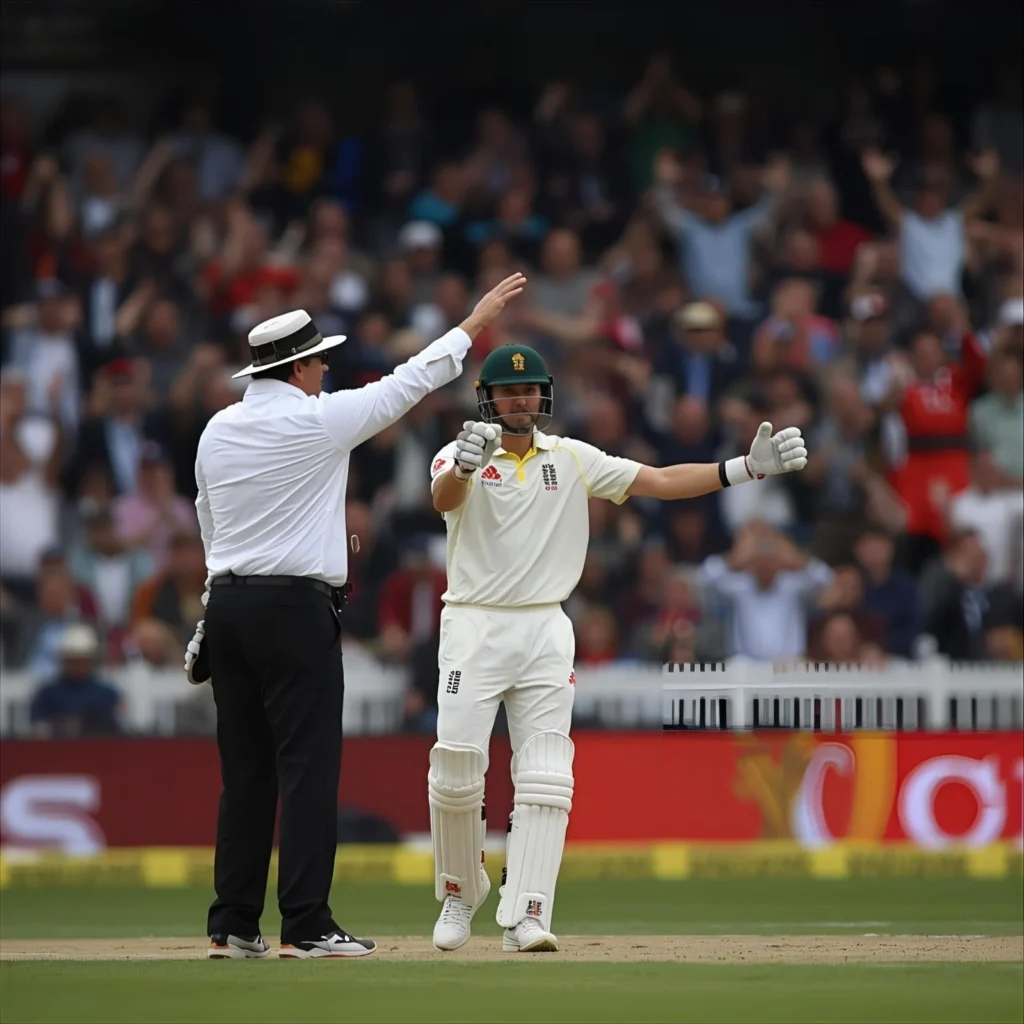
Cricket’s scoring system might seem simple — runs, wickets, and overs — but beneath that lies a precise structure that defines every match. From Test cricket’s patience-driven scoring to T20’s explosive pace, every format follows a unique system governed by the Laws of Cricket (MCC and ICC).
In this guide, you’ll learn everything about how scoring works, the role of technology, penalties, controversies, and how the system continues to evolve in the modern game.
🏏 1. The Basics of Scoring in Cricket
Cricket scoring revolves around runs, extras, and penalty runs. Each run represents a complete exchange between batsmen running between the wickets or from boundaries hit.
How Runs Are Scored in Cricket
1. Runs from the Bat
When the batter hits the ball and both players safely run between the wickets, runs are added to both the batter’s individual score and the team total.
| Type of Run | Description |
|---|---|
| Single (1 run) | Batters run once between the wickets. |
| Double / Triple | Two or three runs completed. |
| Boundary (4 runs) | Ball touches or crosses boundary after hitting the ground. |
| Six (6 runs) | Ball clears the boundary on the full without touching the ground. |
Extras: Runs Not Scored Off the Bat
Extras are runs awarded to the batting side due to errors by the fielding team.
| Type | Description |
|---|---|
| No-ball | Illegal delivery (overstep, height, fielding violation) – 1 run + free hit in limited-overs. |
| Wide | Ball delivered out of batter’s reach – 1 run added. |
| Bye | Ball passes batter and keeper – runs completed count as extras. |
| Leg Bye | Ball hits batter’s body (not bat) and runs taken count as extras. |
| Penalty Runs | Added due to serious rule breaches or unfair play (5 runs). |
Penalty Runs Explained
Penalty runs are awarded for misconduct, obstruction, or law violations.
Awarded to the Batting Side (5 runs):
- Ball hits a helmet placed on the ground.
- Fielding team deliberately distracts or obstructs batter.
- Unfair movement by wicketkeeper before the ball reaches the batter.
- Ball tampering or illegal fielding equipment use.
Awarded to the Fielding Side (5 runs):
- Batter deliberately runs short or obstructs fielders.
- Batter steals runs after the ball is dead.
- Use of offensive language or time-wasting tactics by batters.
Scoring in Different Formats
1. Test Cricket
- Unlimited overs per innings.
- Two innings per team.
- Runs accumulate across both innings; highest total wins or match may end in a draw.
Example:
Team A scores 350 & 280; Team B scores 320 & 260 → Team A wins by 50 runs.
2. One Day Internationals (ODI)
- 50 overs per side.
- Team with higher total after 50 overs wins.
- Net Run Rate (NRR) used in tournaments for ranking teams.
Example:
Team A: 300/8 (50 overs)
Team B: 290/9 (50 overs) → Team A wins by 10 runs.
3. T20 Cricket
- 20 overs per side.
- High run rates; boundaries dominate scoring.
- Ties often decided by Super Over.
Example:
Team A: 180/6 (20 overs)
Team B: 180/8 (20 overs) → Match tied → Super Over.
Bonus Rules: Super Over & Duckworth-Lewis (DLS)
Super Over:
Used in tied matches for limited-overs cricket.
- Each team bats one over (6 balls).
- Highest runs win.
- If tied again → Boundary count rule or additional Super Over.
Duckworth-Lewis-Stern (DLS) Method:
Used in rain-affected matches to recalculate targets based on overs and wickets remaining.
- Mathematical formula ensures fairness.
- Constantly updated by ICC based on match data.
Case Studies: When Scoring Changed the Game
1. World Cup 2019 Final – England vs New Zealand
Both teams tied even after Super Over (241 each).
England won on boundary count rule, leading ICC to change tiebreaker laws for fairness in future events.
2. Ben Stokes Overthrow Incident (2019 Final)
A throw deflected off Stokes’ bat to the boundary. Awarded 6 runs (2 + 4 overthrow).
ICC later reviewed the law and clarified overthrows must be judged at the moment of the throw, not after impact.
3. India vs Pakistan (T20 World Cup 2022)
A no-ball on height during last over gave India a free hit + run on ricochet, confirming that batters can run on free-hit rebounds, adding new clarity to scoring logic.
Scoring Technology and ICC 2025 Updates
Modern cricket scoring uses AI-assisted digital systems to ensure real-time accuracy.
Recent ICC Innovations (2025):
- Smart bails & stumps record impact and dismissal timing.
- AI scoreboards integrate ball-tracking and run prediction.
- Helmet sensors track deflections for accurate leg-bye and overthrow calculation.
- DLS 3.0 algorithm with cloud data for faster target recalculations.
How Scorers Record and Validate Runs
Scorers play a vital behind-the-scenes role.
They maintain three primary records:
- Batting sheet – tracks individual runs, boundaries, and dismissals.
- Bowling sheet – overs, runs conceded, wickets, and extras.
- Score summary – overall team totals, partnerships, and fall of wickets.
Every run must be agreed upon by both scorers and verified by the umpires after each innings.
Penalties, Reviews, and Common Scoring Errors
| Error Type | Outcome | Modern Fix |
|---|---|---|
| Umpire signals wrong run | Manual correction allowed during over | Electronic umpire review |
| Boundary or overthrow confusion | 3rd umpire decision | Real-time tracking |
| Scorer miscounts | Team manager may request official correction | Central ICC database validation |
Expert Insight: Why Scoring Rules Matter
The scoring system defines fairness, strategy, and spectacle.
Every run reflects not just batting power but teamwork and discipline.
Clear, updated scoring laws:
- Ensure transparency for fans and players.
- Reward technical precision.
- Eliminate disputes through technology.
As cricket evolves, so too does the art of scoring — merging the soul of tradition with the precision of data.
Main Scoring Methods
- Running Between Wickets: 1, 2, or 3 runs per shot depending on how far the batsmen run.
- Boundaries:
- Four (4 runs): When the ball hits or crosses the boundary after touching the ground.
- Six (6 runs): When the ball crosses the boundary on the full.
- Extras: Runs awarded not from the bat — wides, no-balls, leg byes, and byes.
- Penalty Runs: Umpires may award 5 runs to either side for rule violations (e.g., fielding obstruction, ball tampering, or slow over rate).
📜 2. Historical Evolution of the Scoring System
The origins of cricket scoring date back to the 18th century, when scores were recorded with chalk marks on boards. Boundaries weren’t even part of the system until the late 1800s — every run had to be physically completed by running.
- 1700s: Early matches used hand-tallied scores.
- 1800s: Introduction of scorers, boundary rules, and wides.
- 1900s: Leg byes, penalty runs, and extras formalized.
- 2000s–2020s: Digital scoreboards, DRS, and real-time analytics revolutionized the process.
The modern scoring system now integrates data-driven tools and real-time AI insights, making cricket not just a sport but a science of performance measurement.
⚙️ 3. Modern Scoring Technology
Cricket has evolved from chalkboards to AI-based scoring systems. Today’s matches rely heavily on digital and broadcast technologies to ensure accuracy.
Key Tools:
- Hawk-Eye: Tracks ball trajectory for lbw and boundary confirmations.
- CricViz / ESPN StatsGuru: Provide real-time player metrics and scoring probabilities.
- DRS (Decision Review System): Assists with umpiring and scoring verification.
- Smart Scoreboards: Sync data automatically with scorers, broadcasters, and apps.
Technology has also eliminated human errors, ensuring every run — or miscount — is detected instantly.
🧮 4. Scoring Differences Across Formats
Each format uses the same scoring foundation but applies different strategic interpretations.
| Format | Overs | Typical Run Rate | Fielding Rules Impact | Key Feature |
|---|---|---|---|---|
| Test | Unlimited (max 5 days) | 2.5–3.5 per over | No Powerplays | Patience and consistency |
| ODI | 50 overs | 4.5–6.0 per over | 3-stage Powerplay | Balances attack and defense |
| T20 | 20 overs | 7.5–10+ per over | 2-stage Powerplay | Aggression and innovation |
In T20s, fast scoring is crucial. In Tests, batters build innings through time and precision.
⚖️ 5. Extras and Penalty Runs Explained
Extras are vital to the scoring system — they can decide games.
Types of Extras
- No-Ball (1 run): Illegal delivery; next ball is a free hit in limited overs.
- Wide (1 run): Ball beyond batsman’s reach.
- Bye: Ball passes batsman and wicketkeeper; runs taken.
- Leg Bye: Ball hits the batsman’s body and runs are completed.
Penalty Runs
Awarded by umpires for misconduct or technical infringements:
- Field Obstruction / Fake Fielding: +5 runs to batting side.
- Ball Tampering: +5 runs penalty.
- Keeper Interference or Helmet Obstruction: +5 runs.
- Slow Over Rate: In limited formats, may cost penalty runs or reduced overs.
💰 6. Bonus Points in Leagues and Domestic Matches
Some competitions (like The Hundred, Sheffield Shield, or County Championships) introduce bonus points to encourage dynamic play.
- Batting Bonus Points: Awarded for reaching certain score thresholds (e.g., 200, 300, 400).
- Bowling Bonus Points: Granted for quick wicket-taking.
- Net Run Rate (NRR): In T20 and ODI leagues like the IPL, teams advance based on scoring efficiency.
🔥 7. Controversies and Famous Rule Changes
Scoring controversies have shaped modern cricket laws.
- 2019 World Cup Final (England vs New Zealand): Match tied, decided by boundary count rule — later abolished by ICC.
- Ben Stokes Overthrow Rule (2019): Accidental boundary from overthrow awarded 6 runs, sparking global debate.
- Underarm Bowling (1981): Led to restrictions on unfair delivery tactics.
These moments highlight how scoring isn’t just about runs — it’s about fairness and evolution.
📊 8. Statistical Insights and Records
- Highest ODI Team Total: England — 498/4 vs Netherlands (2022)
- Highest Test Score: Sri Lanka — 952/6 vs India (1997)
- Most Extras in an Innings: India — 76 vs Pakistan (2007)
- Fastest Century: AB de Villiers — 31 balls vs West Indies (2015)
These records show how boundary hitting and extras play critical roles in modern scoring strategies.
🧠 9. The Psychology Behind Scoring
Scoring is both mental and mechanical.
- Test Batters: Focus on strike rotation and minimizing risk.
- T20 Players: Emphasize aggression, quick singles, and power-hitting.
- Captains: Manage scoring pressure by rotating bowlers strategically.
“Smart scoring isn’t about power — it’s about rhythm,” says Rahul Dravid, reflecting how psychological balance defines consistent performers.
⚠️ 10. Common Scoring Errors and Misinterpretations
Even in professional cricket, scoring confusion can arise.
- Miscounted Runs: Umpires can correct totals before the next delivery.
- Boundary Uncertainty: Third umpire checks replay for ground contact.
- Wrong Batter Strike: Corrected before next over; repeated errors can lead to official warnings.
These scenarios prove why digital scoring systems and replay reviews are essential.
🧩 11. Case Studies from Real Matches
Case 1: England vs New Zealand, 2019 World Cup Final
A boundary overthrow gave England six runs instead of five — a rare law oversight that changed the result. ICC later amended the rule.
Case 2: AB de Villiers, 2015
Scored 149 (44) using perfect placement and timing — an example of efficient scoring without reckless risk.
Case 3: Bangladesh vs Sri Lanka, 2022
A scoring dispute due to leg byes led to match delay, reinforcing the importance of scorer accuracy.
❓ 13. FAQs about Cricket Scoring System
Q1: How are runs awarded in cricket?
Runs are scored when batsmen complete runs between wickets or hit boundaries.
Q2: What happens if scorers make a mistake?
Umpires can correct errors before the next ball is bowled, ensuring fairness.
Q3: Do wides and no-balls count in a batsman’s score?
No — they count as extras and are added to the team total.
Q4: How are penalty runs given?
Umpires award five runs for serious infringements, like unfair play or field obstruction.
Q5: What’s the DLS Method?
The Duckworth-Lewis-Stern formula adjusts targets in rain-affected limited-overs matches.
🏁 Conclusion
Cricket’s scoring system is a perfect blend of strategy, precision, and history. From traditional run counting to AI-powered analytics, every advancement aims to make the game fairer and more exciting.
Understanding the scoring laws — from extras and penalties to advanced methods like DLS — allows players and fans alike to appreciate how every run contributes to the drama that defines cricket.

Liam Thompson is a cricket regulations analyst who covers international and league-level rules in depth. He focuses on fielding laws, over-rate penalties, powerplay strategies, and updated ICC guidelines. Liam’s goal is to educate readers while keeping the excitement of the game alive.