
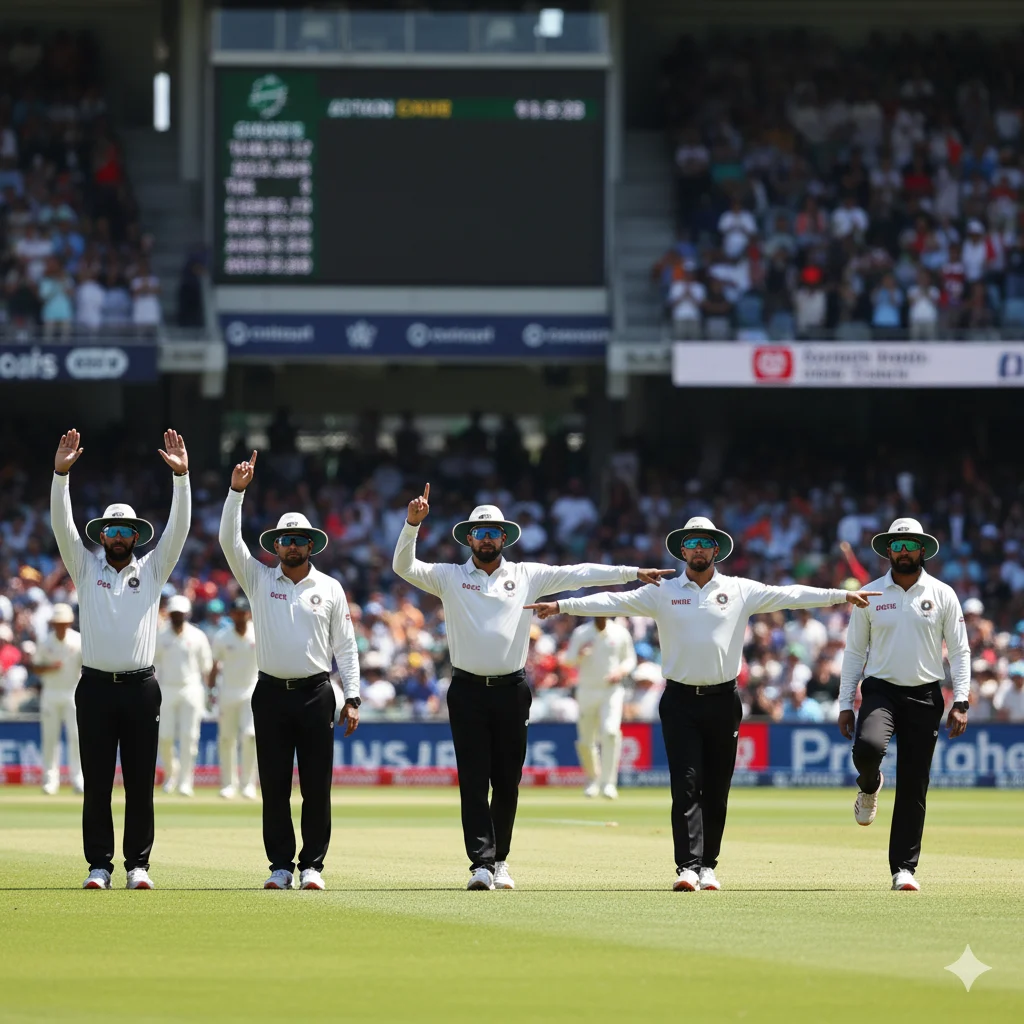
Cricket is a sport of precision, strategy, and tradition. Every movement on the field has meaning, and the umpire’s signals are its universal language. Among the most recognized calls in cricket are “Six,” “Four,” “Out,” “No Ball,” “Wide,” and “Leg Bye.” Each represents a vital part of the game’s scoring or decision-making process. In this article, we’ll explore what these terms mean, their origins, and how umpires communicate them during play.
1. Six Runs (Sixer)
Meaning
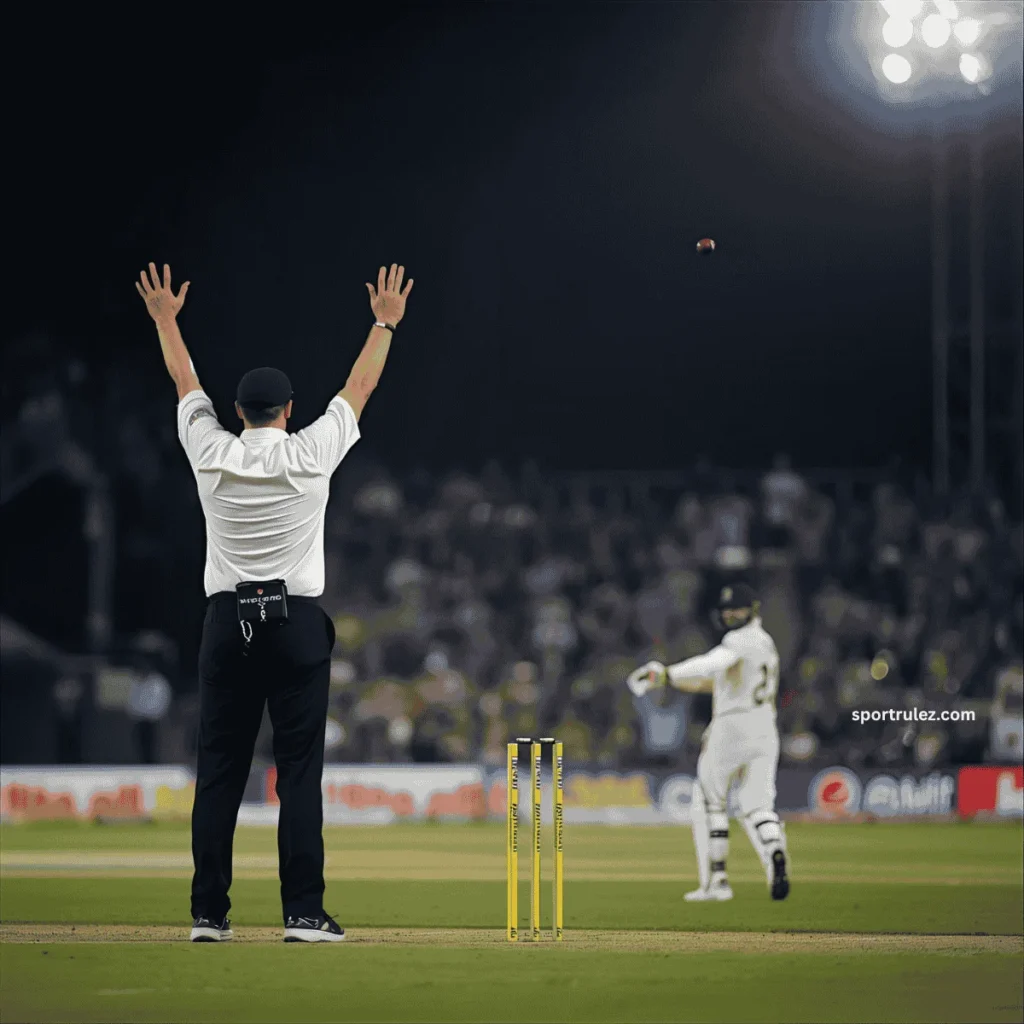
A Six occurs when a batsman hits the ball over the boundary rope without it touching the ground, directly scoring six runs. It’s the highest scoring shot in cricket.
Umpire Signal
The umpire raises both arms straight above the head to signal a six.
Historical Background
The six originated from early cricket when boundaries weren’t marked, and batsmen were rewarded for powerful hitting beyond the field. Over time, formal boundary rules defined six runs for balls hit on the full beyond the rope.
Key Fact
In limited-overs cricket, sixes are crucial for boosting run rates and are celebrated as signs of dominance and confidence.
2. Four Runs
Meaning
A Four is scored when the ball touches the ground before crossing the boundary. It’s the second-highest scoring shot in cricket.
Historical Background
The rule was standardized in the 19th century to ensure fair scoring between ground shots and aerial hits. The boundary line made scoring clear and consistent worldwide.
Key Fact
Players known for elegant timing, like Sachin Tendulkar and Babar Azam, often favor fours over sixes for controlled aggression.
3. Out
Meaning
A batsman is declared Out when dismissed according to any of the Laws of Cricket (bowled, caught, run out, LBW, etc.).
Umpire Signal
For most outs, the umpire raises one index finger above the head, signaling the dismissal.
Historical Background
The raised finger gesture was adopted for clarity and authority in early Test matches. It became iconic — symbolizing fairness and finality in cricket decisions.
Key Fact
There are 11 recognized modes of dismissal, with “Caught” and “Bowled” being the most common.
4. No Ball
Meaning
A No Ball is called when the bowler violates the delivery rules — for example, overstepping the crease or delivering an illegal full toss.
Umpire Signal
The umpire extends one arm horizontally to indicate a No Ball.
Historical Background
This rule dates back to the 18th century to protect batsmen from unfair deliveries. Over time, technology (like front-foot sensors) has refined the enforcement of this law.
Key Fact
A No Ball gives the batting side an extra run and a free hit in limited-overs formats.
5. Wide Ball
Meaning
A Wide is given when the bowler delivers the ball too far from the batsman to hit, outside the legal width of the crease.
Umpire Signal
The umpire extends both arms horizontally to signal a wide ball.
Historical Background
The concept was introduced in 1811 to prevent bowlers from deliberately avoiding the batsman. It encourages fair play and balanced competition.
Key Fact
Each wide delivery gives one extra run to the batting side and requires the ball to be re-bowled.
6. Leg Bye
Meaning
A Leg Bye occurs when the ball hits the batsman’s body (not the bat) and runs are scored, provided the batsman attempted a shot or avoided being hit.
Umpire Signal
The umpire taps a raised knee with one hand to signal a leg bye.
Historical Background
Introduced in the late 1800s, leg byes were added to reward teams for legitimate attempts to play rather than penalizing them for accidental deflections.
Key Fact
Leg byes are credited to the team’s total, not the batsman’s individual score.
Conclusion
Each umpire signal in cricket reflects centuries of evolution in fair play, precision, and communication. From the joy of a Six to the discipline of a No Ball, these gestures bridge players, officials, and fans in a universal cricketing language. Understanding them deepens one’s appreciation for the game’s structure and spirit.

Liam Thompson is a cricket regulations analyst who covers international and league-level rules in depth. He focuses on fielding laws, over-rate penalties, powerplay strategies, and updated ICC guidelines. Liam’s goal is to educate readers while keeping the excitement of the game alive.