
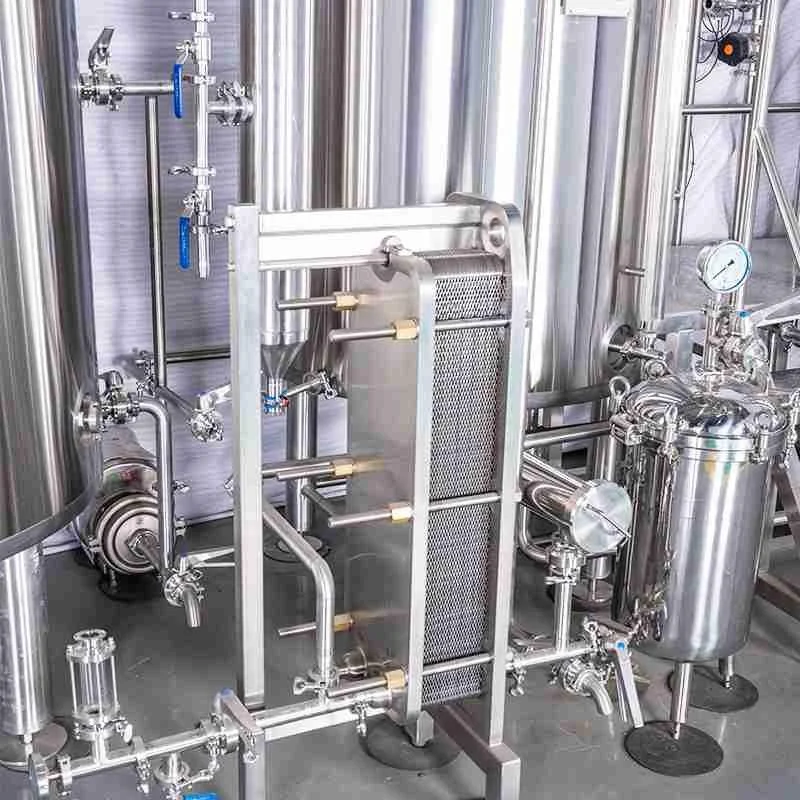
Select a wort heat exchanger by batch volume, hot and target wort temperatures, cooling-water or glycol temperatures, required knockout time, flow rates, pressure limits, cleaning method, and seasonal utility conditions. The exchanger must cool wort consistently without restricting transfer or creating an uncleanable process path.
Use the hottest expected cooling-water temperature and the largest regular batch in the calculation. A unit that works in winter may miss fermentation temperature during summer. Confirm performance at the brewery’s actual utilities, not only a standard catalog condition.
How Does a Plate Heat Exchanger Work?
Hot wort and cooling fluid flow through alternating channels separated by thin plates. Heat passes through the plates without the fluids mixing. Counter-current flow improves temperature approach and efficiency.
Plate pattern, count, size, material, gasket, flow arrangement, and pressure drop affect performance. Product and utility pressures should be monitored because a damaged plate or gasket can create leakage or cross-contamination risk.
What Is a Single-Stage Heat Exchanger?
A single-stage exchanger uses one cooling medium, often cold water, to cool wort. It is simple and can work well when source water is consistently cold enough.
The warmed outlet water can often be recovered for brewing or cleaning. In warm climates or for low fermentation temperatures, water alone may not reach the target. Increasing water use is not always an acceptable solution.
What Is a Two-Stage Heat Exchanger?
A two-stage unit uses one cooling medium in the first section and a colder medium, often glycol, in the second. The first stage removes most heat and can recover hot water. The second reaches the final wort temperature.
Two-stage systems add piping, valves, controls, pressure-drop considerations, and cleaning complexity. They are useful when water temperature varies or lager wort needs deeper cooling. Both stages must be sized for the intended flow.
How Is Required Capacity Calculated?
Capacity depends on wort mass flow, specific heat, temperature reduction, and allowed knockout time. The supplier also needs cooling-medium inlet temperature and available flow.
Provide actual wort gravity and seasonal utility conditions. High-gravity wort and reduced flow can change performance. Request predicted outlet temperatures and pressure drops on both sides. Include fouling margin without selecting an unnecessarily oversized unit.
How Fast Should Wort Be Cooled?
The target knockout time should match brewhouse transfer, oxygenation, fermenter filling, cleaning, and daily turn schedule. Faster is useful only when pumps, piping, utilities, and cellar operations support it.
Excessive flow can create pressure, aeration, or control problems. Slow flow keeps hot wort and the brewhouse occupied longer. Select a stable range and test it with production wort.
How Much Cooling Water Is Required?
Water demand depends on inlet temperature, desired outlet temperature, wort load, and exchanger efficiency. Colder water requires less flow for the same duty. Warm source water may need much greater volume or a second stage.
Measure water pressure and flow during peak brewery use. Plan where heated water will go. An exchanger cannot maintain performance when another process reduces supply pressure during knockout.
Why Does Pressure Drop Matter?
Pressure drop determines the pump head required to move wort and cooling fluid through the exchanger. Too much restriction can reduce flow, lengthen knockout, and move the pump outside its preferred operating range.
Include hoses, valves, filters, elevation, and piping in the complete calculation. When purchasing brewing equipment, request clean and expected fouled pressure-drop values. Do not solve restriction by increasing pressure beyond component ratings.
How Is the Heat Exchanger Cleaned?
Clean immediately after use with an approved circulation, temperature, chemistry, and time. Flush out solids before they dry. Flow direction and velocity should reach every channel.
Backflushing can help remove material when included in the procedure. Plate units may require periodic opening and inspection, depending on design and validation. Reassemble gaskets and plates in the correct sequence and tighten according to instructions.
How Can Blockage Be Prevented?
Control trub and hop solids before wort enters the exchanger. Use suitable whirlpool practice, screens, or strainers that do not create another contamination or pressure problem.
Monitor flow and pressure. A gradual increase in pressure drop or longer cooling time can show fouling. Do not push large solids through narrow channels. Investigate repeated blockage at its process source.
How Is Performance Verified?
Record hot wort inlet, cooled wort outlet, cooling-fluid inlet and outlet, both flow rates, pressure, and total knockout time. Compare the results with design conditions.
Test during the warmest source-water season and while other utilities operate. Trend changes over time. Reduced performance can indicate fouling, air, low utility flow, changed plate compression, or sensor error.
What Information Should Be Sent to the Supplier?
Provide batch size, wort volume, gravity, starting and target temperatures, desired knockout time, cooling-water and glycol temperatures, available flows and pressures, pump data, pipe size, solids control, cleaning method, and water-recovery plan.
Ask the brewery supplier for heat-duty calculations, plate material and count, gasket type, pressure ratings, pressure drops, connections, cleaning instructions, expansion options, and performance acceptance criteria.
What Is the Most Common Selection Mistake?
The most common mistake is selecting the wort heat exchanger from nominal capacity or purchase price without testing the complete operating cycle. Interfaces with upstream equipment, downstream capacity, utilities, cleaning, and labor often determine real performance.
Base the decision on largest high-gravity batch with the warmest seasonal cooling water. Record the assumptions used in every proposal so apparently similar quotations can be compared on the same operating conditions.
How Should Factory and Site Acceptance Be Planned?
Create written acceptance criteria before fabrication. Factory checks should confirm dimensions, components, controls, fabrication, documentation, and safe functional operation where testing is possible. Site testing should use installed utilities and representative process conditions.
Measure knockout time, outlet temperature, pressure drop, utility use, drainage, and cleaning. Record results, deviations, responsible parties, and completion dates. Do not release final acceptance because the equipment powers on; confirm the functions that create usable brewery capacity.
What Costs Should Be Included Beyond Purchase Price?
Include plates, frame, valves, gauges, pumps, piping, cold-water or glycol supply, and installation. Add freight, unloading, commissioning, training, spare parts, consumables, inspection, production downtime, financing, and local professional services.
Compare total installed cost and expected annual operating cost. A lower equipment quotation can cost more when essential controls, utility work, or process connections are excluded. Identify every supply boundary in writing.
