
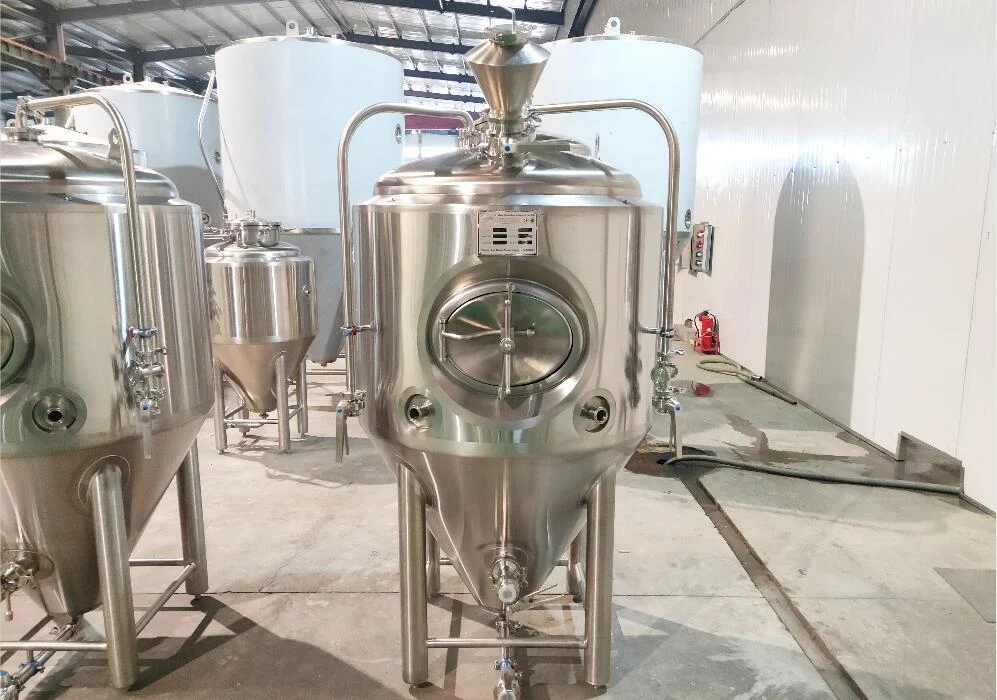
Choose dry-hopping equipment by batch size, hop format and dose, addition timing, vessel pressure, oxygen target, extraction method, solids removal, cleaning, operator safety, and beer-loss goals. The system should add hops consistently without exposing beer or employees to unnecessary risk.
Options range from a simple vessel port to purged hop dosers and external recirculation systems. Select the least complex method that achieves repeatable aroma, safe operation, acceptable oxygen, and manageable solids for the brewery’s production scale.
Why Is Dry Hopping Difficult in a Closed Tank?
Fermenters may contain pressure and carbon dioxide. Opening a port can release gas, foam, or beer and introduce oxygen or contamination. Hop pellets can bridge, expand, and create blockages.
Use equipment designed for the vessel pressure and follow a written depressurization or pressure-balanced procedure. Never open a pressurized fitting. Account for hop-induced foaming and available headspace before adding material.
What Is a Hop Doser?
A hop doser is a small chamber used to load, purge, and introduce hops into a closed vessel. It may connect to a top port and use controlled gas pressure or gravity.
The chamber volume must hold the intended dose without overpacking. Valves, clamps, pressure rating, purge connection, and safe venting must match the procedure. A doser reduces open exposure but does not remove pressure or oxygen risk automatically.
What Is an External Hop Recirculation System?
An external system circulates beer through a chamber or device that contacts hops and returns beer to the tank. It can improve mixing, reduce manual additions, and support larger doses.
The loop adds pumps, hoses, valves, seals, oxygen-entry points, and cleaning requirements. Control shear, pressure, temperature, and solids. Confirm that the pump and return path do not cause excessive foaming or damage beer quality.
How Is Equipment Sized for Hop Dose?
Use the maximum planned hop mass, bulk density, expansion, loading clearance, and desired number of additions. Pellets and whole cones have different volume and handling behavior.
Do not fill a chamber to its total shell volume. Leave room for safe closure and movement. Large doses may be divided into controlled additions. Confirm vessel headspace and solids capacity at the same time.
How Can Oxygen Pickup Be Reduced?
Use closed, clean equipment; purge chambers and lines; minimize open time; verify seals; and control gas movement. Follow a consistent sequence for loading, purging, equalizing pressure, adding hops, and isolating the device.
Measure dissolved oxygen where the brewery’s quality program requires it. Low-oxygen claims should be verified through results. More gas purging is not a substitute for leaking fittings or an uncontrolled process.
How Should Hop Material Be Mixed?
Natural fermentation activity, tank circulation, gas movement, or controlled external recirculation can distribute hops. The method should achieve extraction without excessive oxygen, shear, foaming, or beer loss.
Avoid improvised gas injection that creates unsafe pressure or uncontrolled foam. When comparing brewing tanks, confirm port size, location, racking arm, cone capacity, and compatibility with the planned mixing method.
How Are Hop Solids Removed?
Conical tanks allow settled solids to be removed through the cone. Timing, temperature, cone geometry, and valve size affect removal. Large loads can compact or block outlets.
Plan dumps, cold conditioning, racking height, and transfer screens carefully. Repeated large dumps can waste beer. External separation equipment may be justified at higher volume. Test yield and packaged clarity rather than focusing only on hop addition.
How Is Dry-Hopping Equipment Cleaned?
Every chamber, valve, hose, pump, gasket, and connection contacting beer or hops must be included in the cleaning process. Hop resin and particles can remain in dead legs, screens, seals, and rough surfaces.
Use cleanable geometry and full drainage. Disassemble components that cannot be reliably cleaned in place. Inspect spray coverage and return flow. Clean soon after use before resin and solids dry.
What Safety Risks Must Be Controlled?
Pressurized tanks, carbon dioxide, elevated access, heavy hop containers, slippery floors, and reactive foaming create risk. Use rated equipment, safe platforms, gas monitoring, isolation, controlled venting, and trained procedures.
Never stand over a pressurized port or loosen a clamp under pressure. Confirm vessel and accessory ratings. Review the complete operation with qualified safety personnel before first use.
How Should the Process Be Tested?
Start with water or another approved commissioning method to confirm valves, pressure control, flow, leakage, drainage, and cleaning. Then use a controlled production trial with a defined hop dose and procedure.
Record addition time, oxygen, pressure, temperature, extraction result, solids removal, beer loss, cleaning time, and operator feedback. Adjust one variable at a time and document the approved sequence.
What Information Should Be Provided to the Supplier?
Provide tank size and pressure rating, port sizes, hop format, maximum dose, addition schedule, oxygen target, available gas, pump and piping data, desired recirculation, solids strategy, floor plan, access height, and cleaning method.
Ask the craft brewery equipment provider for working volume, pressure rating, valve sequence, purge method, flow requirements, cleaning coverage, safety features, and compatibility with existing tanks.
What Is the Most Common Selection Mistake?
The most common mistake is selecting the dry-hopping system from nominal capacity or purchase price without testing the complete operating cycle. Interfaces with upstream equipment, downstream capacity, utilities, cleaning, and labor often determine real performance.
Base the decision on maximum hop dose in the smallest available headspace. Record the assumptions used in every proposal so apparently similar quotations can be compared on the same operating conditions.
How Should Factory and Site Acceptance Be Planned?
Create written acceptance criteria before fabrication. Factory checks should confirm dimensions, components, controls, fabrication, documentation, and safe functional operation where testing is possible. Site testing should use installed utilities and representative process conditions.
Measure safe pressure control, purge sequence, addition time, oxygen, extraction, solids removal, beer loss, and cleaning. Record results, deviations, responsible parties, and completion dates. Do not release final acceptance because the equipment powers on; confirm the functions that create usable brewery capacity.
What Costs Should Be Included Beyond Purchase Price?
Include doser or loop, rated valves, pump, hoses, gas controls, access platform, instruments, and installation. Add freight, unloading, commissioning, training, spare parts, consumables, inspection, production downtime, financing, and local professional services.
Compare total installed cost and expected annual operating cost. A lower equipment quotation can cost more when essential controls, utility work, or process connections are excluded. Identify every supply boundary in writing.
