
In modern football, free kicks are one of the situations that can completely change the course of a match in just seconds. Many famous goals in world football have originated from spectacular free kicks that leave goalkeepers helpless. For football fans, especially regulars, this is a significant factor. Xoilac TV, Understanding the rules of direct free kicks will make the experience of watching football much more enjoyable.
So What is a direct free kick?When does the referee award a direct free kick, and what are the rules for implementing it? Let’s find out in detail in the article below.
What is a direct free kick?
What is a direct free kick?This is a set-piece situation in football where the referee allows the fouled team to take a direct shot at the opponent’s goal. If the ball goes straight into the net without touching any other players, the goal is still considered valid.
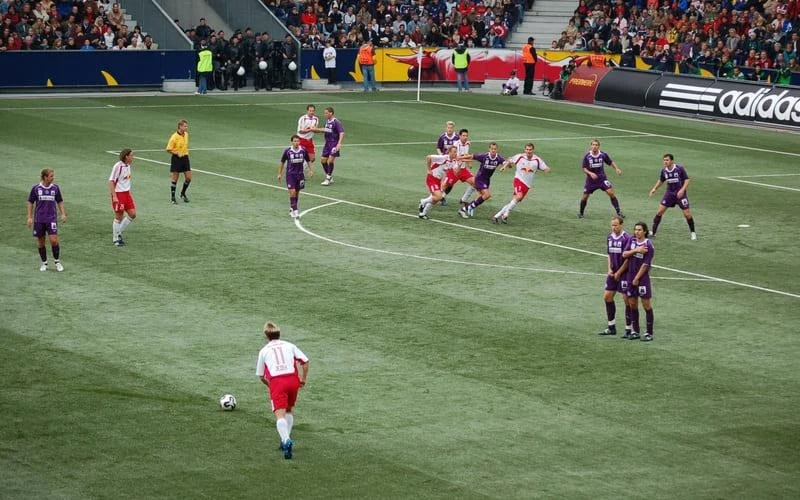
What is a direct free kick? It’s a situation where the team that was fouled takes a direct shot.
This is the biggest difference between a direct free kick and an indirect free kick. With an indirect free kick, the ball must touch another player before going into the net for it to be counted as a goal.
In the top matches broadcast onFireFans regularly witness world-class free-kick goals from superstars like Lionel Messi, Cristiano Ronaldo, and Kevin De Bruyne. These shots not only require technical skill but also demand extreme accuracy.
When do free kicks occur?
To understand clearly aboutWhat is a direct free kick?Let’s find out when a direct free kick occurs. According to FIFA football rules, a direct free kick is awarded when a player commits a serious foul or makes direct contact with an opponent. Below are some common situations that lead to a direct free kick.
Kicking or intentionally kicking the opponent.
If a player intentionally uses their foot to make a dangerous contact with an opponent, the referee may award a free kick to the fouled team. This is a fairly common foul in football when players are overly aggressive in challenges. Situations involving tackles with the sole of the boot or kicking an opponent’s leg are usually severely punished.
Tripping an opposing player
When a player uses their foot to obstruct an opponent’s movement, causing them to fall or lose the ball, the referee will blow the whistle for a direct free kick. In many matches broadcast on…XoilacTVIn situations where players are fouled near the penalty area, this often creates extremely dangerous free-kick opportunities.
Jump on your opponent
Uncontrolled lunges or deliberate, forceful collisions are also considered fouls that lead to direct free kicks. This behavior poses a high risk to opposing players, so referees usually handle it very strictly.
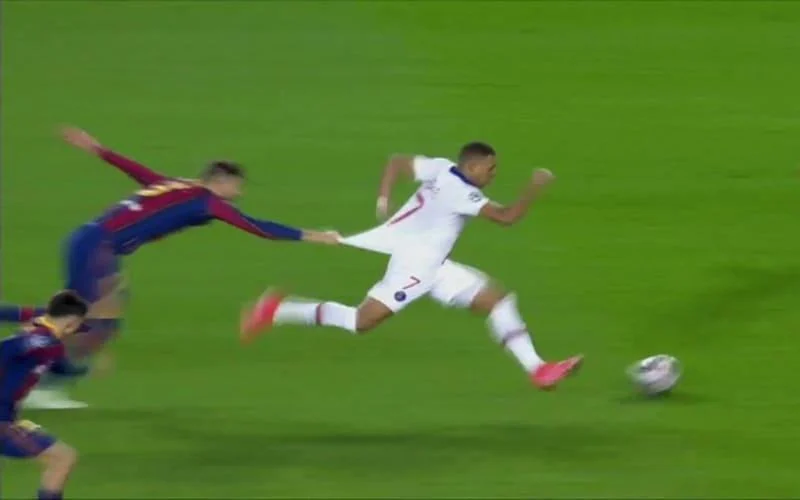
Situations that result in free kicks in football.
Pushing the opponent
Any action involving using hands or body to push an opposing player in order to gain an advantage can result in a foul. This is especially common during aerial balls or corner kicks.
Pulling the opponent’s shirt.
Shirt-pulling is a very easily recognizable foul in modern football thanks to VAR technology. When a player uses their hand to hold or pull an opponent’s shirt to prevent movement, the opposing team will be awarded a free kick.
To hit or intentionally hit someone
Violent acts such as elbowing, foul play, or attacking opponents are severely punished. In addition to direct free kicks, offending players may also receive yellow or red cards depending on the severity of the offense.
Spit at the opponent
This is considered unsportsmanlike conduct and a serious offense in football. If a player spits at an opponent, the referee will award a free kick and issue a direct red card.
Intentionally using hands to play the ball.
Except for the goalkeeper in their own penalty area, all other players are prohibited from using their hands to play the ball. If a player intentionally uses their hand to block the ball or create an advantage, the opposing team will be awarded a direct free kick.
If a foul occurs inside the penalty area, the referee will award a penalty.
Rules for taking direct free kicks
Although free kicks are familiar, there are still many important rules that viewers need to understand.
Ball placement
The ball must be placed at the exact location where the foul occurred, or near that location as determined by the referee. If the team intentionally places the ball in the wrong position to gain an advantage, the referee may order a retake.
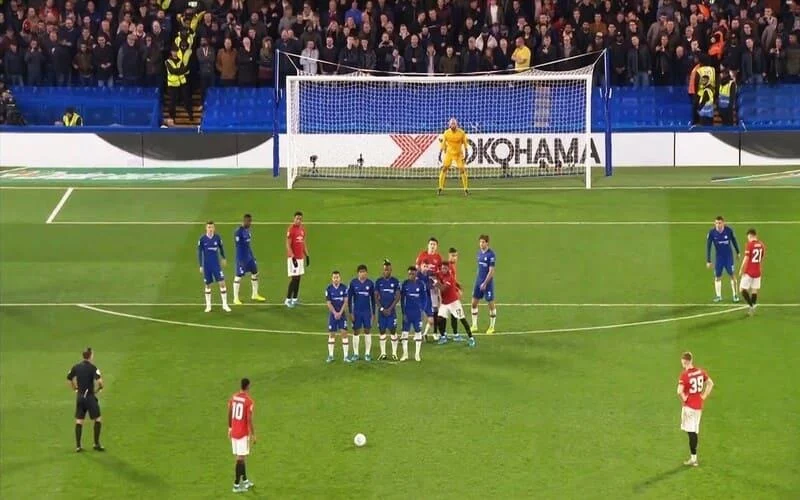
The ball must be placed at the exact location where the foul occurred, or near that location as determined by the referee.
Fence spacing
Defensive players must stand at least 9.15 meters away from the ball until it is kicked. If the wall is too close or deliberately obstructs the kick, the referee has the right to caution the offending player.
The ball must remain stationary.
Before a free kick can be taken, the ball must be completely still on the ground. If a player kicks the ball while it is still moving, the kick may be disallowed.
The player taking the penalty is not allowed to touch the ball twice.
After a free kick, the player taking it is not allowed to touch the ball again unless another player has touched it. If this rule is violated, the opposing team will be awarded an indirect free kick.
The most dangerous free-kick positions
Understanding aboutWhat is a direct free kick?It’s also well known that not every free-kick situation has a high chance of scoring. Some areas of the pitch are particularly dangerous.
The area just in front of the penalty box
This is an ideal position for free-kick specialists. The close distance to the goal makes it easy for the player to execute a powerful shot over the wall. Fans are watching.Xoilac TVYou’re probably familiar with spectacular free-kick goals from this position.
Angles on either side of the penalty area
Free kicks taken from an angled position often create opportunities for players to loft the ball or curl a shot into the far corner. This is a tactical move used by many big teams.
The middle of the field
Although direct free kicks are less likely to result in a direct shot, they are suitable for launching quick attacking moves. Teams often take advantage of this opportunity to surprise the opposing defense.
The best free-kick takers in the world.
The history of football has seen many famous players known for their exceptional free-kick abilities.
Lionel Messi
Messi possesses incredibly accurate free-kick technique and unpredictable ball trajectories. Many of his spectacular goals are frequently rewatched by fans online.XoilacTV.
Cristiano Ronaldo
Ronaldo is famous for his powerful knuckleball shots. Although his free-kick style has changed over time, CR7 remains one of the most feared free-kick takers.
David Beckham
Beckham is considered an icon of English football’s free-kick tradition. His ability to create spin and place the ball with precision helped him score many spectacular goals.
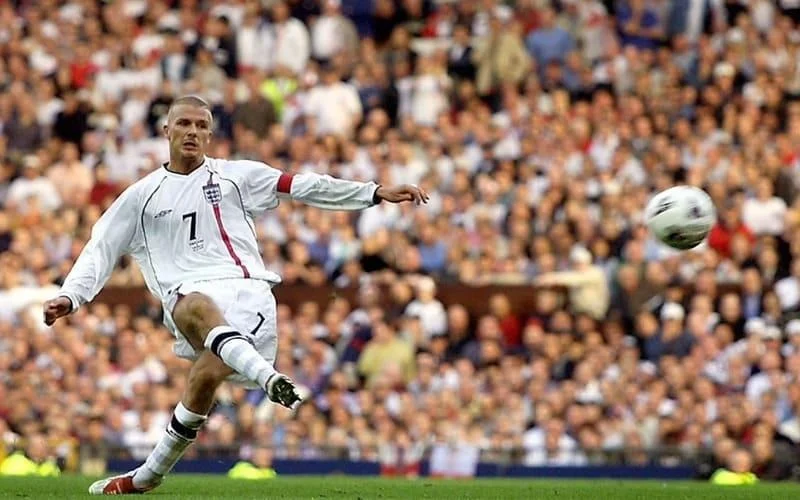
Beckham is considered the icon of free kicks in English football.
Juninho Pernambucano
Juninho is a free-kick legend in Brazilian football. Many experts consider him the best free-kick taker in history.
Conclude
Free kicks are one of the most exciting and important situations in football. They not only present a clear scoring opportunity but also showcase a player’s technique, composure, and handling ability.
UnderstandingWhat is a direct free kick?And knowing when it happens will help viewers easily follow the match and feel the excitement of the beautiful game.
If you love football and want to stay updated with more interesting knowledge, don’t forget to follow the exciting matches and lịch thi đấu c1 in XoilacTVTo enjoy world-class free-kick masterpieces from top stars around the globe.
