
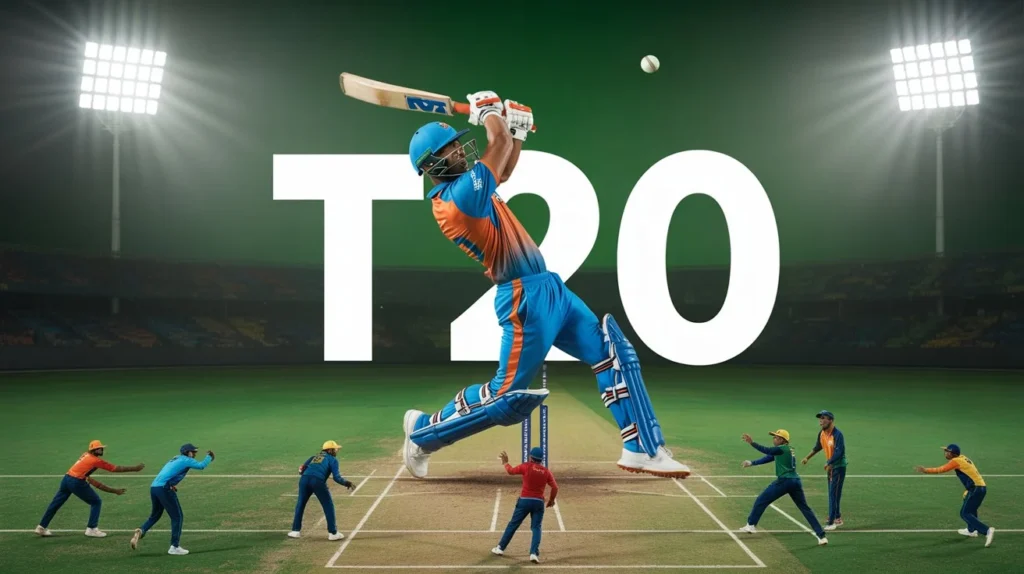
T20 cricket is not just a shorter game; it’s a different beast. Engineered for pace and drama, its unique set of rules creates a whirlwind of explosive batting, tactical bowling, and high-pressure fielding. This guide breaks down every essential rule, from the basic format to the intricate laws that govern every ball.
The Fundamental Framework: What Defines a T20 Match?
Before diving into specifics, understanding the core structure is key.
- Overs: Each team bats for a maximum of 20 overs.
- Innings Duration: Each innings has a strict time limit of 85 minutes (in internationals), with penalties for slow over-rates.
- The Result: The team that scores the most runs within their 20 overs wins. If the team batting second surpasses the first team’s score, they win. If they are bowled out before doing so, they lose.
The Batting Rules
While the basic modes of dismissal (bowled, caught, LBW, etc.) remain from traditional cricket, the context is different.
- The Goal: Maximize runs in a limited number of balls. This encourages aggressive shot-making, leading to higher frequencies of sixes and fours.
- Running: Batsmen are encouraged to run every possible single and turn ones into twos to maintain a high run rate.
- Wide & No-Ball Penalties: These are costly for the bowling side, as they result in an extra run and an additional delivery (except on the final ball of an over).
The Bowling & Fielding Rules
This is where T20 rules are most distinct, designed to create a balance between bat and ball.
Over Limitations per Bowler
- The Rule: No single bowler can deliver more than 4 overs in a match.
- Impact: This forces captains to use at least five bowlers, promoting strategic rotation and match-ups (e.g., a spinner against a weak batsman against spin).
Powerplay Fielding Restrictions
This is a critical tactical phase of the game.
- Overs 1 to 6 (Mandatory Powerplay): Only two fielders are allowed outside the 30-yard circle.
- Objective: To encourage aggressive batting at the start of the innings by limiting the fielding team’s ability to defend the boundary.
Post-Powerplay Fielding Restrictions
- Overs 7 to 20: A maximum of five fielders are allowed outside the 30-yard circle at any time.
- Objective: This allows the bowling side to set more defensive fields, protecting the boundaries in the death overs.
H2: The Penalty Rules
To ensure the game maintains its fast pace, strict penalties are in place.
Slow Over-Rate Penalty
- The Rule: If the fielding team fails to bowl their 20 overs within the allotted 85 minutes (in ICC events), they are penalized.
- The Penalty: For every over not completed in time, the fielding team must bring one additional fielder inside the 30-yard circle for the remaining overs of the innings. This is a severe disadvantage in the death overs.
The Free Hit Rule
- The Trigger: Awarded after a front-foot no-ball.
- The Rule: The very next delivery is a “Free Hit.” The batter can only be dismissed in these ways:
- Run Out
- Hitting the ball twice (Hit the Ball Twice)
- Obstructing the field
- What’s Not Out: The batter cannot be bowled, caught, leg-before-wicket (LBW), or stumped.
- Signal: The umpire signals this by circling one arm over their head.
The Tie– The Super Over
When a T20 match ends with both teams scoring the exact same number of runs, a Super Over is used to decide the winner.
- The Process: Each team nominates three batsmen and one bowler to play a single, six-ball over.
- The Goal: The team batting second in the Super Over must chase the target set by the first team.
- Winning: The team with the higher score from their Super Over wins. If the Super Over is also tied, subsequent Super Overs are played until a winner is determined. (Note: Older rules used “countback” based on boundaries, but this has been largely phased out in favor of continuous Super Overs).
Substitute Rules
- Playing XI: Each team has 11 players on the field.
- Substitutes: A concussion substitute is allowed, like-for-like, if a player suffers a concussion during the match. A regular substitute fielder can only field but cannot bat or bowl.
The Ball and Equipment Rules
- The Ball: A white ball is used for better visibility under floodlights. Two new balls are often used from each end in some tournaments to maintain condition.
- Bats: Must conform to ICC size regulations, though they are typically larger and heavier than those used in the past to enable more powerful hitting.
The Decision Review System (DRS) in T20
- Reviews per Innings: Each team gets 1 unsuccessful review per innings.
- Usage: Used to challenge on-field decisions for outs, primarily for LBWs and edges, using Hawk-Eye and UltraEdge technology.
A Brief Historical Context
- First Official Domestic Tournament: The English County Championship launched the T20 format in 2003.
- First T20 International: Played between Australia and New Zealand on February 17, 2005, at Eden Park, Auckland. Australia chased down 214 to win.
- First T20 World Cup: Held in 2007 in South Africa, famously won by India, which catapulted the format into global superstardom.
Frequently Asked Questions (FAQs)
Q1: How many fielders are allowed outside the 30-yard circle during the Powerplay?
A: During the mandatory Powerplay (overs 1-6), a maximum of only two fielders are permitted outside the 30-yard circle. This rule encourages aggressive batting at the start of the innings.
Q2: What is a ‘Free Hit’ in T20 cricket and how is it triggered?
A: A ‘Free Hit’ is awarded to the batting team after a front-foot no-ball is bowled. On the next delivery, the batter can only be dismissed by being run out, hitting the ball twice, or obstructing the field. They cannot be bowled, caught, LBW, or stumped.
Q3: What happens if a T20 match ends in a tie?
A: If the scores are level, the match is decided by a Super Over. Each team faces one additional over (six balls). The team that scores the most runs in their Super Over wins. If the Super Over is also tied, the process is repeated.
Q4: What is the penalty for a slow over-rate in T20 cricket?
A: If the fielding team fails to bowl their 20 overs within the allotted time (usually 85 minutes), they are penalized. For every over short, they must bring one extra fielder inside the 30-yard circle for the remainder of their innings, making boundary-hitting easier for the batters.
Q5: How many overs can a single bowler bowl in a T20 match?
A: In a T20 match, no single bowler is allowed to bowl more than 4 overs. This rule ensures that teams must use a minimum of five bowlers, adding a key tactical element to the captain’s role.
Conclusion: A Game of Calculated Chaos
The rules of T20 cricket are a masterclass in sports design. Every regulation, from the 4-over limit for bowlers to the fielding restrictions and the Free Hit, is meticulously crafted to create a spectacle of calculated chaos. It’s a format where strategy is as important as skill, and where every single ball can change the course of the game. Understanding these rules is the key to appreciating the brilliance and pressure that defines modern cricket’s most popular format.

Arjun Mehta is a dedicated cricket rules analyst with strong expertise in ODI, T20, and Test match regulations. He focuses on explaining powerplay rules, fielding restrictions, bowling limits, and modern ICC updates in simple language. Arjun’s content helps fans clearly understand match decisions and on-field situations without confusion.