
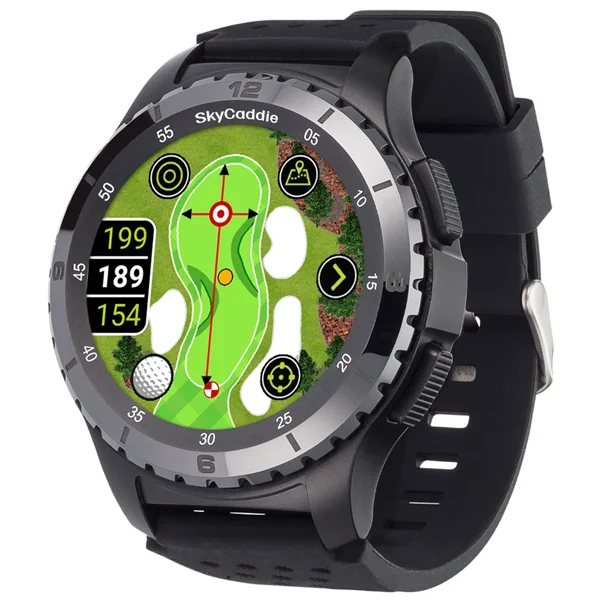
Modern golfers have access to more information than ever before. From launch data on the practice ground to detailed course maps during a round, technology is increasingly helping players make better decisions rather than relying entirely on instinct.
One of the most practical developments has been the growth of golf GPS technology.
For many golfers, the value of GPS is not about removing the challenge from the game. It is about having clearer information before making a shot. Knowing the distance to the front, middle and back of a green, understanding how far it is to a bunker or identifying the carry required over a hazard can make course management far more straightforward.
Used properly, GPS technology can help golfers select clubs with greater confidence, reduce avoidable mistakes and develop a better understanding of how they actually play.
Better Decisions Start With Better Distance Information
Golf is full of situations where the correct decision depends on distance.
A player standing 150 yards from the green may initially think the shot is straightforward. But that number alone rarely tells the whole story.
The pin could be positioned at the back of the green. A bunker might guard the front. There may be water short of the putting surface, or the golfer may need to carry a particular section of rough.
Accurate distance information gives the player more context.
Instead of simply asking, “How far is it to the flag?”, golfers can consider the entire target area.
For many amateur players, that can lead to safer and more effective club choices.
A golfer who knows the middle of the green is 155 yards away and the back is 170 may decide that aiming towards the centre is a much better option than attacking a difficult rear pin.
That kind of thinking can prevent unnecessary dropped shots.
GPS Can Encourage Smarter Course Management
Many golfers lose strokes through poor decisions rather than poor swings.
Trying to hit through a narrow gap, taking on a carry that requires a perfect strike or aiming directly at a tucked pin can quickly turn an average hole into a costly one.
GPS devices can help players view the hole more strategically.
Knowing the distance to hazards, doglegs and landing areas allows golfers to plan backwards from the green rather than automatically reaching for the driver.
On a short par four, for example, the best tee shot may not be the longest possible one.
If a fairway bunker sits at normal driver distance, using a shorter club may leave a slightly longer approach but remove a major hazard from play.
Similarly, a golfer laying up on a par five can choose a distance that leaves a preferred wedge yardage rather than simply hitting the ball as far as possible.
Technology provides the information. The golfer still makes the decision.
Why Front, Middle and Back Distances Matter
One of the most useful features of GPS devices is the ability to show distances to different sections of the green.
Golfers often focus too heavily on the exact pin position.
For professionals with highly consistent distance control, attacking specific parts of a green can make sense. For many amateurs, however, choosing a club that comfortably reaches the putting surface is usually the better strategy.
Imagine a green where the front edge is 140 yards away, the centre is 152 and the back is 165.
If the flag is positioned near the front, a golfer may be tempted to choose a club that carries exactly 140 yards.
But a slightly mishit shot could finish short in a bunker or rough.
Choosing a club based closer to the centre distance may provide more margin for error.
GPS information makes these decisions easier because the player can see how much room exists around the target.
Golf GPS Watches Make Information Easy to Access
Convenience is an important part of on-course technology.
Players do not necessarily want to stop before every shot, take out a separate device and spend time searching for information.
That is one reason golf GPS watches have become a popular option.
Because the information is worn on the wrist, golfers can check distances quickly as they walk towards the ball.
This can help maintain the pace of play while still providing useful course information.
Many modern watches go beyond simple green distances. Depending on the model, features can include hazard information, digital scorecards, shot tracking and course maps.
For golfers who prefer minimal equipment, wearing one device throughout the round can be particularly convenient.
GPS Can Help Golfers Learn Their Courses Better
Regular GPS use can also improve a golfer’s understanding of the courses they play most frequently.
A player may have played the same hole dozens of times without knowing exactly how far it is to a particular bunker or where the fairway begins to narrow.
Accurate measurements can reveal useful information that is difficult to judge visually.
Over time, golfers can begin recognising ideal landing areas and preferred approach distances.
This can change how familiar holes are played.
Rather than automatically repeating the same strategy, a golfer might realise that leaving the driver in the bag creates a better angle into the green, or that a hazard previously thought to be out of range is actually very much in play.
The result is a more informed approach to course management.
Understanding Your Own Distances Is Still Essential
GPS information is only useful when golfers also understand how far they hit their clubs.
Knowing that a bunker requires a 165-yard carry is not particularly helpful if the player has no realistic idea how far their 6-iron or hybrid travels.
This is where course technology and practice need to work together.
Golfers should try to develop realistic carry numbers for each club rather than relying on their longest-ever shots.
If a golfer’s typical 7-iron carries 145 yards, that number is much more useful than remembering one shot that travelled 160.
Accurate club distances combined with accurate course distances create better decisions.
That does not guarantee perfect results, but it improves the odds of choosing the right shot.
GPS Can Help Reduce Emotional Decisions
Golfers do not always make logical choices during a round.
After a poor hole, it is easy to become aggressive and try to recover lost shots immediately.
GPS information can encourage a more measured approach.
Seeing that a carry requires significantly more distance than normal may convince a golfer to lay up rather than attempt a low-percentage shot.
Likewise, understanding the full depth of a green may encourage a player to aim towards a safer section instead of chasing a difficult flag.
These decisions might appear conservative, but avoiding major mistakes is one of the simplest ways for amateur golfers to improve scoring.
Good golf is often less about producing spectacular shots and more about reducing unnecessary trouble.
Useful for Unfamiliar Courses
GPS devices become particularly valuable when playing somewhere new.
On a familiar course, golfers often know where bunkers sit, how far doglegs extend and which side of the fairway provides the best approach.
At an unfamiliar venue, much of that knowledge disappears.
A GPS device can provide an immediate overview.
Golfers can identify hazards they might not be able to see from the tee and gain a better understanding of how the hole is designed.
This can prevent frustrating mistakes caused simply by lack of local knowledge.
For golfers who regularly play different courses, that added information can make the experience both more enjoyable and less intimidating.
Technology Should Support, Not Distract
As with any golf technology, GPS works best when it remains simple.
There is little benefit in spending several minutes analysing every possible number before hitting a shot.
For most golfers, the key information is straightforward: how far is it to the target, where are the main hazards and which club gives the best margin for error?
Once those questions are answered, the technology has done its job.
The player can then focus on the shot itself.
That balance is important. Golf still requires judgement, feel and commitment.
GPS should make decisions clearer, not make the game feel more complicated.
A Practical Tool for Better Golf
The biggest advantage of GPS technology is its simplicity.
It provides golfers with useful information at the moment they need it most.
Accurate distances can improve club selection, encourage safer course management and help players understand where the real risks exist on each hole.
For golfers trying to lower their scores, those small improvements in decision-making can add up over the course of a round.
No GPS device can guarantee a good swing, and technology cannot remove the challenge that makes golf so rewarding.
What it can do is help golfers approach each shot with better information.
When players understand both the course in front of them and their own realistic capabilities, they are more likely to make decisions that lead to consistent, sensible golf.
