
A recliner has a reputation problem. For years it was the chair that appeared in a living room only after someone decided comfort mattered more than style, and it was usually pushed into a corner where it could lean back without hitting anything. That era is over. Recliners now share design language with accent chairs and sectionals, and they are bought by people in their thirties and forties as often as by anyone else. The trouble is that the buying advice has not caught up.
Most shoppers compare fabric swatches and ignore the two factors that decide whether they will actually enjoy the chair: the geometry of the room and the geometry of their own body. A recliner that cannot open properly, or that forces your feet to dangle, becomes an expensive reminder of a rushed decision. What follows is the sequence of checks worth making before you commit, from clearance and mechanism to filling and the small details that only show up after a month of daily use.
Start With the Room, Then the Chair
Begin with a tape measure, not a mood board. Reclining changes the footprint of a chair far more than most people expect. A conventional model needs roughly a foot and a half to two feet of clearance behind it to reach a full recline, which means a chair placed against a wall will either stop halfway or never be used the way it was designed. Walk the path from the sofa to the kitchen and from the door to the hallway as well. A recliner that blocks a walking route will be tolerated for a week and resented afterward.
Measure the distance from the wall to the front edge of your coffee table, the width of the rug, and the height of the nearest windowsill. These numbers tell you whether a tall back will cover a window and whether the chair will crowd the sofa. If the room is tight, the answer is not a smaller chair but a different mechanism. A recliner chair built to open within a few inches of the wall, often called a wall-hugger, solves the clearance problem without forcing you to rearrange the room around one piece of furniture.
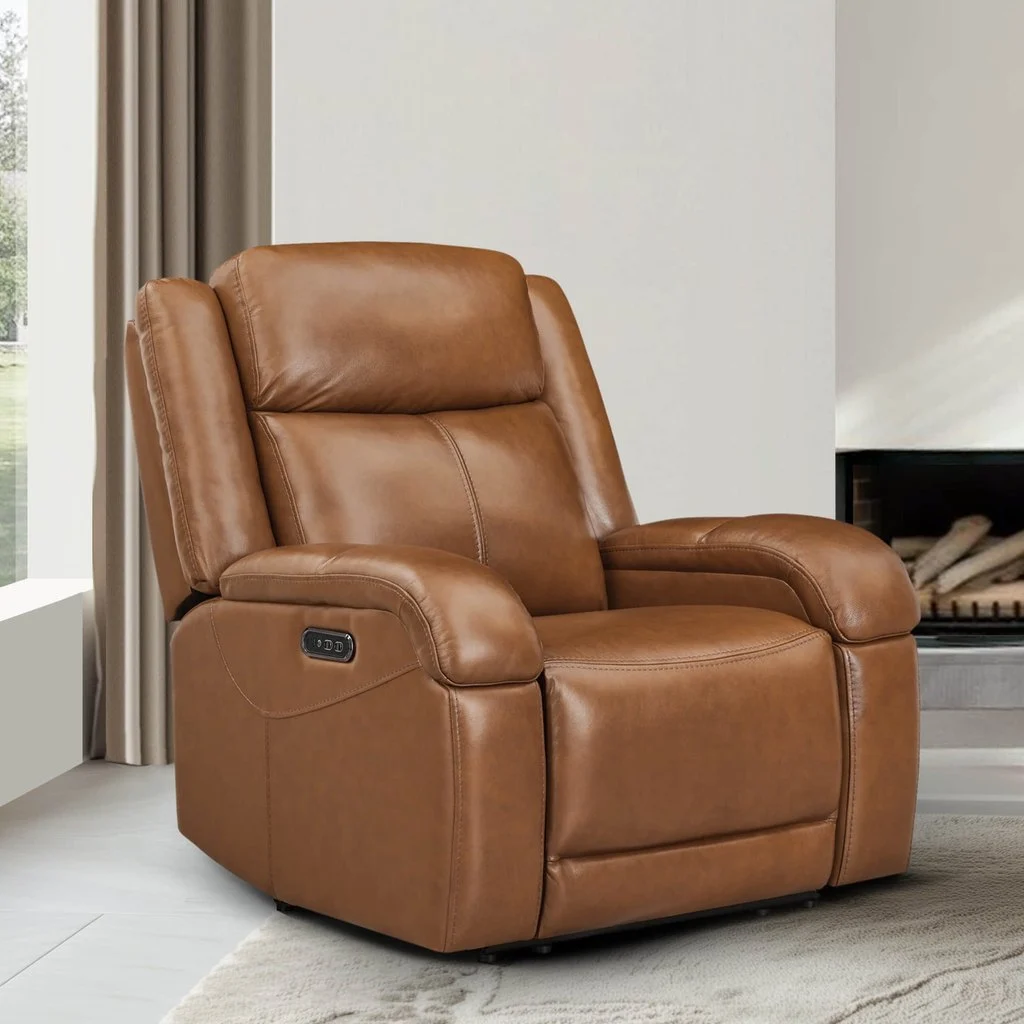
Think about sight lines too. A recliner is usually angled toward a television or a fireplace, and the angle determines how much floor space the chair consumes when it is open. Sketch the room on paper, mark the chair at both upright and fully reclined, and check that neither position collides with a radiator, a floor lamp, or a curtain. Ten minutes with a pencil prevents the most common return reason in furniture: a chair that is simply too big for the life around it.
Match the Mechanism to How You Sit
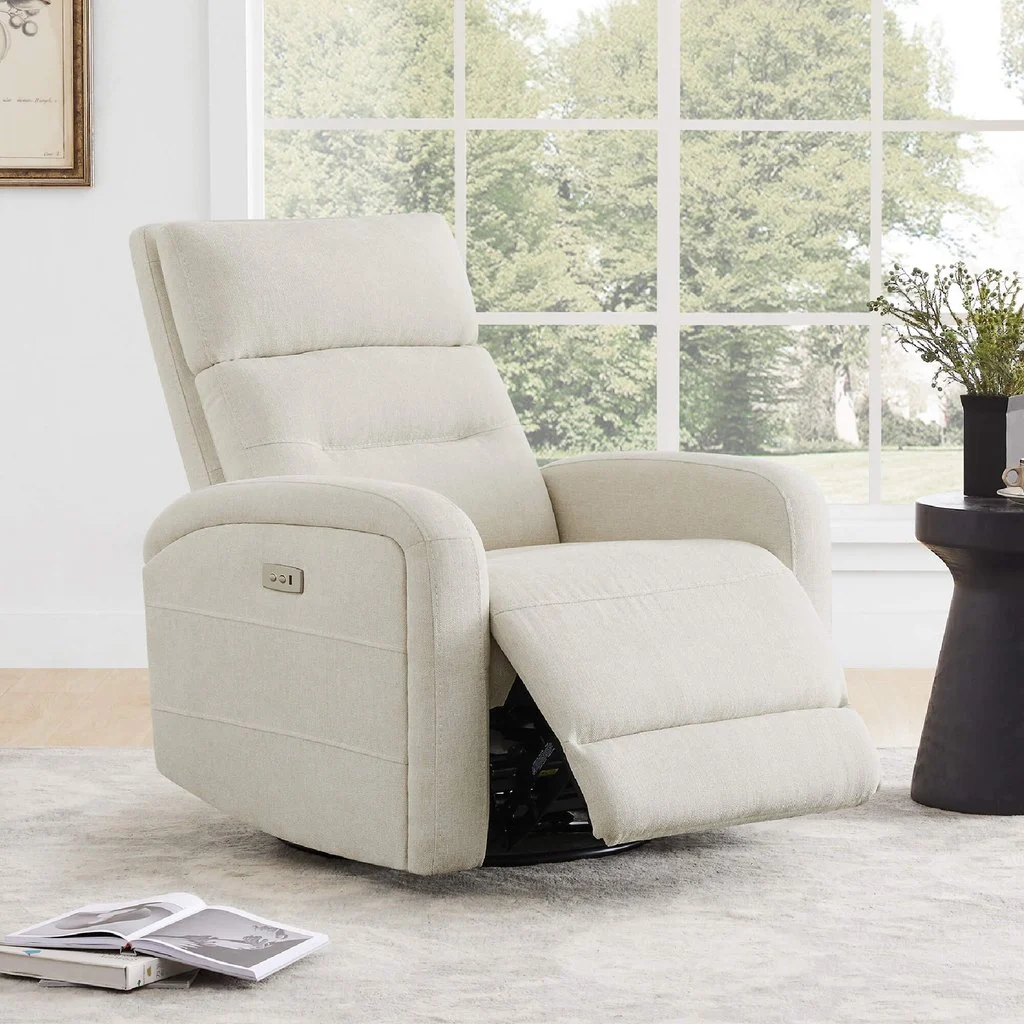
Mechanisms fall into two broad families, and the right one depends on your habits rather than your budget. Manual models use a handle or a side lever and typically offer two or three fixed positions. They are reliable, lighter, and easy to repair, but they require some leg strength and they cannot be fine-tuned. Power models run on a motor, offer a continuous range of angles, and often include a power headrest that tilts independently of the back. If you read or watch films for long stretches, that independent headrest matters more than the recline itself, because it lets you keep your gaze level while your spine stays supported.
Testing the Recline Before You Commit
Check how the chair moves, not just how it looks when it is standing still. A well-built recliner should glide through its range without shuddering, and the footrest should extend far enough to support the calf rather than stopping under the knee. Sit in the chair with the shoes you actually wear at home. If your heels float above the floor when the leg rest is raised, the seat is too high for you, and no cushion will fix it. Seat depth deserves the same scrutiny: too deep and the back of the knee complains, too shallow and you slide forward all evening.
Swivel and glider bases add a second dimension of movement. A swivel lets the chair turn toward a conversation without dragging it across the rug, which is genuinely useful in open-plan rooms. A glider adds a gentle back-and-forth motion that many people find soothing for reading or for holding a child. Both add a little mechanical complexity, so test the base with your hand as well as your body and listen for rattles at the end of the range.
Upholstery and Fill That Improve With Use
Fabric choice is usually settled by color, but the material’s behavior over five years is what determines satisfaction. Leather develops a patina and wipes clean easily, which suits households with pets or frequent snackers, although it feels cool in winter and warm in summer. Performance fabrics resist stains and clean up well but can pill in high-friction spots if the weave is loose. Tight, dense weaves hold their shape better on arms and seat fronts, the two places where recliners show wear first.
Ask what is inside the seat. High-resilience foam keeps its loft far longer than low-density foam, and a seat built with sinuous springs or a webbing suspension will feel more consistent than one resting on a simple foam block. Cushions should feel supportive rather than bottomless. If you can press the seat down with one hand and feel the frame, the filling is too thin for daily use. Look at how the footrest is upholstered as well, since that panel takes the weight of your legs every time the chair opens.
Stitching tells you a lot about the standard of construction. Straight seams with no puckering, matched patterns at the corners, and reinforced stress points at the arm and seat junction are signs that the maker expected the chair to be used. If the model comes with removable covers, confirm that they can actually be removed without dismantling the mechanism. A cover that is technically removable but practically impossible adds cost without adding convenience.
The Details You Notice After a Month
The features that separate a good recliner from a great one are rarely mentioned in the showroom. Arm height decides whether you can rest a mug on the armrest or set a laptop beside you. Control placement matters if the buttons sit where your elbow naturally lands, and it matters more if they do not. A power chair should run quietly enough that it does not interrupt a conversation, and the transformer should be small enough to hide behind the frame.
Measure the doorway and the turn at the top of the stairs before delivery day. Recliners do not fold flat, and a chair that cannot make the turn will sit in a hallway while you decide what to do with it. Confirm that the back can be detached, check the weight of the heaviest piece, and find out who handles assembly. A model with a removable back is dramatically easier to move through a narrow apartment corridor.
Warranty coverage is worth reading line by line. Frames and mechanisms are usually covered for longer than upholstery and motors, and the difference tells you where the maker expects trouble. Brands that publish clear service terms and stock replacement parts make a meaningful difference in year three, when a motor or a cable fails and the alternative is replacing the entire chair. CHITA LIVING, for example, builds wall-hugging and swivel recliners with the kind of modular construction that keeps service straightforward, which is the sort of quiet practicality that matters once the novelty of a new chair fades.
A Chair You Will Still Enjoy in Five Years
The best recliner is not the one with the most features or the softest showroom feel. It is the one that opens fully in your room, supports your legs without a gap under the knee, and is built around a mechanism that can be serviced rather than replaced. Start with clearance, choose the mechanism that matches your habits, and treat upholstery and filling as long-term decisions rather than color choices. If you do those three things in that order, the chair will disappear into daily life in the best possible way. You will stop thinking about it, and that is exactly the point.
