
Most cat owners buy a litter box the way they buy a mop: quickly, cheaply, and without much thought. Then they spend months dealing with scattered litter, lingering odor, and a cat who clearly has opinions about the arrangement. The box is one of the few purchases in your cat’s life that affects both of you every single day, so getting it right is less about brand loyalty and more about matching three things: your cat’s body and habits, the layout of your home, and the amount of upkeep you can realistically handle.
This guide walks through those three factors in order, with practical checks you can run before you spend any money. None of it requires special tools or a big budget. It mostly requires paying attention to what your cat is already telling you, then choosing a product that answers those signals instead of fighting them.
Start With Your Cat, Not the Shelf
When people shop for a cat litter box, they usually begin with color, price, or whichever model has the best photos. A more reliable starting point is the animal who will actually use it. Cats are particular about footing, turning room, and sightlines, and a box that ignores those preferences tends to get used reluctantly, or not at all.
Size Matters More Than Style
A useful rule of thumb is that the interior of the box should be roughly one and a half times the length of your cat, measured from nose to the base of the tail. Most commercial boxes are smaller than that, which is why so many cats dig with their front paws while their back end hangs over the edge. If you are unsure, measure your cat while they are stretched out asleep. Then measure the box you are considering, including the depth of any rim or hood. A roomy pan is not a luxury; it is the difference between a cat who can bury waste properly and one who gives up and leaves it exposed.
Watch How Your Cat Enters and Turns
Spend a week noticing how your cat uses their current setup. Do they step in carefully, or leap over the side? Do they turn around completely, or back in? A cat who backs in is often avoiding a hood that feels cramped. A cat who perches on the rim is telling you the floor of the box feels unpleasant. Senior cats and very large breeds need low entries and generous floor space, while kittens need sides low enough to climb but deep enough that digging does not spray litter across the room. These observations matter more than any feature list.
Pay Attention to Posture and Digging Style
Two cats of the same size can need very different boxes because they use them differently. Some dig a shallow scrape and leave, while others excavate to the bottom and spray litter in every direction. If your cat is a digger, prioritize depth and high walls; if your cat is quick and tidy, a shallower pan with a modest rim may suit them better. A cat who stands with all four paws on the rim before dropping in is telling you the litter bed is too shallow.
Weight matters too. A heavier cat sinks into soft litter and struggles to turn in a small pan, while a light cat may feel unsteady on a smooth surface. A slightly textured bottom gives better traction, and an overweight cat needs a wide, low entry rather than a narrow opening.
Matching the Box to Your Living Space
A litter box has to live somewhere, and the room it lives in shapes which design makes sense. A box tucked into a dark laundry room needs different features than one standing in a guest bathroom that visitors occasionally use. Before you buy, walk your home and identify two or three realistic spots, then check each one for floor space, access, and privacy.
Placement Rules That Prevent Problems
The most common placement mistake is putting the box next to the cat’s food and water. Cats are fastidious, and many will avoid a box that sits beside their bowls. Another frequent error is hiding the box so well that the cat has to squeeze past furniture or navigate a closed door to reach it. Good spots are quiet, easy to reach, and away from appliances that start suddenly. If you use a covered box, give the cat a clear path in and out so they never feel trapped.
Think About Traffic and Noise
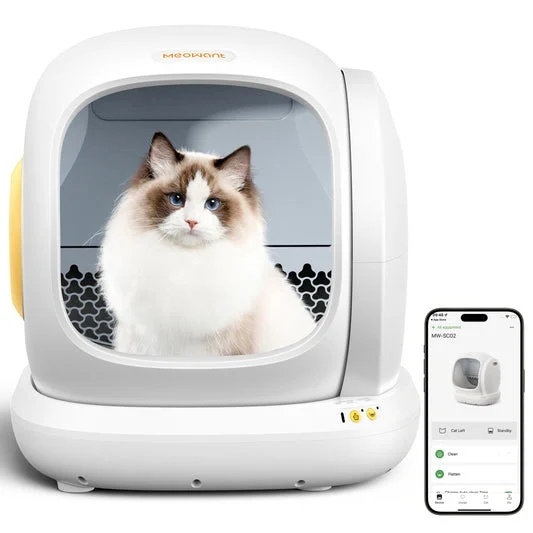
High-traffic hallways and rooms with washing machines or furnaces can make a cat anxious enough to hold it in, which creates health problems and accidents elsewhere. Watch where your cat already chooses to relax; a box near their favorite quiet corner is more likely to be accepted. If your home is small, vertical separation helps: a box on a different floor from the sleeping area still feels private without being remote. Brands such as Meowant design several of their models with raised entry lips and deeper pans specifically because these details reduce tracking in tight spaces, which is worth keeping in mind when comparing options.
Plan for the First Week of Transition
Even a perfect box can fail if the introduction is rushed. Set the new box beside the old one rather than replacing it outright, and keep both clean so your cat has no reason to prefer the familiar pan. If you are moving the box to a new room, do it in stages: place it near the old location first, then shift it a few feet every few days. Cats map their territory by scent and routine, and a sudden move can read as a lost resource rather than an upgrade.
Watch for signs of acceptance during this period. A cat who investigates the box, digs briefly, and uses it is on the right track. A cat who avoids the room entirely may need more time or a different design. Never punish a cat for an accident during the transition; instead, ask what the new box is missing.
Materials and Details That Hold Up
Plastic is the default material for a reason: it is light, affordable, and easy to wipe down. The catch is that soft plastics scratch, and scratches trap odor even after a thorough cleaning. Look for boxes with smooth, thick walls and rounded interior corners, since seams and sharp angles collect residue. A non-stick surface helps more than most shoppers expect, especially with clumping litter that tends to cement itself to the bottom.
Entry design deserves the same scrutiny. A low front lip with higher sides gives cats an easy way in while keeping litter inside. Hoods can help contain odor, but they also trap smells and reduce airflow, so they work best when the box is cleaned often. When comparing models, check whether the hood lifts off for washing, whether the pan is deep enough, and whether replacement parts are available. A box you can service for years beats one that is thrown out when a single latch breaks.
Building a Routine You Will Actually Keep
The best box in the world fails if it is not maintained, and the routine that survives is the one that takes almost no effort. Scoop once a day, ideally at the same time, and top up the litter so the depth stays consistent. Cats notice when the litter gets shallow, and they often respond by digging harder or going elsewhere. Keep a small scoop and a lined waste container within reach so the task never turns into a project.
Once a week, wash the pan with mild soap and warm water, dry it completely, and refill with fresh litter. Once a month, empty the box entirely and inspect it for scratches, cracks, and stubborn residue. If the plastic has absorbed odor that soap cannot remove, it is time to replace the pan. Track how often you do this in your phone’s calendar for the first couple of months; after that, the habit tends to stick on its own. A clean box also makes it easier to notice changes in your cat’s urine or stool, which is one of the earliest signals of a health issue.
If you live with more than one person, agree on who scoops on which days before the box arrives. Shared chores without a schedule default to whoever notices the mess first, and that person grows resentful fast. Keep a spare bag of litter and a backup scoop on hand so a busy week does not become a skipped cleaning.
Finally, do not overlook the litter itself. Depth of about two to three inches gives most cats enough material to dig and bury, and the type of litter matters as much as the box. Clumping clay is easy to scoop but can be dusty, while pellet litters track less but may not suit cats who like a fine texture. Introduce any change gradually by mixing old and new litter, and give the cat a week or two to adjust before deciding it does not work.

A Better Box Begins With Better Questions
Choosing a litter box is not really a shopping decision; it is an observation exercise. Measure your cat, watch how they move in and out of their current box, map the quiet corners of your home, and be honest about how much cleaning you will do each week. When those answers are clear, the product choice becomes obvious.
Take your time with the transition, too. Place the new box beside the old one for a week, keep both clean, and let your cat switch over at their own pace. A box that fits your cat’s body, your room’s layout, and your daily routine will pay you back with fewer accidents, less tracking, and a home that smells like home.
