
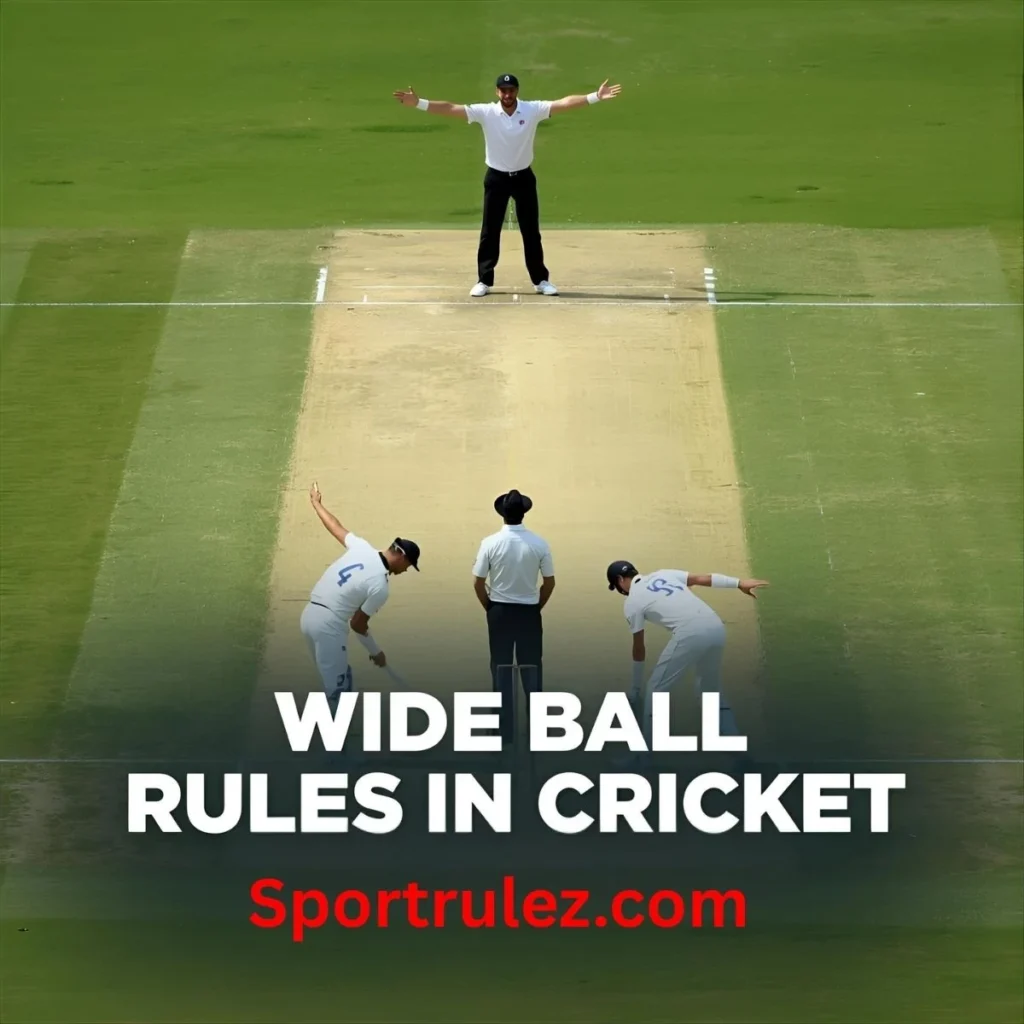
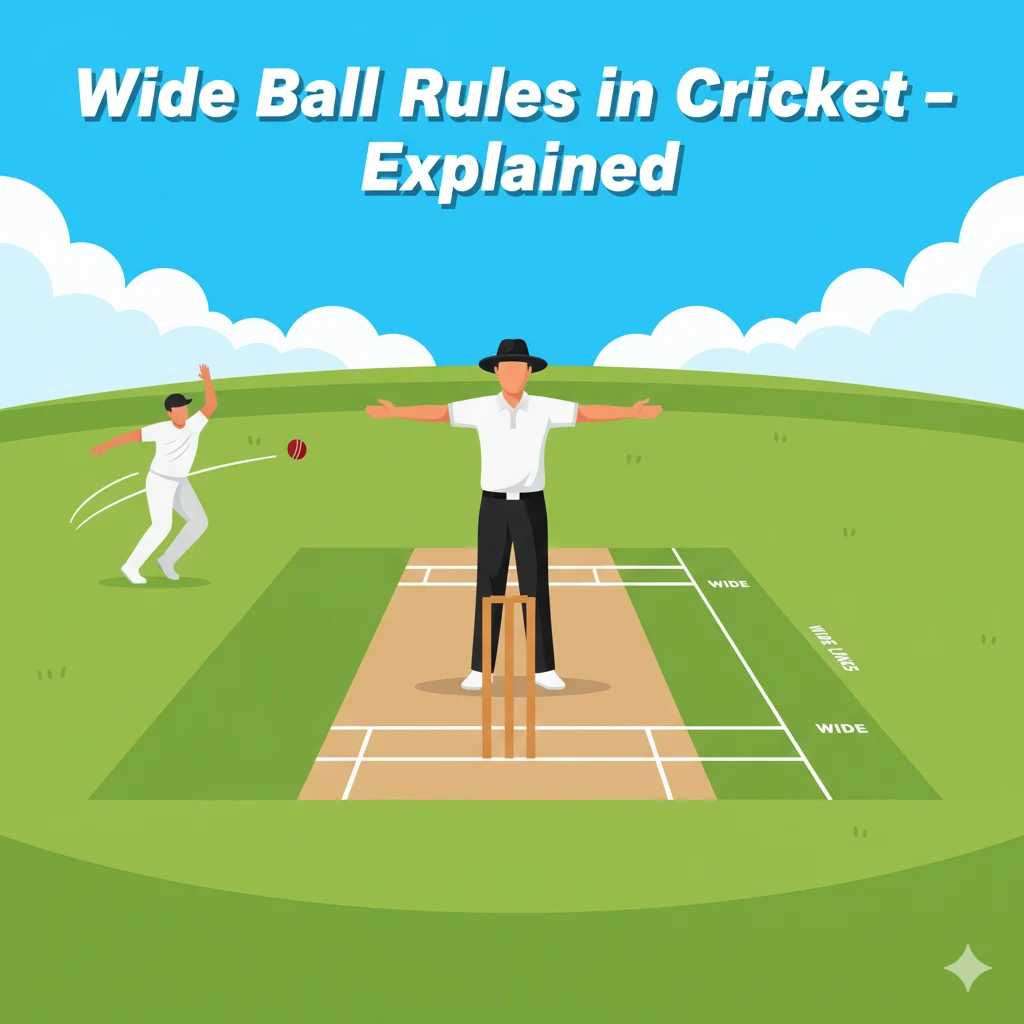
In cricket, the wide ball is one of the most common extras awarded to the batting team. A wide occurs when a delivery is bowled so far from the batter that it cannot be reached with a normal cricket stroke. The concept of wides is governed by MCC Law 22, ensuring fairness between the bowler and the batter.
Wides not only add runs to the batting team but also increase the bowler’s workload since the ball must be re-bowled. In limited-overs cricket, wides often become turning points as strict umpiring can shift the momentum in favor of batters.
What is a Wide Ball?
A wide ball is any delivery that:
- Passes outside the batter’s hitting range in their normal stance.
- Goes beyond the marked wide guidelines (in limited overs formats).
- Doesn’t touch the bat, body, or clothing of the batter.
👉 Key Point: Wide is a judgmental call by the umpire.
Law Reference (MCC – Law 22.1):
“If the bowler bowls the ball so high, so wide or otherwise so that, in the opinion of the umpire, it is not within reach of the striker when in their normal stance, the umpire shall call and signal Wide.”
Types of Wide Deliveries
1. Off-Side Wide
- If the ball passes outside the wide guideline line on the off-side without contact.
- Stricter in ODIs and T20s compared to Tests.
2. Leg-Side Wide
- Any ball going past the batter on the leg side, unless it touches them.
- Considered unfair since most batters cannot reach behind them to play a shot.
3. High-Bounce Wide
- A delivery that bounces over the batter’s head in their normal stance.
- Even if the batter ducks, it can be called wide.
- Note: A full toss above head height is a no-ball, not a wide.
4. Wicketkeeper Rule
- If the wicketkeeper is standing up close and misses a ball slightly outside leg, it may still be called a wide if it was unplayable.
5. Moving Batter Rule
- If the batter moves excessively across the crease, umpire adjusts the judgment.
- Example: If batter moves off-stump, a leg-side delivery may not be judged wide.
Wide Ball Rules in Different Formats
| Format | Wide Ball Judgement | Strictness Level |
|---|---|---|
| Test Cricket | Based on batter’s stance only (no guideline lines). | Lenient |
| One Day Internationals (ODIs) | Uses wide guideline markings outside off-stump. | Moderate |
| T20 Internationals (T20s) | Very strict; even slight deviation is called wide. | High |
Penalties for Wide Ball
- +1 run to batting team as an extra.
- Ball must be re-bowled.
- If keeper misses the ball, batters can run additional runs (wide runs).
- Wides add to bowler’s stats: economy rate and deliveries bowled.
👉 In limited-overs matches, wide runs can be very costly in close games.
Case Study: IPL 2022 Final – Hardik Pandya vs Jos Buttler
In a crucial over, Pandya bowled a tight line but one delivery was declared wide. That single extra shifted momentum, giving Rajasthan Royals a free scoring opportunity. This shows how wides, even if minor, affect high-pressure matches.
Wide Ball vs No-Ball – Key Differences
| Aspect | Wide Ball | No Ball |
|---|---|---|
| Reason | Delivery outside batter’s reach | Illegal delivery (foot fault, waist height full toss, overarm restrictions) |
| Extra Runs | 1 run | 1 run |
| Free Hit? | ❌ No | ✅ Yes |
| Ball Re-bowled? | Yes | Yes |
Impact of Wides in T20 Cricket
- In T20 leagues (IPL, PSL, BBL), wides are highly penalizing.
- Bowlers not only give away runs but also lose control of over rate.
- Wides in death overs (last overs) can decide the match outcome.
Common Confusions About Wide Ball
- What if the ball hits the bat/pads while outside off-stump?
👉 Not a wide, since it made contact. - If the batter plays a switch-hit and misses, will it still be wide?
👉 No, umpire considers batter’s original stance. - What if the bowler bowls around the wicket wide outside leg stump?
👉 Called a wide, unless the batter moves across.
FAQs on Wide Ball Rules
Q1. Is a wide the same in Test and T20 cricket?
No. Tests allow more bowling freedom, while T20/ODIs follow strict wide lines.
Q2. Can a wide ball result in a wicket?
Yes, batters can be run out or stumped off a wide. But bowled, caught, or LBW is not possible.
Q3. How many wides can a bowler bowl in an over?
Unlimited. The umpire will keep calling wides until a legal delivery is bowled.
Q4. Is a ball bouncing twice considered a wide?
No, that’s a no-ball, not wide.
Q5. Can a wide be overturned on DRS review?
No, wides are umpire’s judgment and cannot be reviewed unless for wicket appeals.
Conclusion
Wide ball rules maintain balance between batting and bowling. While lenient in Tests, they’re far stricter in ODIs and T20s to encourage fair play. Bowlers must control line and length to avoid extras, especially in high-stakes limited-overs matches where a single wide can change the game.

Daniel Foster is a senior sports writer specializing in cricket laws and international playing conditions. With extensive experience covering ICC rules, domestic leagues, and tournament regulations, he delivers detailed yet easy-to-read explanations. His work is trusted by readers looking for accurate and up-to-date sports rules.