

In the world of elite sports, every millisecond, every ounce of power, and every split-second decision counts. Fans and analysts alike often wonder why a star player suddenly hits a massive slump or why a relatively unknown athlete explodes onto the scene with a series of record-breaking performances. While physical training and tactical preparation are the bedrocks of success, there is an invisible layer to high-level competition that is often overlooked: the factor of timing. Many believe that the secret to a “winning streak” is not just about effort, but about aligning that effort with the natural ebbs and flows of energy.
To understand these patterns, many are now turning to sophisticated tools for astrology online free at astroma.co to map out their most potent periods of output. This level of preparation is increasingly common among professionals who want to ensure their hardest work coincides with their highest potential, allowing them to focus their energy on high-impact strategy. By treating time as a resource that fluctuates in value, athletes can learn to push hard when the conditions are right and recover strategically when the winds are less favorable.
The Science of the “Zone”
We often hear athletes talk about being in the “zone”—a state where the game seems to slow down, and every movement feels effortless. Scientifically, this is a flow state, but from a broader energetic perspective, it is a moment of near-perfect alignment. Ancient systems have long observed that human performance is influenced by larger cycles. When an athlete’s internal rhythm synchronizes with these external conditions, their capacity for focus and physical output expands.
This isn’t magic; it is about rhythm. Consider the greatest players in history. They rarely maintain the same level of intensity every single day. Instead, they hit peaks. These peaks are the result of intense preparation meeting the right opportunity. When an athlete tracks their performance history against these planetary shifts, they begin to see a pattern. They realize that their best games aren’t just luck; they are the result of being mentally and physically ready at the exact moment their personal “energy window” is wide open.
Decoding the Vedic Transits
In Vedic terminology, the concept of transits refers to the constant movement of planetary bodies across the sky. Each movement creates a different energetic environment. Just as the tides respond to the moon, human systems—including our nervous systems and cognitive clarity—respond to these shifts. For an athlete, a “winning streak” often begins when their personal energetic cycle aligns with a favorable transit.
This alignment acts like a tailwind. If you are a sprinter, a swimmer, or a cricketer, you know the difference between running with the wind at your back and running against it. Transits provide that invisible support. When an athlete learns to identify these windows, they can adjust their training intensity accordingly. They might choose to do their heaviest conditioning during a period of sustained high energy and focus on technical refinements or mental visualization when the energy is more grounded.
The Role of Rituals and Preparation
Before we discuss the 4th heading, it is worth noting that consistent performance requires a bridge between theory and action. Seeking clarity through a free astrology chat session can often reveal these hidden cycles, helping you visualize your professional calendar with far more accuracy than a standard planner.
Building a Performance Strategy
To build a winning strategy, you must combine data with intuition. Start by keeping a log of your “best” and “worst” performances over the last six months. Don’t just record the score; record how you felt. Were you anxious? Calm? Hyper-focused? Energized? When you cross-reference these feelings with the planetary cycles of that time, you will start to see the “why” behind your streak.
The Power of Tactical Recovery
An athlete’s biggest mistake is failing to stop. A winning streak is not a marathon—it is a series of sprints. Many athletes ruin their peak performance windows by refusing to rest, leading to burnout right when they should be at their strongest. A true champion knows that recovery is a training phase in itself. During “low” transit periods, focus on deep recovery. Sleep, nutrition, and mental health should take priority. This is the only way to ensure that when your next high-energy window opens, you are fully charged and ready to dominate.
Visualizing Success: The Cycle Chart
| Performance Phase | Energetic State | Strategic Focus |
| Rising Transit | Building / Growing | Training Volume & Skill Acquisition |
| Peak Transit | High Intensity | Competition & Performance Delivery |
| Descending Transit | Integration / Resting | Recovery & Tactical Review |
| Low Transit | Deep Restoration | Mental Health & Maintenance |
Translating Ancient Wisdom into Modern Sports
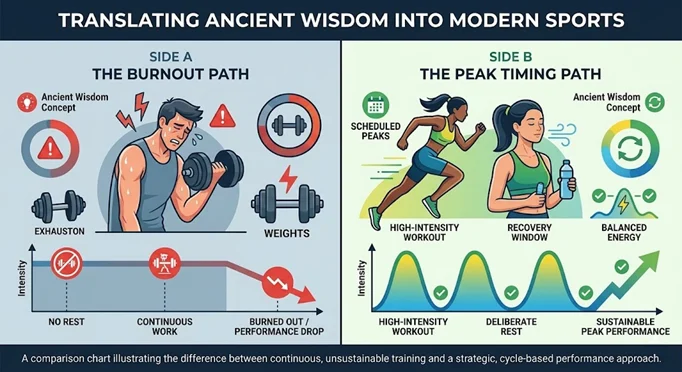
How does an athlete actually apply this? It begins with scheduling. If you look at the tournament calendar for a major sport like cricket or football, you can map your peak energy windows against the biggest matches of the year. If a major final aligns with a period of high clarity and energy, your focus shifts to peak preparation. If a lower-stakes game aligns with a period where your energy is naturally lower, you adjust your training to avoid over-exertion.
This isn’t about giving up control; it is about gaining it. When you understand the natural rhythm of your season, you stop fighting against your own biology. You stop feeling guilty about “slumps” because you understand they are just part of the cycle. Instead, you manage them with the same level of professional detail that you bring to your diet or your equipment.
Mental Mapping and Visualization
The most powerful tool for an athlete isn’t found in a gym—it is found in the mind. Once you have identified your peak windows using your personal data, spend time visualizing your success during those specific weeks. Your brain cannot distinguish between a deeply imagined event and a real one. By “practicing” your success in your mind while your energetic levels are naturally high, you are priming your nervous system to execute those same moves in reality.
The Value of External Insight
Success in sports has always been collaborative. You have coaches for your body and trainers for your strength. Adding a layer of energetic analysis is simply the next step in the evolution of athletic support. By understanding the “timing” component of your career, you elevate your game from mere athleticism to a disciplined, calculated pursuit of greatness.
Final Thoughts on Consistency
Consistency is the hallmark of a legend. It is not about winning every single time, but about showing up prepared every single time. By mapping your efforts against your natural rhythm, you ensure that you are never caught off guard. You learn to embrace the peaks, navigate the plateaus, and use the valleys for the essential work of recovery.
As you look toward your next tournament or professional goal, remember that the “winning streak” isn’t an accident. It is a structure. It is the result of aligning your preparation, your effort, and your timing. When these three elements converge, you are no longer just a player in the game—you become the master of it. Start tracking your cycles today, respect the rhythm of your own life, and watch as your consistency transforms into a career that truly stands the test of time.
Frequently Asked Questions
Can timing really influence sports performance?
Yes, high-level performance is often about rhythm. Aligning training and competition with your natural energetic peaks can significantly improve focus and output.
What is the best way to handle a slump in performance?
Instead of forcing harder work, view slumps as a natural part of the cycle. Use these periods for deliberate recovery, mental health, and physical maintenance.
How does visualization help an athlete succeed?
Mental mapping helps the brain recognize high-pressure scenarios as familiar territory, reducing stress and allowing for precise execution when it matters most.
Why is recovery considered part of athletic training?
Consistency requires sustainable energy. Dedicated recovery phases allow the body and mind to recharge, ensuring you are prepared for the next period of peak intensity.
