
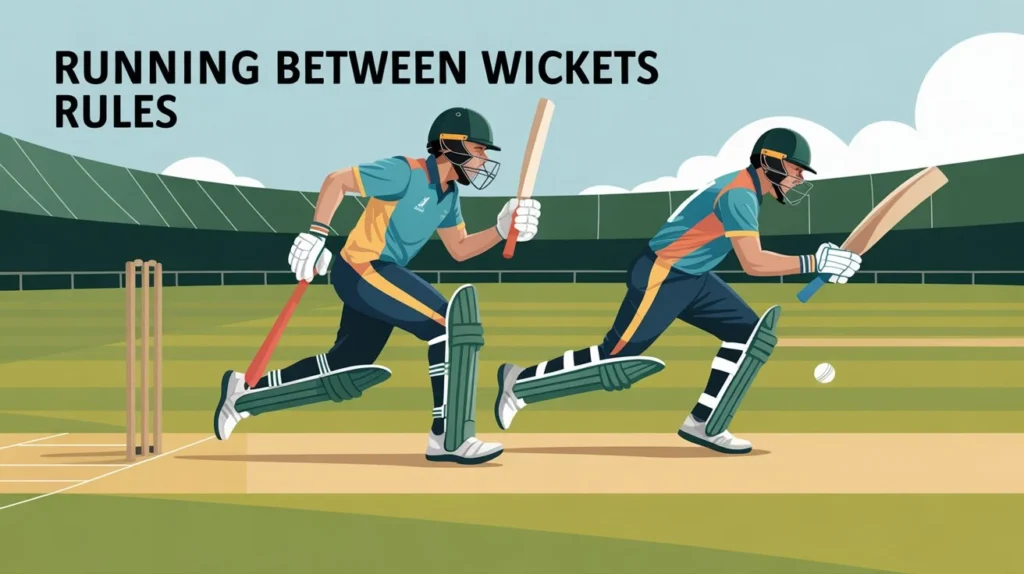
Running between wickets is one of the most vital skills in cricket. It may look simple — just sprinting from one end of the pitch to the other — but in reality, it’s a game-changing art. In 2026, with cricket becoming faster and more competitive across Test matches, One Day Internationals (ODIs), and T20s, running between wickets decides whether a team wins or falls short. Smart running can turn singles into doubles, doubles into boundaries, and apply constant pressure on the fielding side.
There is no official ICC record for the fastest runner between the wickets in cricket history, so no single player is officially crowned No. 1.
In cricket discussions and media, Virat Kohli, MS Dhoni, AB de Villiers, and Mohammad Kaif are among the names most often described as the fastest or best runners between the wickets, while Michael Bevan is also widely praised for this skill.
There is no official ICC record for the fastest runner between the wickets in cricket history, but players like Virat Kohli, MS Dhoni, AB de Villiers, Mohammad Kaif, and Michael Bevan are widely regarded among the best and quickest.
For fans, players, and budding cricketers, understanding running between wickets is crucial. It’s not just about speed but also communication, awareness, and tactics. In this guide, we’ll break down ICC rules, techniques, penalties, and format-specific insights so you can master the art of running between wickets.
What Does Running Between Wickets Mean?
- Running between wickets is when the two batters run from one crease to the other after hitting (or sometimes without hitting) the ball to score runs.
- Each successful run is counted when both batters make it safely to the opposite ends of the pitch.
- It requires quick reflexes, sharp calls, and great fitness.
Example:
If the striker hits the ball to mid-off and they both sprint to the other crease, that’s one run completed.
ICC Rules of Running Between Wickets
1. Law 18 – Scoring Runs
- Runs are scored when both batters safely reach the other end.
- If they cross each other mid-pitch but one batter is run out, the completed runs before the wicket is broken are still counted.
Case Example:
If two batters cross for a second run but one is run out before reaching, only 1 run is added.
2. Law 29 – Batsman’s Ground
- A batter must ground some part of the bat or body inside the crease.
- If not grounded and the stumps are broken, the batter is run out.
3. Law 30 – Run Out
- A batter is run out if the fielding side legally breaks the stumps before the batter reaches the crease while attempting a run.
- This makes communication between partners crucial.
4. Overthrows
- If the fielders throw the ball and it goes beyond them, batters can run extra runs.
- Runs scored = Runs completed + Runs in progress + Boundary (if the ball crosses rope).
Example:
If batters complete 2 runs, are attempting the 3rd, and an overthrow sends the ball to boundary, they get 2 + 1 + 4 = 7 runs total.
5. Short Runs (Law 18.5)
- If a batter does not ground their bat or foot inside the crease while turning for the next run, the umpire can declare it a short run.
- That incomplete run will not count.
Penalty Runs Related to Running Between Wickets
While running between wickets itself doesn’t usually lead to penalties, there are situations where penalty runs are awarded under ICC Laws:
- Obstructing the Field (Law 37):
If a batter deliberately changes their running path to block a throw, the batter is out, and sometimes penalty runs may apply. - Fielding Side Penalties:
If a fielder deliberately throws and the ball hits a helmet kept on the ground, the batting side is awarded 5 penalty runs. - Deliberate Short Runs:
If an umpire thinks the batters deliberately ran short to steal runs, penalty runs can be applied.
Techniques for Effective Running Between Wickets
- Quick Calls:
Use “Yes,” “No,” and “Wait” loudly and clearly. - Running in Straight Lines:
Always run in a direct path, not curved, to save time. - Sliding the Bat:
Extend and slide the bat inside the crease to avoid run outs. - Turn Fast:
Keep your body low and turn quickly for the second run. - Awareness of Fielders:
Always check the ball’s position before attempting risky runs.
Running Between Wickets – Comparison Table
| Aspect | T20 Cricket | One Day (ODI) Cricket | Test Cricket |
|---|---|---|---|
| Number of Runs Possible in One Shot | Usually 1–2 runs (due to field restrictions & shorter boundaries). | Typically 1–3 runs depending on ground size. | Often 2–4 runs possible on larger grounds. |
| Running Priority | Quick singles are vital; strike rotation is key. | Balance between singles and boundaries; running saves dot balls. | Long innings demand steady running; minimizing risks is important. |
| Risk Factor | High, as dot balls pressure batters into risky runs. | Moderate; depends on batting phase (powerplay vs. middle overs). | Lower early on; increases when chasing or setting targets. |
| Importance of Fitness | Very high—fast sprinting and sharp turns are crucial. | High—batters need consistent energy for 50 overs. | Extremely high—batters may run hundreds of runs across long innings. |
| Common Running Strategy | Target fielders with weaker arms; quick calling. | Rotate strike regularly; push for 2s in gaps. | Preserve energy with safe singles; exploit gaps for 3s and 4s. |
| Case Example | In T20s, batters often attempt quick singles off almost every ball to keep the scoreboard ticking. | In ODIs, batsmen like Virat Kohli are known for converting singles into 2s, maximizing pressure on fielders. | In Tests, Cheteshwar Pujara is famous for running tirelessly between wickets to build big scores. |
Common Mistakes While Running Between Wickets
- Miscommunication leading to both batters running to the same end.
- Watching the ball instead of focusing on the partner’s call.
- Slowing down before grounding the bat inside the crease.
- Attempting a second run when the ball is already in the fielder’s hand.
Running Between Wickets Across Formats
| Format | Strategy | Key Difference |
|---|---|---|
| Test Cricket | Take fewer risks; singles and twos matter over long innings. | Focus on building partnerships. |
| ODI Cricket | Rotate strike consistently; keep scoreboard moving. | Mix of singles, doubles, and boundaries. |
| T20 Cricket | Quick running is critical; every run counts. | Turning ones into twos can change the game. |
Case Study: MS Dhoni’s Running Between Wickets
MS Dhoni was known as the fastest runner between wickets in modern cricket. In a T20 against Australia, he turned singles into twos multiple times, keeping pressure on the bowlers and fielders, showing that running smartly is as valuable as hitting sixes.
FAQs and Extended Queries on Running Between Wickets
Q1: Is it important to use lightweight pads for quick running between wickets?
Yes, lightweight pads are highly recommended for quick running between wickets. Heavier pads can slow a batsman down and affect agility. Professional cricketers often choose slim, lightweight designs to balance protection with speed.
Q2: Who is better in running between wickets—Virat Kohli or MS Dhoni?
Both Virat Kohli and MS Dhoni are legends when it comes to running between wickets. Dhoni was known for his explosive sprinting and finishing, while Kohli is admired for his consistency, speed, and sharp calls. Statistically, Kohli has accumulated more runs through singles and doubles, but Dhoni’s lightning sprints and smart judgment made him exceptional too.
Q3: What is the best running between wickets in cricket?
The best running between wickets usually comes from pairs who trust each other. Famous examples include Sachin Tendulkar and Sourav Ganguly, MS Dhoni and Virat Kohli, and Rohit Sharma and Shikhar Dhawan. Their coordination, quick judgment, and speed made their running stand out.
Q4: Was MS Dhoni the fastest in running between wickets?
Yes, Dhoni was regarded as one of the fastest runners between wickets. His explosive burst over the first 22 yards often turned quick singles into easy twos. Even in his late career, his fitness and sprint speed were admired worldwide.
Q5: Who has scored the most runs by running between wickets in ODIs?
Virat Kohli has scored a massive chunk of his ODI runs through running between wickets. He is known for converting ones into twos and maintaining pressure on the field. While exact numbers change with ongoing matches, Kohli consistently leads this category.
Q6: What is the maximum runs that can be scored by running between wickets?
Theoretically, six runs can be taken by running between wickets without hitting a boundary. However, in international cricket, 5 runs or sometimes 6 have been achieved due to overthrows or large grounds.
Q7: What is the record for most runs by running between wickets in one ball?
The most runs taken by running between wickets on a single ball is 5 runs, achieved through overthrows. Without extras, usually 3 or 4 runs is the maximum possible in standard play.
Q8: Are there drills to improve running between wickets?
Yes, cricket coaches emphasize drills such as:
- Sprinting 22 yards repeatedly with quick turns
- Calling practice with partners (“yes,” “no,” “wait”)
- Fitness sessions to improve acceleration
- Short shuttle runs for stamina and speed
Q9: Can I find a cricket running between wickets tutorial video?
Yes, many cricket academies and channels provide running between wickets tutorial videos. These explain body posture, calling, judgment, and fitness routines. Beginners and advanced players can both benefit.
Q10: What are the cricket rules for running between wickets?
- Both batsmen must reach the crease line to complete a run.
- The bat must touch the ground behind the crease.
- If a batsman doesn’t ground the bat or body, the run won’t count if a run-out happens.
- Overthrows add to the runs scored.
Q11: What is “Cricket 22 running between wickets”?
Cricket 22 (the video game) has a running between wickets feature where players can practice calling and sprint timing virtually. It helps gamers simulate real cricket running situations.
Q12: How fast is Virat Kohli in running between wickets?
Virat Kohli’s running between wickets speed is considered world-class. He reacts quickly, accelerates fast, and maintains fitness levels that allow him to consistently push for twos and threes.
Q13: What does Dhoni’s running between wickets show us?
Dhoni’s running between wickets was a perfect mix of raw speed and cricketing brain. His famous finishes often came from sneaking twos when others thought only a single was possible.
Q14: What makes Kohli’s running between wickets unique?
Kohli’s specialty is his judgment and fitness. He knows when to push for an extra run and rarely misjudges, making him one of the most efficient runners in cricket history.
Conclusion
Running between wickets is more than just sprinting; it’s about timing, trust, and tactics. From following ICC rules to avoiding run outs and using quick communication, mastering this skill can turn average scores into match-winning ones. In Test matches, it builds partnerships, in ODIs it rotates strike, and in T20s it can win matches in tight situations.
For cricketers and fans alike, remembering that “every run counts” makes running between wickets one of the most exciting parts of the game.

Daniel Foster is a senior sports writer specializing in cricket laws and international playing conditions. With extensive experience covering ICC rules, domestic leagues, and tournament regulations, he delivers detailed yet easy-to-read explanations. His work is trusted by readers looking for accurate and up-to-date sports rules.