
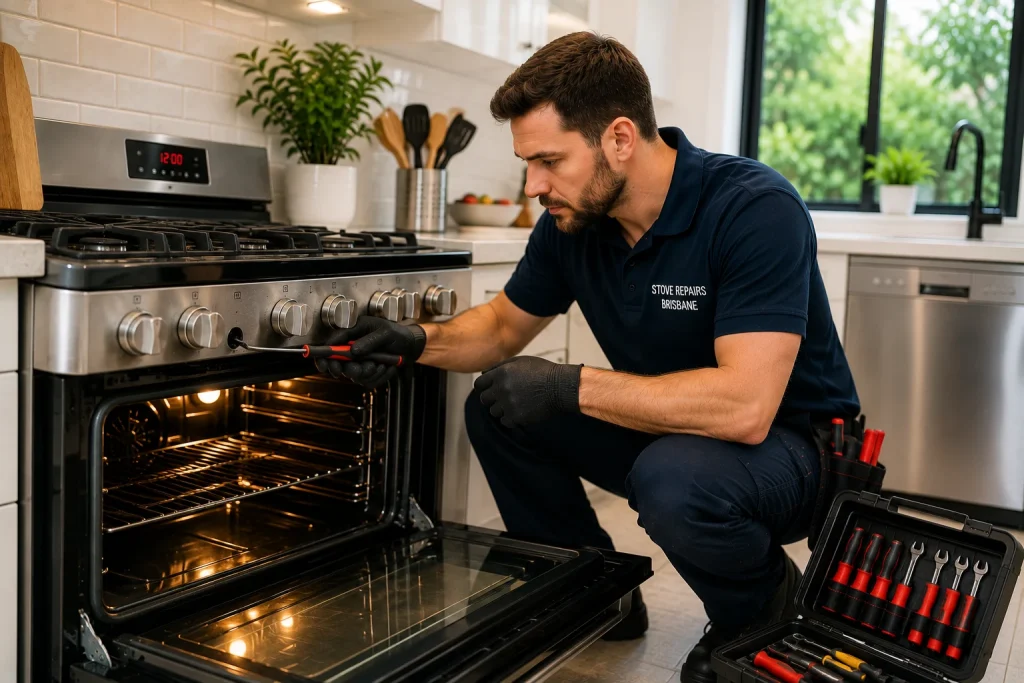
A stove is one of the most important appliances in a modern kitchen. Whether a household prepares quick breakfasts, family dinners, or larger weekend meals, reliable burners make everyday cooking significantly easier. When a stove suddenly stops heating, a burner refuses to ignite, or temperature control becomes inconsistent, even simple meal preparation can become difficult. Professional Stove Repairs Brisbane can help homeowners identify the cause of these problems and determine the most practical way to restore normal operation.
Both gas and electric stoves contain components that can wear, become dirty, or develop faults over time. Gas models depend on burners, ignition components, controls, and a reliable fuel supply, while electric stoves use heating elements, switches, electrical connections, and control systems. Modern appliances may also incorporate electronic controls and safety features. Because different faults can produce similar symptoms, accurate Stove Repair is important when basic cleaning and manufacturer-recommended troubleshooting do not resolve the problem.
Why Stove Problems Should Be Addressed Promptly
Stove problems can begin with relatively small changes in performance. A gas burner may take slightly longer to ignite, an electric element may heat intermittently, or a control knob may become less responsive. Because other burners continue working, homeowners sometimes adapt their cooking habits instead of addressing the underlying issue.
Ignoring a developing problem is not always sensible. A burner that works intermittently may have a connection, element, ignition, or control problem that eventually leads to complete failure. Electric burners, for example, can stop heating because of faulty elements, worn receptacles, damaged switches, or wiring problems.
Gas stoves can develop a different set of symptoms. Repeated clicking without ignition, slow ignition, or an uneven flame may indicate that a burner is dirty, wet, incorrectly positioned, or affected by an ignition-related fault. GE Appliances notes that moisture, clogged burner openings, and incorrectly positioned burner heads or caps can contribute to ignition problems.
Changes in normal stove behaviour therefore deserve attention. Early assessment can provide homeowners with a clearer understanding of the problem before the appliance becomes more difficult or potentially unsafe to use.
Common Gas Stove Problems
Gas stoves are popular because they provide immediate heat and allow users to adjust the flame quickly. However, the ignition and burner systems require appropriate care to work reliably.
One of the most familiar problems is a burner that clicks but does not ignite. Food spills and cleaning residue can block small openings in the burner head, while moisture left after cleaning can temporarily interfere with ignition. Burner caps that are not correctly positioned can also prevent proper lighting.
Another issue is a burner that fails to produce an even flame. When burner openings become partially obstructed, gas may not flow evenly around the burner. Cooking performance can then become inconsistent, particularly when trying to maintain low or moderate heat.
Persistent clicking after the burner has ignited can also indicate a problem. Moisture or contamination around the ignition system is one possible explanation, although a faulty ignition component may require technical attention if cleaning and drying do not resolve the issue.
Regular cleaning can reduce some of these problems, but homeowners should follow the manufacturer’s instructions. Burner heads and caps should be correctly positioned after cleaning and completely dry before normal use.
If ignition problems continue despite basic maintenance, professional Stove Repairs Brisbane can help determine whether the fault involves the burner, ignition system, controls, or another component.
Common Problems With Electric Stoves
Electric stoves operate differently but can develop their own range of problems. Traditional coil models use removable heating elements, while smooth-top appliances generally contain radiant elements beneath a glass or ceramic surface. More advanced models may use electronic controls.
A burner that does not heat is one of the most obvious faults. Possible causes include a failed heating element, loose connection, damaged receptacle, faulty control switch, or internal wiring problem.
Intermittent heating can be equally frustrating. A burner may work normally on one occasion and fail the next, or it may only operate at certain settings. These symptoms can indicate problems with electrical contacts or controls rather than the element itself.
Another warning sign is a burner that becomes extremely hot regardless of the selected setting. Stove controls are designed to regulate the amount of power delivered to the heating element. When temperature adjustment no longer behaves normally, the control system may require inspection.
Visible damage should also receive attention. Cracks in a smooth glass cooktop, burned electrical connections, or heavily damaged elements should not simply be ignored because the appliance continues operating.
Professional Stove Repair can help distinguish between a straightforward element problem and a fault involving electrical connections, switches, or electronic controls.
When Uneven Heating Affects Everyday Cooking
A stove does not have to stop working completely to become inconvenient. Uneven or unpredictable heating can make everyday cooking difficult because recipes depend on consistent temperature control.
With electric stoves, an ageing element may fail to heat evenly or may operate intermittently. Loose or worn electrical connections can create similar problems. The cookware itself can also affect results, particularly when the base does not sit properly on the cooking surface. Manufacturer troubleshooting guidance commonly recommends using cookware with a flat base that closely matches the burner diameter for better performance.
Gas stoves can experience uneven heating when burner ports become blocked or the burner cap is incorrectly positioned. Instead of producing a consistent ring of flame, one area may burn differently from another.
Before assuming that a major repair is required, homeowners can check whether cookware is appropriate and whether accessible burner components are clean and correctly positioned. If the problem remains, further diagnosis may be necessary.
Arranging Stove Repairs Brisbane when heating becomes noticeably inconsistent can help restore more predictable cooking and prevent homeowners from continually adjusting recipes to compensate for a malfunctioning appliance.
Why Accurate Stove Diagnosis Matters
Several different faults can create almost identical symptoms. This is one of the main reasons proper diagnosis is important before components are replaced.
Consider an electric burner that does not heat. The element itself might have failed, but the problem could instead involve the receptacle, switch, connection, or wiring. Troubleshooting guidance for electric stoves identifies each of these as possible causes of a non-working burner.
The same principle applies to gas burners. Clicking without ignition could be caused by moisture, food debris, burner positioning, or an ignition fault. Simply replacing the igniter without checking these other possibilities could result in unnecessary expense.
A professional Stove Repair process should therefore consider exactly when the problem occurs and which functions are affected. If only one burner has failed while the others operate normally, that information can help narrow the diagnosis. If the entire appliance has stopped operating, a different set of causes may need to be investigated.
Accurate diagnosis helps homeowners understand both the fault and the likely cost of restoring normal operation before making a repair decision.
Safety Should Always Come First
Stoves combine high temperatures with either significant electrical power or gas, so safety needs to remain a priority whenever a fault occurs.
Basic cleaning and simple checks described in the manufacturer’s manual may be suitable for homeowners, but internal electrical or gas repairs require greater care. Electrical troubleshooting guidance recommends disconnecting power before accessing components because stove circuits can present a serious shock hazard.
Gas-related problems require particular caution. If there is a suspected gas leak or persistent gas smell, the issue should not be treated as an ordinary burner-cleaning problem. Professional attention should be sought rather than attempting complicated internal work without suitable qualifications.
Burning smells, sparking, repeated circuit breaker trips, scorched connections, or controls that behave unpredictably are also reasons to stop normal use until the appliance has been assessed.
The goal of professional Stove Repairs Brisbane is not simply to make a burner heat again. The repair should address the underlying fault while maintaining the safe operation of the appliance.
Regular Cleaning Can Reduce Avoidable Stove Problems
Cooking naturally produces grease, crumbs, sauces, oils, and other residue. Over time, this material can accumulate around burners and cooking surfaces. Regular cleaning can therefore play an important role in stove maintenance.
Gas burner caps and heads should be kept clean according to the appliance manufacturer’s instructions. Spillovers can block flame ports and interfere with ignition, while moisture remaining after cleaning can cause temporary clicking or difficulty lighting.
Electric cooktops also benefit from routine cleaning. Food residue should not be allowed to accumulate around heating areas, controls, or removable components. Smooth-top models require appropriate cleaning products and techniques to avoid damaging the cooking surface.
Control knobs should be kept clean and monitored for damage. If a knob becomes loose, cracked, or difficult to operate, it may become harder to select or confirm the correct setting.
Homeowners should also avoid unnecessarily rough treatment of the appliance. Heavy cookware should be placed carefully on glass surfaces, and spills should be cleaned according to manufacturer recommendations.
These habits cannot prevent every component failure, but they can reduce avoidable problems and make genuine technical faults easier to identify.
Deciding Between Stove Repair and Replacement
When a stove develops a significant problem, homeowners may wonder whether repairing it is worthwhile. The answer depends on the age and condition of the appliance, the type of fault, previous repair history, and the cost of replacement.
A relatively modern stove with one failed component may still have considerable useful life remaining. Replacing an element, switch, ignition component, or another repairable part may therefore be more practical than purchasing a completely new appliance.
Older stoves require a broader assessment. If an appliance has experienced repeated major failures or replacement components are becoming difficult to obtain, continued repairs may eventually become less economical.
The physical condition of the stove should also be considered. An appliance with significant structural damage may present a different situation from one that is clean, well maintained, and experiencing its first technical fault.
Professional Stove Repair can provide the information needed to compare these options. Once homeowners know what has actually failed and what is required to correct it, they can make a more informed decision about repair or replacement.
Keeping Brisbane Kitchens Cooking Reliably
A dependable stove makes everyday cooking simpler, safer, and more predictable. Problems such as slow ignition, repeated clicking, failed electric elements, inconsistent heating, damaged controls, or unusual electrical behaviour can interfere with that reliability and should not be ignored indefinitely.
Routine cleaning and responsible operation can prevent some avoidable issues, particularly those caused by food debris, moisture, or poorly positioned burner components. When cleaning and basic troubleshooting do not resolve the problem, professional Stove Repairs Brisbane can help identify the actual cause.
Timely Stove Repair can also extend the useful life of an appliance that remains in otherwise good condition. Replacement will sometimes be the better choice for ageing or extensively damaged equipment, but a single malfunction does not automatically mean a new stove is required.
By recognising warning signs, keeping cooking surfaces and burners properly maintained, and seeking professional assistance for technical problems, Brisbane homeowners can protect an appliance that plays an essential role in daily life. Reliable stove performance ultimately means fewer interruptions in the kitchen and greater confidence whenever it is time to prepare the next meal.
