
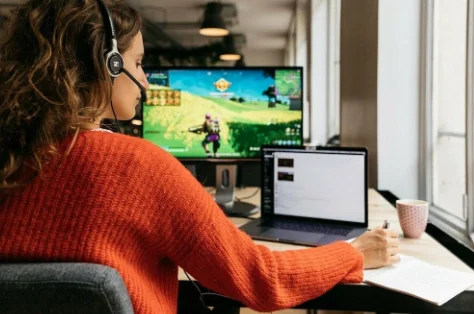
For many years, people have treated online gaming and productivity as if they belong on opposite sides of the spectrum. If someone spends time playing games, they are often assumed to be avoiding responsibilities. If someone is highly productive, many believe they must have given up gaming entirely. Yet reality paints a much more interesting picture. Around the world, millions of students, entrepreneurs, creative professionals, engineers, and business leaders continue to enjoy online games while building meaningful careers and fulfilling personal lives. Their success isn’t built on choosing one over the other. Instead, it comes from understanding how to balance both.
The relationship between gaming and productivity is not determined by the number of hours spent in front of a screen but by the intention behind every gaming session. When online games become a way to recharge after completing important responsibilities, they often improve motivation instead of reducing it. On the other hand, when gaming becomes a method of delaying work, avoiding challenges, or ignoring priorities, even the most enjoyable games can slowly become sources of stress rather than relaxation. The difference lies not in the game itself but in the habits surrounding it.
From the perspective of a university student, balancing gaming and life often begins with learning how to prioritize. Academic schedules are filled with lectures, assignments, research projects, and examinations that require sustained concentration. Many students discover that setting clear goals before opening a game creates a healthier routine. Finishing an assignment before joining friends online makes every gaming session feel more rewarding because there is no lingering pressure from unfinished work. Instead of playing with guilt in the background, they play with a clear mind, knowing that relaxation has been earned rather than borrowed from tomorrow’s responsibilities.
Working professionals often experience a similar transformation. After spending an entire day solving complex problems, attending meetings, answering emails, and making countless decisions, mental fatigue naturally begins to build. Simply doing nothing does not always restore focus. Many professionals find that online games provide a refreshing shift in attention by replacing work-related thinking with strategic challenges, cooperative teamwork, or immersive storytelling. Rather than draining energy, a well-timed gaming session can help clear the mind and create the mental separation needed before returning to personal responsibilities or preparing for another productive day.
Interestingly, one of the greatest lessons gaming teaches has nothing to do with entertainment at all. Every successful player understands that progress requires planning. Whether managing limited resources, completing objectives in the correct order, or adapting to unexpected situations, games constantly reward thoughtful decision-making. These same habits quietly transfer into everyday life. Organizing schedules, setting priorities, solving problems under pressure, and making efficient use of available time become familiar patterns because they have been practiced repeatedly inside virtual worlds.
Competitive gamers perhaps understand balance better than most people imagine. From the outside, their routines may appear centered entirely around games, but behind every high-level performance lies a disciplined lifestyle. Professional players know that reaction speed, concentration, and decision-making depend on proper sleep, healthy nutrition, physical activity, and regular breaks. Endless practice without recovery often leads to slower reactions and poorer performance. For that reason, many experienced competitors carefully structure their daily routines, proving that taking care of real life actually improves success inside the game rather than limiting it.
Balance also changes the emotional experience of gaming. When responsibilities are constantly postponed in favor of entertainment, gaming gradually becomes associated with anxiety. Every notification about unfinished work interrupts the enjoyment of playing, making it difficult to fully relax. By contrast, people who complete their priorities first experience gaming as a genuine reward. Every achievement inside the link slot game feels lighter, conversations with teammates become more enjoyable, and the entire experience contributes positively to emotional well-being because it exists alongside responsibility rather than replacing it.
Another perspective comes from the importance of maintaining meaningful relationships. Online games have evolved far beyond simple entertainment. Today they serve as meeting places where friends separated by cities, countries, or even continents reconnect after busy weeks. Multiplayer sessions become opportunities to celebrate achievements, share stories, and laugh together despite physical distance. For many adults with demanding careers and limited free time, gaming has become one of the easiest ways to preserve friendships that might otherwise fade because of busy schedules. In this sense, gaming strengthens social connections instead of weakening them.
Families are beginning to recognize this benefit as well. Parents who choose to understand the games their children enjoy often discover entirely new ways to spend quality time together. Cooperative adventures, puzzle-solving experiences, and friendly competitions encourage communication without forcing it. Conversations emerge naturally while working toward shared objectives, allowing family members to connect through teamwork and shared accomplishments. Gaming becomes less about screen time and more about creating memorable experiences together.
From a psychological perspective, balance is essential because the human brain was never designed for continuous productivity. Mental performance naturally declines after extended periods of concentration, making recovery an important part of long-term success. Online games provide a unique form of active relaxation by engaging different cognitive processes than those used during work or study. Instead of thinking about deadlines or responsibilities, players shift their attention toward exploration, creativity, strategy, and problem-solving in entirely different contexts. This mental transition often leaves people feeling refreshed and more capable of returning to demanding tasks with renewed focus.
One habit shared by productive gamers is the ability to create healthy boundaries. Rather than allowing gaming to fill every available moment, they intentionally decide when to play and when to stop. Some choose to complete their most important tasks before logging in, while others establish fixed gaming hours that fit comfortably within their daily schedules. These simple boundaries prevent gaming from interfering with sleep, work, exercise, or personal relationships. More importantly, they preserve the excitement of gaming itself. When every session has a clear beginning and end, mahjong ways players continue looking forward to the experience instead of feeling overwhelmed by it.
Another valuable lesson comes from understanding that progress in both games and life happens gradually. Many modern online games reward consistency rather than shortcuts. Players improve through repeated practice, careful observation, and continuous learning rather than instant mastery. The same principle applies outside gaming. Building a successful career, learning a new skill, improving physical health, or developing meaningful relationships all require patience and persistence. Gamers who embrace gradual improvement inside virtual worlds often carry that mindset into everyday life, becoming more resilient when faced with setbacks or slow progress.
Technology continues to provide endless opportunities for entertainment, making time management more important than ever. Social media, streaming platforms, mobile applications, and online games all compete for attention throughout the day. The people who remain productive are not necessarily those who avoid entertainment altogether. Instead, they are the ones who consciously decide how every activity fits within their priorities. Gaming becomes one meaningful part of a balanced lifestyle rather than something that consumes every free moment.
Ultimately, balancing gaming and life is not about strict schedules or giving up the hobbies that bring happiness. It is about making intentional choices that allow both ambition and enjoyment to exist together. Productivity becomes more sustainable when people allow themselves opportunities to recharge, while leisure becomes more fulfilling when responsibilities remain under control. Neither success nor happiness requires sacrificing the other.
At its best, online gaming is far more than a source of entertainment. It encourages strategic thinking, strengthens friendships, improves resilience, and provides valuable moments of mental recovery. When approached with healthy habits and thoughtful time management, gaming does not pull people away from their goals it helps them return to those goals with greater focus, renewed energy, and a more positive mindset. The ultimate balance is not found in choosing between work and play, but in recognizing that both have an important place in building a rewarding, productive, and enjoyable life.
