
Cricket keeps evolving — from powerplays to DRS to boundary fielding restrictions — and now, the wide-ball rule has been refined again in 2025.
The International Cricket Council (ICC) recently announced a trial change to how wides are judged in limited-overs formats, aiming to reduce controversial calls and make decisions more consistent.
In this guide, we’ll break down the new wide ball rule, explain how it differs from the old one, explore its impact on bowlers and batters, and discuss how leagues like the IPL plan to use technology to make these calls fairer.
⚖️ What Was the Old Wide Ball Rule in Cricket?
Before 2025, the wide-ball rule in cricket followed a relatively simple principle:
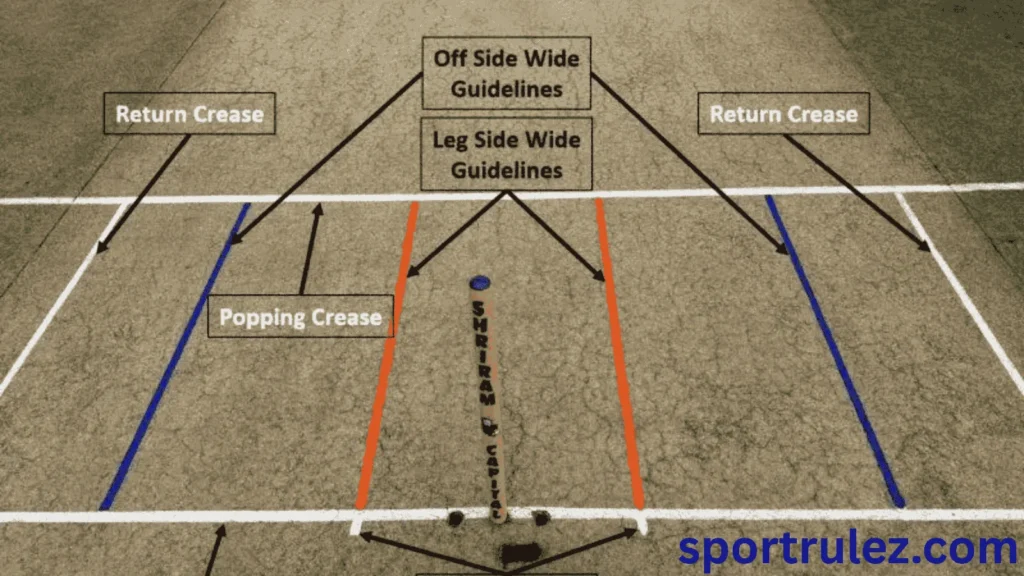
- A ball is called a wide if it’s out of the batter’s reach when the batter is in their normal batting stance and doesn’t make contact with the ball.
- For deliveries outside the off-stump, umpires used visual markers or “wide guidelines” painted on the pitch.
- On the leg-side, any ball passing behind the batter’s body — outside their leg stump — was almost always deemed a wide unless it touched the pad, bat, or glove.
However, there was one growing issue — batter movement.
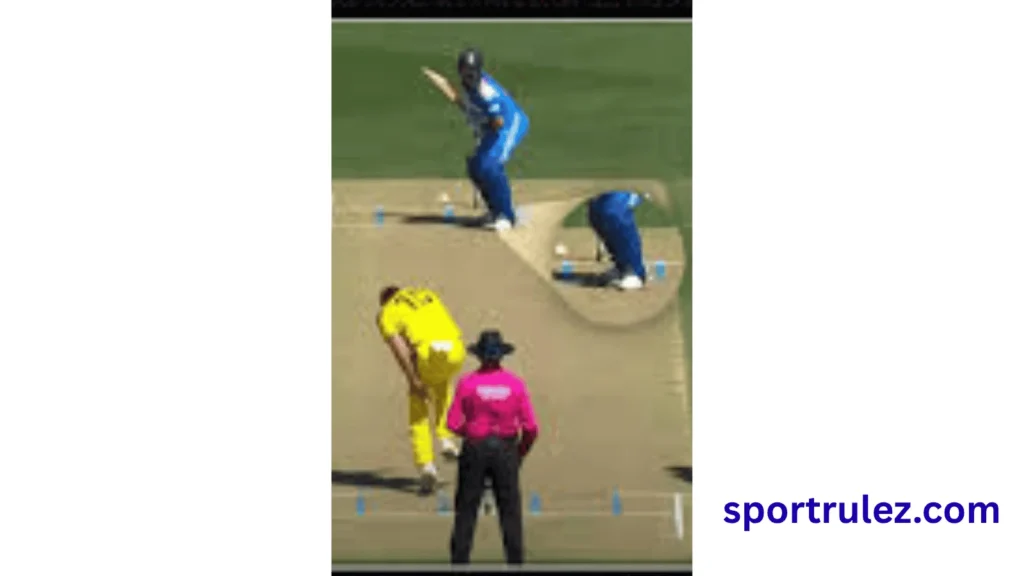
Modern batters often shuffle across the crease, especially in T20 cricket, to scoop, reverse, or lap the ball. This caused confusion for umpires:
- If a batter moved far across the stumps and the ball was delivered outside off, was it still a wide?
- Should the bowler be penalized even though the ball would’ve been legitimate if the batter had stayed still?
These inconsistencies created heated moments, especially in IPL and international T20 matches, where every ball counts.
🆕 The New Wide Ball Rule (2025 ICC Update)
The ICC’s new wide ball rule, introduced as a trial in 2025, changes how umpires judge wides — focusing more on the batter’s original stance rather than their movement.
Here’s how it works:
- The position of the batter’s legs at the moment of delivery is now the key reference point for judging a wide.
- If the batter moves across the stumps after the bowler releases the ball, the umpire will not adjust the decision based on the new position.
- On the leg-side, a ball passing between the leg stump and the protected area marker (now extended to the popping crease) is not automatically a wide — the umpire must consider whether it was within fair reach based on the batter’s original stance.
🔍 Comparison: Old Rule vs New Rule
| Aspect | Old Rule | New Rule (2025) |
|---|---|---|
| Reference Point | Batter’s final position after moving | Batter’s original stance at delivery |
| Movement Across the Crease | Often caused wides unfairly | No longer penalizes bowlers for late movement |
| Leg-Side Deliveries | Anything behind the batter’s leg stump was wide | Judged by protected area marker and batter’s original position |
| Technology Use | Manual umpire decision | Leagues like IPL to use Hawk-Eye tracking for consistency |
| Umpire Markers | Only off-side guidelines | Extended protected area line to popping crease for better visibility |
| Impact | Favoured batters | Brings balance back to bowlers |
🎯 Why the Rule Was Changed
The main goal behind this update is fairness and clarity.
Cricket’s fast-paced T20 era demands precision. When a batter moves dramatically across the stumps, it changes the visual judgment for the umpire. The new rule aims to eliminate ambiguity, ensuring the bowler isn’t punished for something beyond their control.
Key reasons for the change include:
- Reducing controversy caused by batter movement
- Supporting bowlers who deliver legitimate balls
- Improving umpire accuracy with clearer guidelines and technology
- Aligning with modern batting innovations where players constantly move pre-delivery
🧠 Example Scenarios
Example 1: Batter Moves Across
- Old Rule: The batter shuffles toward off-stump. The ball passes wide of the original off-side guideline → Called a wide.
- New Rule: The same delivery will not be called a wide because the batter’s legs were originally within the legal zone.
Example 2: Leg-Side Delivery
- Old Rule: Any delivery missing the leg stump by inches → Automatic wide.
- New Rule: If the ball passes between the leg stump and protected area marker, it may still be legal — depending on reach from the batter’s initial stance.
Example 3: IPL Technology
- New in 2025: The IPL will use Hawk-Eye data to assess ball trajectory against the batter’s recorded height and stance, adding an objective standard to wide and height calls.
🏏 Impact on the Game
For Bowlers
- More breathing room — especially for yorkers and slower balls that tail away.
- Fewer unfair wides when batters premeditate shots and move late.
- Encourages strategic bowling on off-stump without fear of marginal wides.
For Batters
- Forces batters to be smarter with movement — moving early might expose them to legal deliveries they can’t reach.
- Reduces the ability to exploit umpire uncertainty.
For Umpires
- Simplified decisions thanks to the protected-area extension and clearer rules.
- Better consistency with Hawk-Eye validation in major tournaments.
🧩 Challenges and Criticism
Despite the positive reception, a few potential issues exist:
- Subjectivity still exists in low-level matches without technology.
- Determining the exact moment of delivery (when the front foot lands) requires sharp observation.
- Players and fans might initially find it confusing during the transition period.
However, as with DRS or no-ball tech, these challenges usually fade once the rule becomes standard practice.
🔮 Future of Wide Calls in Cricket
The ICC has made this a 6-month trial, after which data from international and domestic matches will be reviewed.
If successful, the rule could be made permanent for ODIs, T20Is, and franchise leagues worldwide by late 2025 or 2026.
With technology integration becoming standard — especially in tournaments like IPL, BBL, and The Hundred — we can expect fewer wide controversies and more accurate outcomes.
💡 Tips for Understanding Wide Calls
- Always watch where the batter’s legs are positioned at delivery, not where they end up.
- Remember: a wide is judged by reach and fairness, not by where the batter runs.
- The protected area line now plays a key role on the leg-side.
- Expect more technology-assisted wide reviews in televised matches.
🏁 Conclusion: A Fairer Future for Bowlers and Batters
The new wide ball rule (2025) is one of cricket’s smartest updates in recent years.
It reflects the modern balance between bat and ball, ensuring that bowlers aren’t punished for batters’ creative footwork.
As the game grows faster and more dynamic, fair play and precision are vital — and this rule is a step toward both.
While the trial period will reveal its long-term success, one thing is clear: the ICC wants cricket’s rules to keep pace with innovation on the field.

Isabella Brooks is a sports content writer with a strong interest in cricket rules and match regulations. She simplifies technical laws, umpiring decisions, and gameplay conditions into engaging explanations. Her writing helps casual fans follow matches with confidence and clarity.