
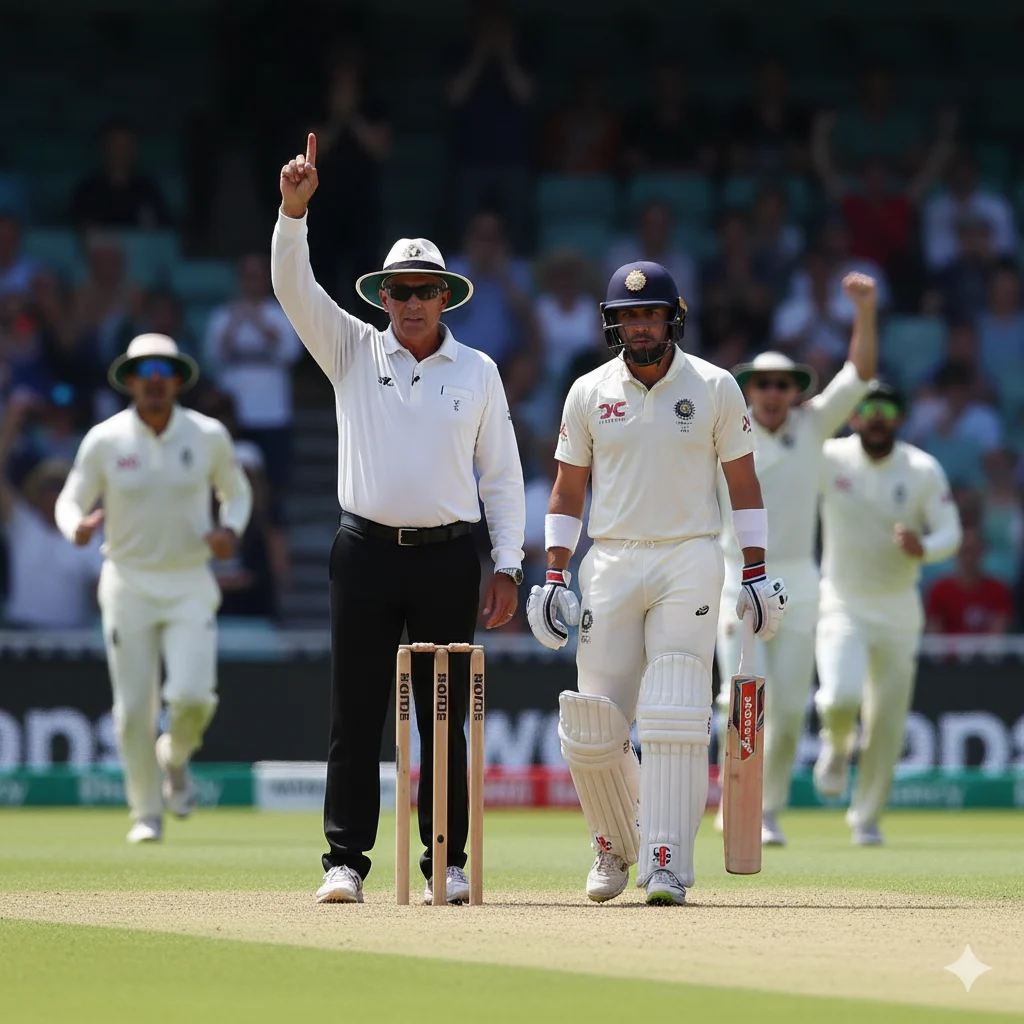
Among all cricket dismissals, LBW (Leg Before Wicket) is arguably the most debated and technical. It tests the umpire’s judgment, the batter’s footwork, and modern technology’s precision.
LBW decisions can change the course of a match, which is why the International Cricket Council (ICC) keeps refining its interpretation to ensure fairness.
In this complete guide, we’ll explain the LBW rule, its history, the decision-making process, technology use, common scenarios, and penalties — aligned with 2025 ICC laws.
🕰️ The History of LBW in Cricket
The LBW rule has one of the oldest and most fascinating histories in cricket. It evolved as batters began using their legs to unfairly block balls that would otherwise hit the stumps.
⚔️ Origins (18th Century Cricket)
- The first mention of the LBW rule dates back to 1774, when it was included in the official Laws of Cricket written by the Marylebone Cricket Club (MCC) in England.
- Back then, bats were curved and resembled hockey sticks, so players often blocked the ball with their legs instead of using the bat.
- To maintain fairness, the MCC introduced a simple rule: “If the ball pitched straight and would have hit the wicket, but was stopped by the batsman’s leg, he shall be out.”
⚖️ Evolution Through the 19th and 20th Centuries
- The rule gradually became more specific as batting styles changed.
- In 1839, the condition was added that the ball must “pitch straight.”
- By 1935, the law evolved further, stating that the ball must pitch “in line with the stumps.”
- 1972 saw one of the biggest reforms — the law allowed LBW if the ball pitched outside off stump, provided the batter did not attempt a shot.
- This addition stopped players from “padding away” balls intentionally without playing them.
🏏 Famous Early LBW Decisions
While exact records from early cricket are scarce, one of the earliest documented LBW dismissals occurred in the late 18th century during an English county match, though the specific player’s name was never officially recorded.
However, by the mid-1800s, the LBW rule was firmly part of Test cricket.
The first recorded LBW in a Test match came in 1877, in the very first official Test match between England and Australia at the MCG.
- The batter dismissed LBW was Nat Thomson of Australia, bowled by Alfred Shaw of England.
- This became the first-ever LBW in Test cricket history — a moment that defined how future cricket would be played.
🧠 Introduction of Technology: The Birth of DRS
The Decision Review System (DRS) was developed to minimize human error and increase fairness in LBW and edge decisions.
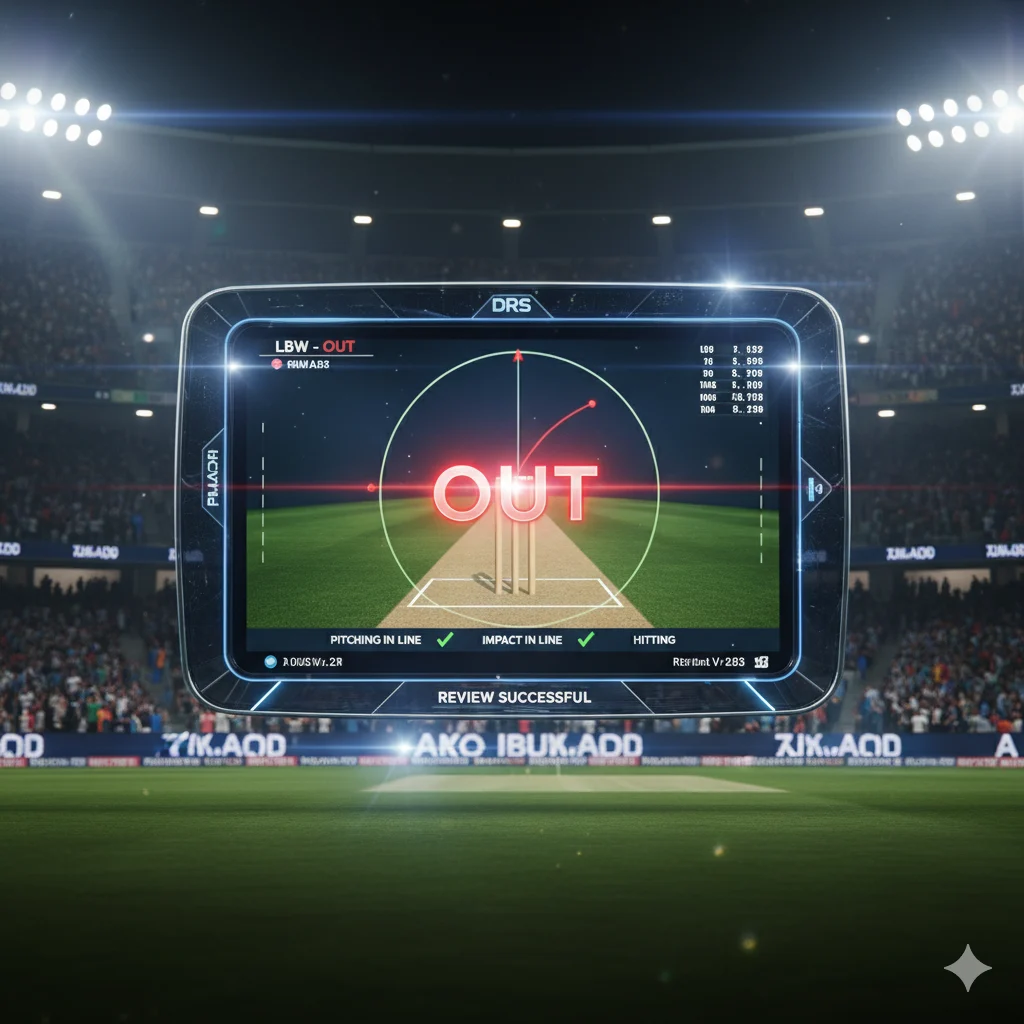
📅 Timeline of DRS Development:
| Year | Event |
|---|---|
| 2001–2002 | Early trials of Hawk-Eye technology began in broadcasting. |
| 2008 | First official DRS use in a Test match: India vs Sri Lanka (Colombo). |
| First Review Ever Taken: Indian batsman Virender Sehwag became the first player in cricket history to request a DRS review. | |
| 2009 | ICC formally approved DRS for international cricket. |
| 2011 World Cup | DRS introduced in ICC events for the first time. |
| 2016 onwards | Technology improved with UltraEdge and ball-tracking accuracy up to 99.3%. |
| 2023–2025 | DRS expanded to all formats — Tests, ODIs, and T20Is, including women’s and franchise cricket. |
🛰️ How DRS Revolutionized LBW Decisions
Before DRS, LBW decisions relied entirely on the on-field umpire’s judgment — leading to many controversial calls.
The introduction of Hawk-Eye, UltraEdge, and impact mapping has made LBW rulings nearly error-free today.
- The “Umpire’s Call” concept was introduced to retain balance between technology and umpire authority.
- As of 2025, ICC continues refining tracking accuracy and camera calibration to enhance consistency worldwide.
🧩 Fun Fact:
The first DRS-reviewed LBW that resulted in an overturned decision was Tillakaratne Dilshan (Sri Lanka) against India in that 2008 series — marking the beginning of cricket’s technological revolution.
🏁 Summary of LBW Evolution
| Era | Change |
|---|---|
| 1774 | LBW rule introduced by MCC. |
| 1839 | Condition added: ball must pitch straight. |
| 1935 | Refined to require pitching in line with stumps. |
| 1972 | “No shot offered” clause added. |
| 2008 | DRS introduced; LBW enters tech era. |
| 2025 | Ball-tracking and umpire call balance perfected. |
⚖️ What Does LBW Mean?
LBW stands for Leg Before Wicket — a mode of dismissal where the batter is out if the ball would have hit the stumps but is stopped by the batter’s leg or pad instead of the bat.
In simple terms:
“If your leg blocks the ball from hitting the stumps — and it meets all rule conditions — you’re out LBW.”
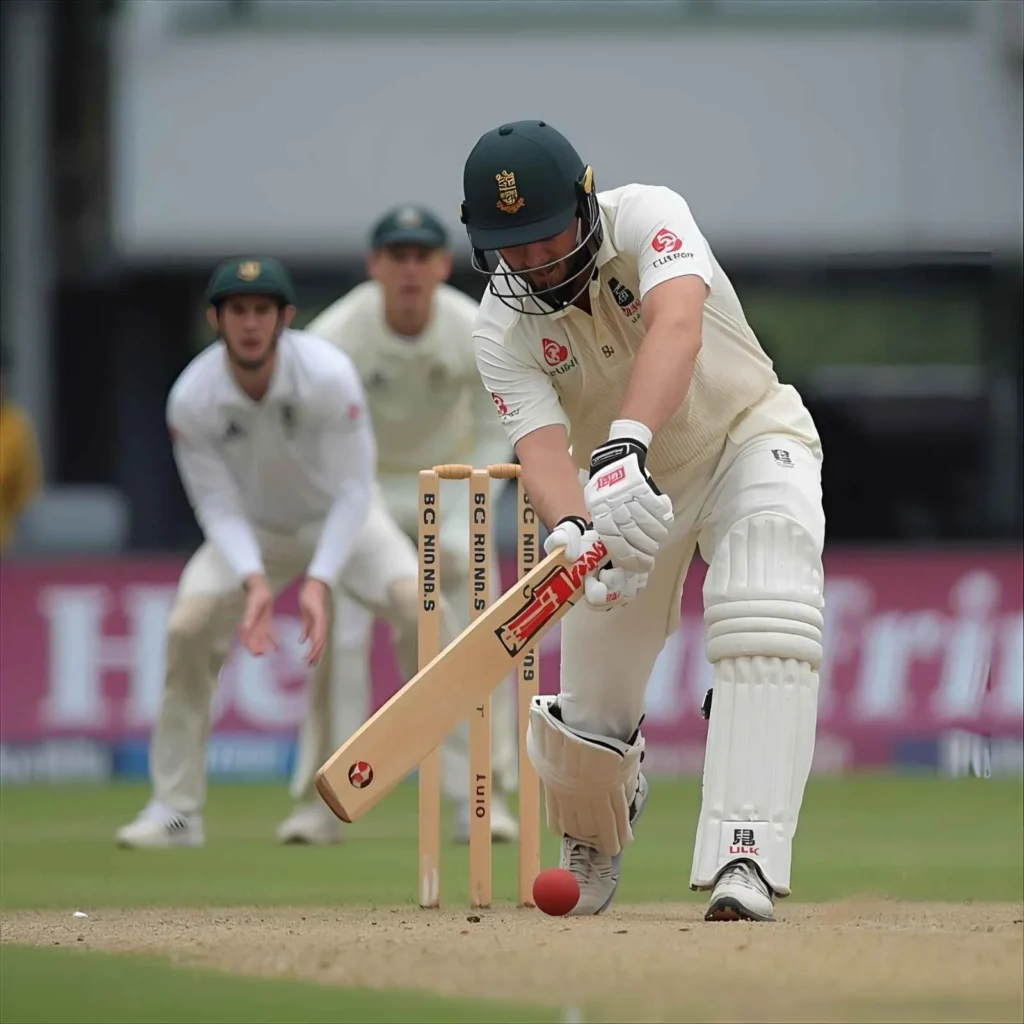
📜 The Official LBW Rule Explained (ICC 2025 Law 36)
A batter is out LBW if, in the umpire’s opinion:
- The bowler delivers a legal ball (not a no-ball).
- The ball pitches in line with the stumps or outside off stump (not outside leg stump).
- The ball hits any part of the batter’s body before touching the bat.
- The ball would have gone on to hit the stumps.
If these four conditions are satisfied, the batter is out LBW.
🎯 Key LBW Conditions (With Examples)
| Condition | Explanation | Example |
|---|---|---|
| Pitching Zone | The ball must pitch in line with the stumps or outside off stump. | Ball pitches outside off stump and turns in — LBW possible. |
| Impact Zone | The ball must strike the batter in line with the stumps (except when no shot is offered). | Batter doesn’t offer a shot — impact outside off can still be out. |
| No-Ball Exception | If the delivery is a no-ball, LBW cannot be given. | Overstepping bowler = no LBW even if all other rules fit. |
| Shot Offered Rule | If batter attempts a shot, the impact must be in line. | Batter tries to defend but misses — only out if struck in line. |
| Height & Bounce | Umpire judges whether the ball would’ve hit the stumps, considering bounce. | A yorker hitting pad below knee — out; one rising above stumps — not out. |
🧠 The Role of DRS (Decision Review System) in LBW
Modern cricket relies heavily on DRS technology to ensure LBW accuracy.
The system uses:
- Hawk-Eye ball-tracking: Predicts ball trajectory after impact.
- UltraEdge / Snickometer: Confirms if bat or pad contact occurred first.
- Impact Zone Graphics: Shows where the ball struck the pad.
Umpire’s decision remains “Umpire’s Call” when the tracking shows a marginal result — maintaining balance between human judgment and technology.
🔍 Common LBW Scenarios (Explained with Real Examples)
- Ball Pitches Outside Leg Stump – Not out, regardless of impact.
- Ball Hits Pad Outside Off but No Shot Offered – Can be out if hitting stumps.
- Inside Edge onto Pad – Not out; bat contact before pad cancels LBW.
- Defensive Shot Missed, Impact in Line – Out if ball hitting stumps.
- Full Toss Hitting Pad in Line – Out if delivery legal.
- Reverse Swing Delivery Late Movement – Depends on trajectory to stumps.
⚖️ The Gray Areas of LBW (Controversial Decisions)
LBW has always invited debate. Some examples include:
- 2005 Ashes – Shane Warne to Andrew Strauss: Ball clipping leg stump; given not out.
- 2011 World Cup – India vs Pakistan: Multiple reviews changed umpire decisions mid-match.
- 2023 Test Series – “Umpire’s Call” debates: Players questioned the fairness of marginal decisions.
The ICC continues refining the rule to reduce subjectivity.
🚨 Penalties and Exceptions
- No Ball: LBW cannot occur off a no-ball.
- Obstructing Field: If batter intentionally uses body, it can lead to another form of dismissal.
- Unfair Movement by Bowler: If bowler’s action distracts batter, delivery may be declared dead ball.
🧩 Case Study: DRS Saves the Day
In the 2022 India vs England Test, Virat Kohli was given out LBW to Anderson.
Upon review, UltraEdge showed a faint inside edge — decision overturned.
This highlighted how technology prevents human error, protecting fair play.
🧍♂️ Umpire’s Decision Sequence
- Appeal by bowler and fielders: “How’s that?”
- Umpire assesses pitch, impact, and ball trajectory.
- Decision given — “Out” or “Not Out.”
- Batter may choose to review using DRS (if available).
🏟️ Modern LBW Strategies (For Bowlers and Batters)
For Bowlers:
- Target middle and off stump line.
- Use inswing and reverse swing effectively.
- Mix pace and length to surprise batter.
For Batters:
- Keep bat close to pad.
- Avoid planting front foot too far across.
- Play with soft hands to minimize pad impact.
❓ FAQs on LBW in Cricket
Q1. Can a batsman be LBW on a no-ball?
No, LBW is not possible on a no-ball under any circumstance.
Q2. Can a batsman be LBW off a full toss?
Yes, if the ball hits the pad in line and would’ve hit the stumps.
Q3. What if the ball hits the glove before pad?
Then it’s considered bat contact, so the batter cannot be LBW.
Q4. Can an LBW occur when no shot is offered?
Yes, if the ball pitches outside off and hits in line with stumps.
Q5. What is “Umpire’s Call” in LBW?
It means the original decision stands because tracking shows marginal contact with stumps.
🧾 Conclusion
LBW isn’t just a rule — it’s a test of judgment, precision, and fair play.
With advanced DRS systems and updated ICC interpretations, today’s cricket ensures fewer controversies and more accurate outcomes.
Whether you’re a bowler seeking that perfect in-swinger or a batter working on foot placement, understanding LBW deeply can transform your game awareness.

Daniel Foster is a senior sports writer specializing in cricket laws and international playing conditions. With extensive experience covering ICC rules, domestic leagues, and tournament regulations, he delivers detailed yet easy-to-read explanations. His work is trusted by readers looking for accurate and up-to-date sports rules.