
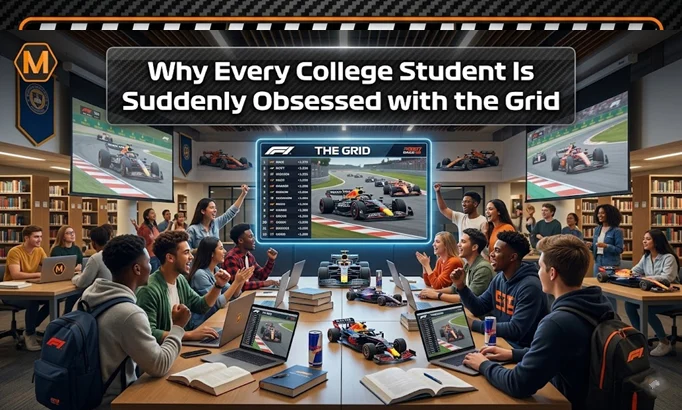
If you walk through a university library in 2026, you will notice a distinct shift in the digital landscape. Among the open textbooks and half-finished research papers, laptop screens are glowing with the sharp orange of McLaren or the iconic red of Ferrari. The “Grid”—the elite lineup of twenty Formula 1 drivers—has moved from a niche European motorsport to the center of global campus culture. It is no longer just about cars going in circles; it is about high-stakes drama, incredible engineering, and a lifestyle that resonates deeply with a generation that values data, speed, and storytelling.
The sudden surge in Formula 1 popularity among students is largely driven by the “Drive to Survive” effect, which turned athletes into celebrities and technical regulations into compelling narratives. This Gen Z sports trend has transformed Sunday mornings into social events, where the F1 grid is debated with the same intensity as a final exam. For many, balancing this new obsession with a heavy academic load can be a challenge. When the pressure of a deadline clashes with a race weekend in Miami or Monaco, students often look for assessment help to manage their schedules, and myassignmenthelp provides the structural support needed to keep their grades as high as their favorite driver’s podium chances.
The Engineering Marvel: Why STEM Students are Hooked
For students in Science, Technology, Engineering, and Mathematics (STEM), Formula 1 is the ultimate case study. It isn’t just a race; it is a laboratory moving at 200 miles per hour. Every millisecond gained on the track is the result of thousands of hours spent on aerodynamics, power unit optimization, and telemetry data analysis.
In 2026, the sport introduced new regulations focusing on sustainable fuels and increased electrical power. This shift has made the sport even more relevant to students studying environmental science and mechanical engineering. They aren’t just watching a race; they are watching their future career field in action. The use of carbon fiber, the physics of the Drag Reduction System (DRS), and the complexity of real-time data streaming provide a level of technical engagement that traditional sports like football or basketball simply cannot match.
The Business of Speed: Marketing and Global Logistics
Beyond the engines, there is a massive business engine that fascinates marketing and management students. F1 is a masterclass in global branding and luxury lifestyle marketing. The way teams manage F1 sponsorships and create a sense of exclusivity while remaining accessible through social media is a strategy being studied in lecture halls worldwide.
Managing a team that moves tons of equipment across five continents every two weeks is a logistical miracle. Students majoring in supply chain management or international business find the sport’s operation to be the gold standard of efficiency. Before you decide to buy assignment services to free up time for the next Grand Prix, it is worth noting how these teams prioritize precision and timing above all else.
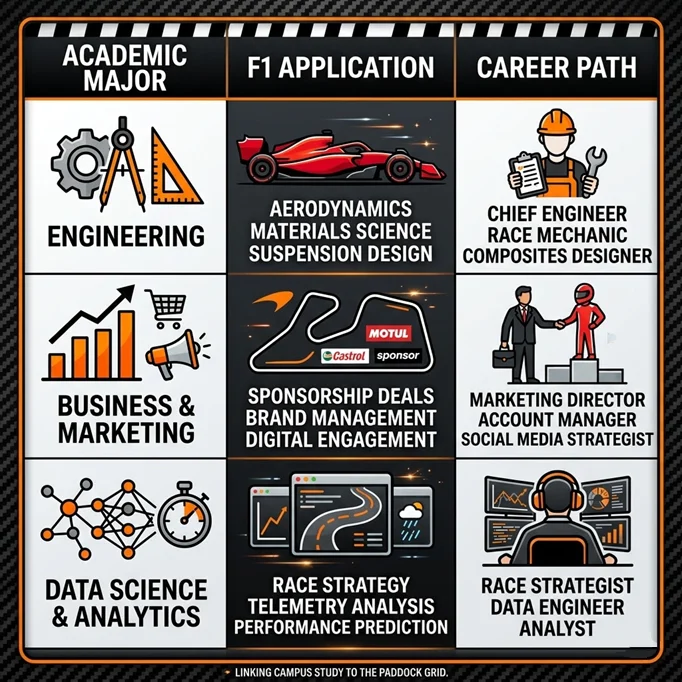
| Department | Academic Relevance | Real-World Application in F1 |
| Engineering | Fluid Dynamics & Materials Science | Aerodynamics and Carbon Fiber Chassis |
| Data Science | Predictive Modeling & Big Data | Pit Stop Strategy and Real-time Telemetry |
| Marketing | Global Brand Equity | Sponsorship Integration and Fan Engagement |
| Psychology | Performance Under Pressure | Driver Mental Coaching and Reflex Training |
| Law | Contractual Obligations | Sporting Regulations and Intellectual Property |
The Sim Racing Revolution: From Dorm Rooms to the Paddock
One of the biggest reasons for the obsession is accessibility. While very few people will ever get behind the wheel of a real F1 car, almost any student can participate in sim racing. The F1 24 game and platforms like iRacing have turned dorm rooms into virtual paddocks.
Sim racing has blurred the lines between gaming and professional sports. Many current F1 drivers, like Max Verstappen, are avid sim racers themselves, which creates a unique bridge between the fans and the athletes. This “aesthetic racing” culture has led to a boom in sim racing setups on campuses, where students compete in their own leagues, analyzing telemetry data just like the professionals do.
A Masterclass in Resilience and Mental Endurance
University life is a high-pressure environment, much like the cockpit of a racing car. Students see a reflection of their own struggles in the drivers. The mental endurance required to recover from a high-speed crash or a tactical error on the track mirrors the resilience needed to bounce back from a difficult semester.
The “Grid” represents the pinnacle of human performance. When a driver like Lando Norris or Charles Leclerc speaks openly about the mental toll of the sport, it resonates with a student body that is increasingly focused on mental health and balance. The drivers are no longer untouchable icons; they are young people navigating immense pressure, making them the perfect role models for a generation facing an uncertain and fast-paced world.
The 2026 Shift: Sustainability and Technology
As we look at the current 2026 season, the sport has undergone its most significant technical change in a decade. The move toward 100% sustainable fuels and a 50/50 split between internal combustion and electrical power has captured the attention of the “Climate Generation.” College students are notoriously protective of the environment, and F1’s “Net Zero 2030” goal has turned skeptics into supporters.
The integration of AI in race strategy is another area where students find a deep connection. In modern F1, teams run millions of simulations during a single race to decide when to change tires. This overlap between computer science and physical competition makes every Grand Prix feel like a live-action chess match.
The Cultural Impact: Fashion and Social Media
The obsession extends beyond the track and into the closets of college students. “Paddock fashion” has become a major trend on platforms like TikTok and Instagram. Vintage racing jackets, team-branded apparel, and the “quiet luxury” aesthetic associated with the Monaco or Silverstone weekends have influenced campus style.
F1 drivers have become the new influencers. Their vlogs, Twitch streams, and behind-the-scenes content provide a level of transparency that traditional sports lack. This constant stream of content ensures that even during the “off-season,” the Grid remains at the forefront of the student conversation.
Why This Obsession is Built to Last
The connection between college campuses and the paddock is only getting stronger. With more races in the US and Asia, and a growing emphasis on diversity and inclusion within the sport, Formula 1 has successfully rebranded itself as the sport of the future.
It is a rare phenomenon to find a topic that appeals equally to a mechanical engineering major, a fashion design student, and a business analyst. This multidisciplinary appeal is the secret sauce of the F1 explosion. It provides a common language for students across different departments, fostering a sense of community that is often missing in large university settings.
Conclusion
Whether it is the roar of the engines, the intricate dance of a two-second pit stop, or the complex data behind a winning strategy, “The Grid” has captured the imagination of students globally. It offers a perfect blend of entertainment, education, and inspiration. By focusing on the intersection of technology, human drama, and career potential, the sport has moved from the television screen directly into the heart of modern campus life.
As students navigate their own “qualifying sessions” in the form of exams and internships, they look to the Grid not just for a distraction, but for a blueprint of how to perform at the highest level. In the race for student attention, Formula 1 hasn’t just taken the lead; it has lapped the competition.
Frequently Asked Questions
Why has motorsport gained such a massive following on university campuses?
The surge in interest is largely due to documentary series that highlight the personal lives and rivalries of competitors. By turning technical regulations into dramatic human stories, the sport has become as much about personality and narrative as it is about racing.
How does watching these races benefit students in technical fields?
For those studying engineering or data science, every Grand Prix serves as a real-world laboratory. Observing how teams analyze live telemetry and optimize aerodynamics provides practical examples of complex theories used in modern automotive and aerospace industries.
What role does gaming play in this growing obsession?
Virtual racing simulators have made the experience accessible to anyone with a computer. This technology allows enthusiasts to compete on the same tracks as professionals, bridging the gap between being a passive spectator and an active participant in the digital paddock.
Are there professional opportunities related to this interest?
Beyond driving, the industry requires experts in global logistics, sports marketing, and sustainable technology. Many students now view their degrees as pathways into the multi-billion dollar business of international racing and high-performance management.
About The Author
Ella Thompson is a seasoned academic consultant and lead content strategist for MyAssignmentHelp. With years of experience in higher education, she specializes in developing comprehensive learning resources and guiding students toward academic excellence through insightful, research-driven content.
