
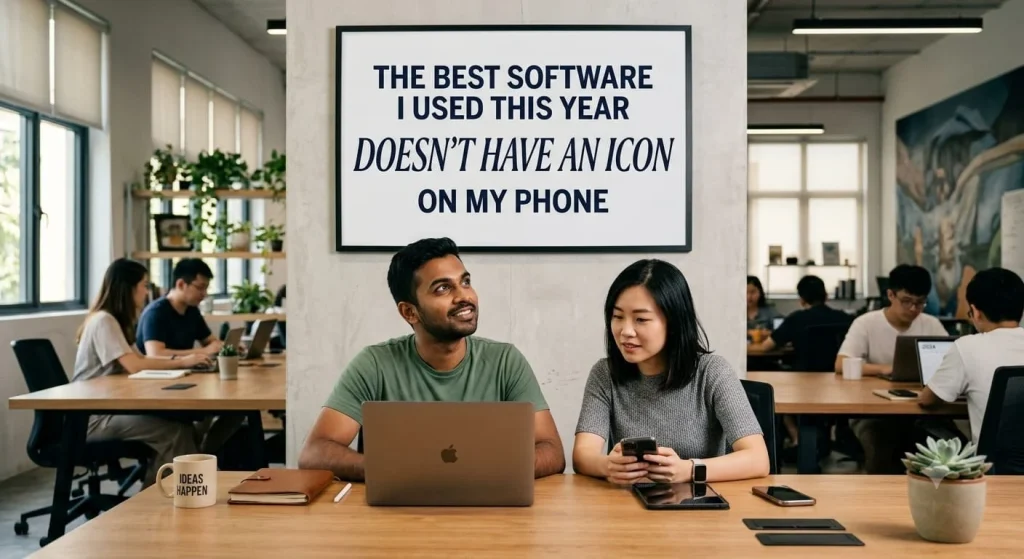
A colleague asked me recently to name my favorite app of the year. I couldn’t. Because nothing stood out, but because the things I actually used most, the ones I opened without thinking, don’t live on my home screen at all. They live in a browser tab I forgot to close.
That’s a strange thing to admit as someone who’s covered gaming and consumer technology for most of my career. For a long time, “app” and “software worth caring about” were basically the same category. Somewhere in the last few years, that stopped being true, and I don’t think enough people in this industry have sat with what that actually means.
The Quiet Death of “You Have to Download This”
There used to be a ritual to trying something new online. Find the link, download the file, wait, install, restart if you were unlucky, and only then find out whether the thing was any good. Half the appeal died somewhere in that sequence for most people.
Browsers weren’t built to carry that weight originally. They rendered text and images and not much else. Anything genuinely interactive, video, games, real-time collaboration, needed a plugin bolted on or a native application running underneath.
That’s gone now, mostly. HTML5 gave browsers native support for video, audio, animation, and rendering without asking permission from a third-party plugin first. WebGL and WebAssembly pushed things further, letting genuinely demanding software run inside a browser tab at speeds that would have seemed absurd a decade back. WebRTC handles real-time audio and video without a separate client. None of these technologies got a big cultural moment. They just showed up, worked, and quietly made the old ritual unnecessary.
Convenience Won, and It Wasn’t Close
I used to assume feature lists decided which platforms survived. More content, better graphics, deeper systems. I don’t think that’s the deciding factor anymore, or at least not the first one.
What decides it now is closer to friction. Every step between someone’s curiosity and their first real interaction is a place they can quit. A signup wall before they’ve seen the product. A download that eats storage they don’t want to spare. A permissions prompt that makes them second-guess the whole thing. Remove those steps, and people stick around longer than the content alone would justify.
This isn’t a gaming-only phenomenon, either. Banking went this direction years before entertainment caught up. Streaming did the same thing to physical media. Once one industry proves that people will choose the frictionless option almost every time, the rest tend to follow, sometimes slower than they should.
Phones Rewired the Whole Equation
Smartphones didn’t just add another screen to the mix. They changed what a “session” even means. Nobody’s clearing an hour for a lengthy install between meetings, but plenty of people will happily poke at something for ninety seconds while waiting for coffee.
Platforms built for that reality look different from the ground up. Shorter loops instead of long campaigns. Interfaces that assume a phone call might interrupt everything at any second, because it usually will. Save states that don’t require a conscious decision to save anything.
A Habit Worth Noticing
Watch how many people check something, anything, while standing in a grocery line. That’s not boredom exactly. It’s a gap in the day that used to go unfilled because filling it required more setup than the gap was worth. Browser-based experiences fit into gaps that native apps mostly can’t reach.
Cross-Device Continuity Stopped Being Optional
People don’t think about which device they’re on the way they used to. Someone starts something on a work laptop, drops it, picks it up on a phone an hour later, and finishes on a tablet that night, all without giving the transition a second thought.
Native software struggles with that pattern structurally. Every operating system needs its own build, its own testing cycle, its own bug reports. Browser platforms mostly sidestep the whole mess because the experience follows the account instead of the device. I’ve talked to developers who describe this as buying back months of engineering time they used to spend just keeping four separate app versions in sync.
That matters more than it sounds like on paper. A platform that breaks the moment someone switches from a laptop to a phone is quietly losing a chunk of its own audience without ever knowing it.
Performance Became Marketing Whether Anyone Planned It That Way
Here’s something I’ve noticed covering this beat for a while: speed reads as quality even when it isn’t really the point. Two platforms can offer nearly identical content, and the one that loads faster gets rated as more trustworthy, more polished, more worth someone’s time.
Content delivery networks push files physically closer to users. Caching makes repeat visits nearly instant. Compression trims bandwidth without visibly hurting quality. Modern rendering engines squeeze more out of the same hardware than they could five years ago. None of it gets a press release. All of it adds up to a first impression that forms before a user has even judged the actual content.
Cloud Infrastructure Does the Heavy Lifting Nobody Sees
None of this works without serious backend investment, even though that investment is invisible to the person clicking around. Cloud computing lets services scale during traffic spikes without anyone downloading a patch overnight. Updates roll out to everyone simultaneously instead of trickling through app store review queues that can take days.
That shift changes team structure, too. Instead of maintaining four fragmented codebases across operating systems, a lot of studios now maintain one and pour the saved time into actual content. I’d argue that’s the more important story here, even though it rarely makes headlines: efficiency freed up for creativity.
Monetization Had to Catch Up With the Technology
The old pay-once-and-install model came with its own tidy business logic. Browser-first platforms broke that logic, so monetization evolved to match. Subscriptions work more naturally when there’s no app store cut eating into every transaction. Freemium tiers make more sense when trying something costs a visitor nothing but a few seconds.
That shift benefits both sides more than people give it credit for. Developers keep a more direct relationship with their audience. Users get to sample things without committing money or storage upfront, which changes what they’re willing to explore in the first place.
Security Had to Grow Up Fast
More connectivity always brings more exposure, and browser-first entertainment isn’t exempt from that trade-off. As mobile gaming communities continue to grow, phrases like slot gacor hari ini have become part of the everyday vocabulary used by Indonesian players when discussing trending games. Modern browsers ship with protections that didn’t exist even five years ago: tab sandboxing, stricter permission prompts, encryption that used to be optional and is now simply assumed.
Developers can’t treat security as an afterthought anymore, mostly because users won’t forgive it if something goes wrong. Trust builds slowly in this industry and disappears the moment a platform mishandles account details or payment information even once.
Community Grew Stronger, Not Weaker
I expected browser platforms to feel more isolated than native apps when this shift started. The opposite happened in most cases I’ve followed. When there’s no install standing between “come play this” and actually playing it, friends jump in together far more often than they used to.
Shared leaderboards, instant invite links, chat that opens the second you do: all of it works better when the gap between invitation and participation shrinks close to nothing. That immediacy turned into its own retention mechanism, and I’d argue it’s a more durable one than any single feature a platform could ship on its own.
Where Discipline Actually Shows Up
A platform like Markas Gacor Official is a decent example of what this looks like when it’s executed with some restraint. Instant access without a download, an interface that doesn’t demand a learning curve, and enough consistency that people don’t wonder whether it’ll behave the same way tomorrow as it did today.
That’s not a flashy pitch, and it doesn’t need to be. In a market crowded with platforms competing on features nobody asked for, reliability has quietly become the thing that actually keeps people coming back week after week.
AI Is a Smaller Piece of This Story Than the Headlines Suggest
Artificial intelligence gets credited with more than it’s actually doing in this particular shift. Recommendation systems surface relevant content. Predictive loading shaves a beat off wait times. Search gets a little better at guessing what someone actually meant. None of that replaces the underlying browser technology; it just rides on top of infrastructure that already existed.
I wouldn’t bet against AI playing a larger role in a few years, but right now it’s an accelerant, not the engine. The engine is still rendering performance, cloud scaling, and standards work that happens quietly in working groups nobody outside engineering pays attention to.
Looking Ahead
Browser technology isn’t finished evolving, not even close. WebGPU keeps closing the gap with native graphics performance. Cloud-native architectures keep getting cheaper to run at real scale. Every incremental improvement makes the browser a slightly more convincing substitute for whatever you would have downloaded a decade ago.
I don’t think that trend reverses. Too much of the infrastructure, the consumer habit, and the underlying economics all point toward fewer downloads, not more. Platforms that keep treating the browser as a full application environment, rather than a waiting room before the “real” experience begins, are the ones that will keep winning attention.
My favorite software this year still doesn’t have an icon. I’ve stopped expecting that to change.
