
Cricket is a game of rules, strategy, and discipline, and batting lies at its very heart. Whether it’s Test cricket, One Day Internationals (ODIs), or the fast-paced T20 format, batting rules ensure the game is fair, balanced, and exciting. From bat dimensions to the time allowed for a new batter to enter the field, every regulation has been set carefully by the Marylebone Cricket Club (MCC), which governs the Laws of Cricket.
In this article, we’ll break down the batting rules across different formats, explain the official clauses (laws), and share real-world case studies so you can fully understand how these laws impact the game.
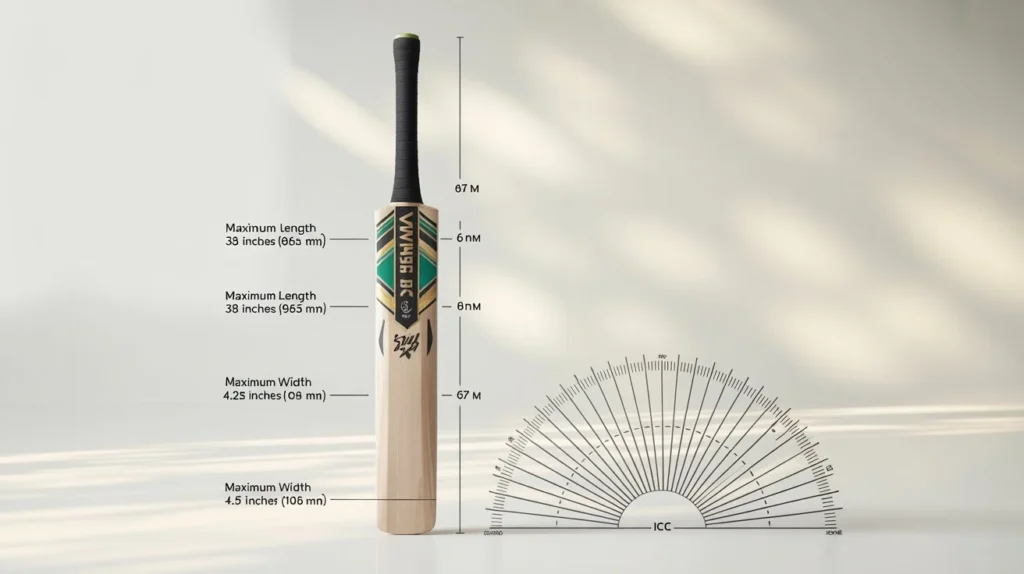
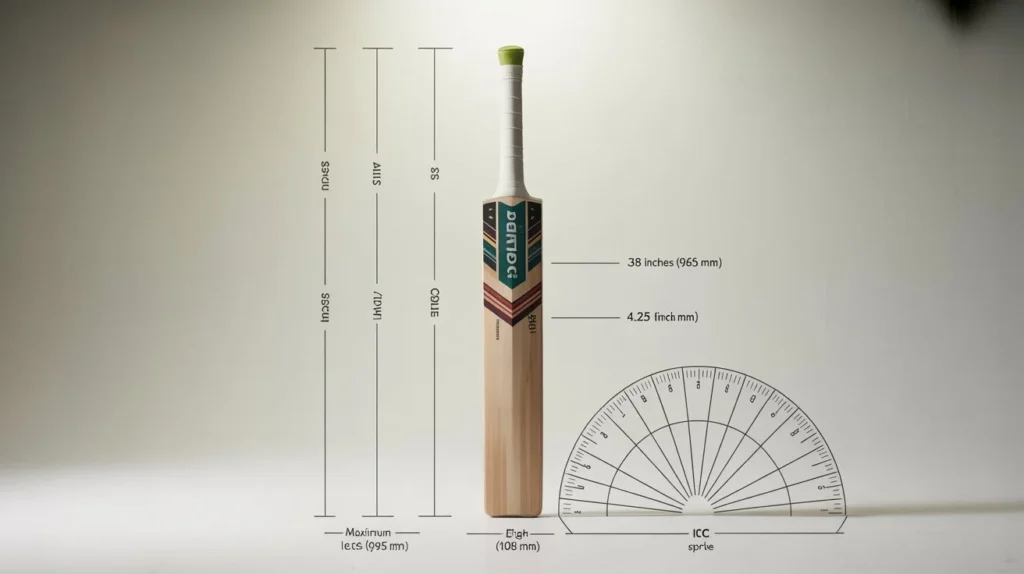
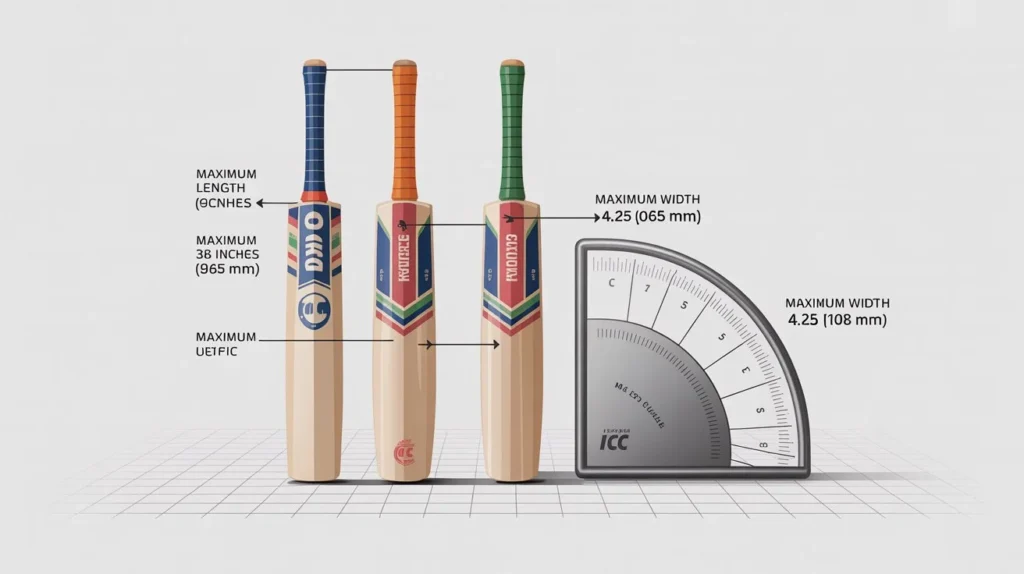
Bat Dimensions and Standards (Law 5)
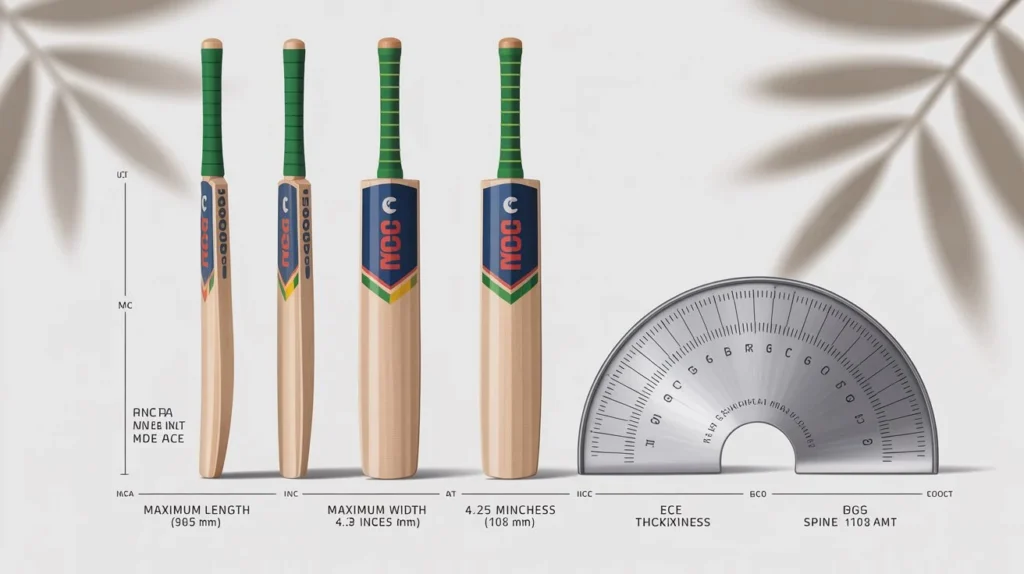
According to ICC playing conditions and MCC Law 5:
- Length: Maximum 38 inches (96.5 cm)
- Width: Maximum 4.25 inches (10.8 cm)
- Edge thickness: Maximum 40 mm
- Spine/Depth: Maximum 67 mm
- Bat Handle: Must be round, covered in rubber/cane, and not cause unfair advantage
Low Number on the Bat
A low number refers to the bat’s position in the batting order. A player batting at number 9, 10, or 11 is considered to have a “low number.” These batters are usually bowlers and are expected to have weaker batting skills.
Case Study
In 2017, ICC introduced restrictions on bat edges after several players like David Warner and Chris Gayle used thick-edged bats that gave unfair power. This rule standardized bat performance globally.
Time Allowed for a Batter to Enter (Law 40.1)
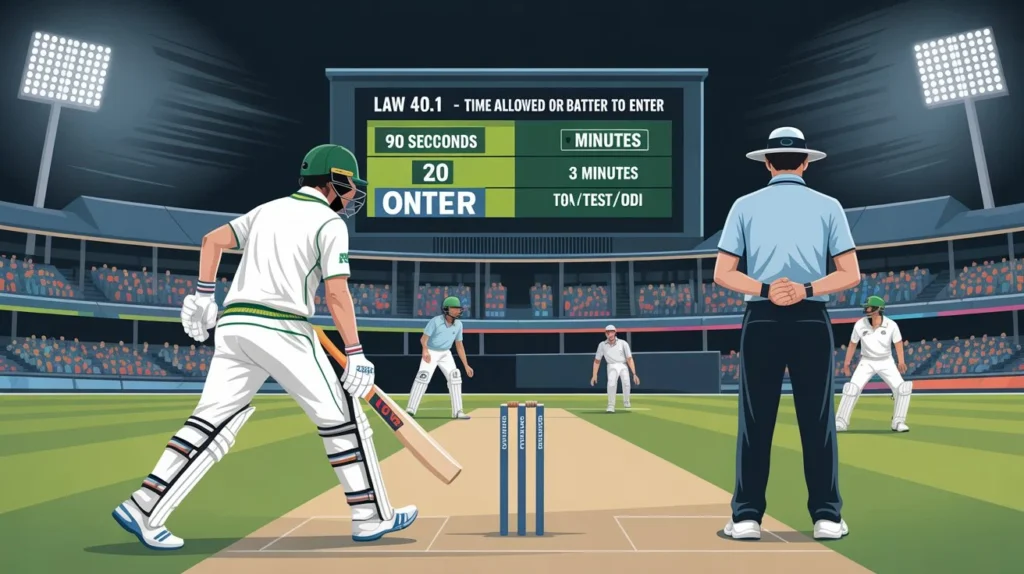
- A new batter must be ready to face the next ball within 3 minutes of a dismissal in Test and ODIs.
- In T20s, this limit is 90 seconds.
Case Study
In the 2022 T20 World Cup, a delay in a batter entering the field almost caused a time penalty. Umpires strictly reminded the team of the 90-second rule, showing how crucial timing is in T20 cricket.
Retired Hurt and Retired Out (Law 25.4)
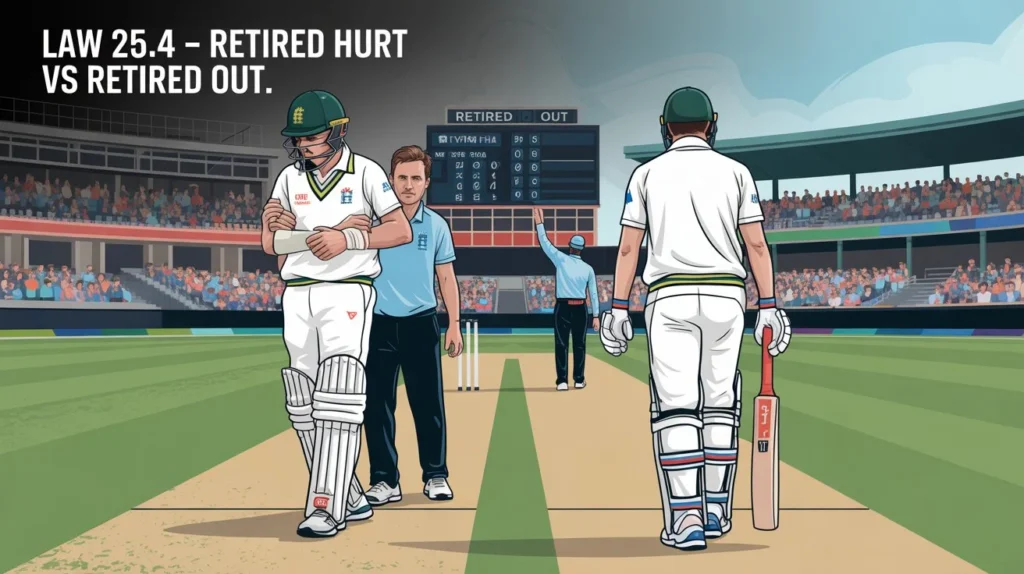
- Retired Hurt: If injured or ill, a batter may leave the field and return later (with umpire’s permission).
- Retired Out: If a batter leaves for reasons other than injury/illness and doesn’t return, they are considered dismissed.
Case Study
During the 1989 Test between India and Pakistan, Salim Malik retired hurt due to cramps but later returned to bat, saving Pakistan from collapse.
Batsman’s Guard and Stance (Law 36.3 & Law 5)
- A batter must take stance within the popping crease.
- The guard (leg, middle, or off) is allowed but should be requested from the umpire.
- A batter stepping outside repeatedly may face penalties for time-wasting.
Case Study
In 2019 Ashes, Steve Smith took multiple guards during his comeback innings. His meticulous stance adjustments were within the laws and demonstrated how players can maximize advantage legally.
Striker and Non-Striker Rules (Law 6.1, Law 30.1)
- Striker faces the ball; must remain inside the crease at delivery.
- Non-striker must not leave crease before ball release (Mankading is legal under Law 41.16).
Case Study
In IPL 2019, R. Ashwin ran out Jos Buttler (non-striker) before release. This caused debate but was 100% legal under MCC Law 41.16.
Follow-On and Declaration Rules (Test Matches Only, Law 14 & Law 15)
- Follow-On: If the team batting second falls short by 200 runs (Test), they may be asked to bat again.
- Declaration: A captain may declare innings closed at any time.
Case Study
In the 2001 Kolkata Test, India followed on against Australia but went on to win, making it one of cricket’s most historic comebacks.
Shot Selection and Dangerous Play (Law 36.1, Law 41.4)
- A batter cannot deliberately obstruct the field (Obstructing the Field = out).
- No intentional hit of the ball twice unless to protect the wicket.
- No using body/equipment unfairly.
Case Study
In 2015, Ben Stokes was given out for obstructing the field against Australia after blocking a throw with his hand.
Comparison of Batting Rules Across Formats
| Rule | Test Cricket | One Day (ODI) | T20 Cricket |
|---|---|---|---|
| Time for new batter | 3 minutes | 3 minutes | 90 seconds |
| Follow-On Rule | Yes (200 runs lead) | No | No |
| Field Restrictions | None | Powerplays | Powerplays + stricter |
| Declaration Allowed | Yes | No | No |
| Bat Dimensions | Standard ICC Laws | Standard ICC Laws | Standard ICC Laws |
| Retired Hurt/Out | Allowed | Allowed | Allowed |
FAQs on Batting Rules in Cricket
Q1. How long does a new batsman have to enter after a wicket falls?
- 3 minutes in Tests and ODIs, 90 seconds in T20s.
Q2. Can a batsman change sides (bat left-handed/right-handed) during the game?
- Yes, but only before the bowler starts the run-up.
Q3. What is the maximum size of a cricket bat?
- 38 inches length, 4.25 inches width, 40 mm edge, 67 mm spine.
Q4. What does “low number” mean in batting order?
- Refers to batters in positions 9–11, usually bowlers.
Q5. Can a batter be given out for wasting time?
- Yes, under Law 40.1, excessive delay can lead to dismissal.
Conclusion
Batting rules in cricket are not just technicalities—they shape how the game is played, from Tests to ODIs and T20s. Understanding these rules helps players, coaches, and fans appreciate cricket on a deeper level. With ICC’s strict bat size regulations, time limits, and stance requirements, every batter is bound by the spirit of fair play.
Whether you’re learning cricket or following it passionately, these batting rules offer insights into the balance between tradition and modern-day challenges.

Liam Thompson is a cricket regulations analyst who covers international and league-level rules in depth. He focuses on fielding laws, over-rate penalties, powerplay strategies, and updated ICC guidelines. Liam’s goal is to educate readers while keeping the excitement of the game alive.