
In the world of video storytelling today, seamless transitions and captivating scene changes are crucial. Transitions are used to guide the viewer’s focus to a specific part of the picture and to create a smooth flow of the story. The audience will easily lose focus if the scene changes are poor, reducing retention. Continuity between segments is even more complex in AI avatar videos. Pippit provides tools to help you seamlessly move between content across platforms and give a polished appearance.
Understanding Dynamic Transitions in AI Character Videos
Dynamic transitions are used to determine how a video scene transitions to another. They don’t cut abruptly; they use smooth visual movement or effects. Static cuts can appear out of place and detract from a story’s effect. Dynamic transitions will help maintain the flow and make it easier for viewers to watch longer videos. They help break content into meaningful segments without losing attention. But also suitable transitions to lead emotions and the direction of the story. Pippit’s transitions are integrated into the editing functions for smooth transitions. These attributes enable creators to create videos that are both visually cohesive and captivating, all thanks to AI.
The Impact of Scene Flow on Viewer Experience
Scene flow is the ease with which a video story can be followed from start to finish. A smooth flow increases comprehension and decreases cognitive load when consuming content. This can help to connect ideas and provide flow in the story. Clear transitions also help make the message clear by separatingby separating its key parts. The scene changes are smoother and more seamless, giving the presentation a more professional appearance. For others, the speed of AI character videos is the deciding factor on engagement. Good flow also aids in focusing the audience on important visual and verbal content. Pippit enables structured scene flow, which increases the overall viewing satisfaction.
Types of Dynamic Transitions Available in AI Scene Editors
There are different types of transitions available to produce a video tone and pacing. Fade transitions help smooth the flow between scenes and reduce jarring shifts. Movement is created through movement and brought to storytelling through energy and realism. The viewer is led to the important elements through spatial emphasis techniques such as zoom, perspective transitions, etc. Transitions are text-assisted with captions or titles when switching scenes. The visual effects integrations provide overlays, flashes, and animated layers for impact. Various kinds of transitions are used to suit different storytelling needs and captivate the audience. The shifts improve the production quality and versatility of settings within the AI video generator.

Steps to add dynamic transitions using an AI character scene editor tool
Step 1: Launch the editor and enter the scene-based avatar tool
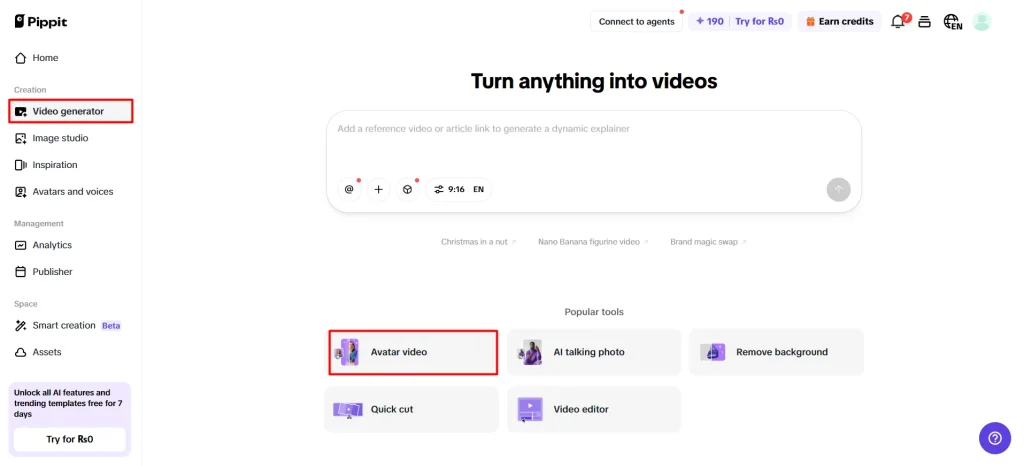
- Log in to Pippit and open the dashboard to begin video creation.
- Click “Video generator” from the left menu to access editing tools.
- Select “Avatar video” from Popular tools to enter the avatar scene setup.
- This helps you combine avatars with smooth scene transitions for dynamic storytelling.
Step 2: Choose an avatar and configure scripted scenes
- Review characters under “Recommended avatars” in “Choose avatar”.
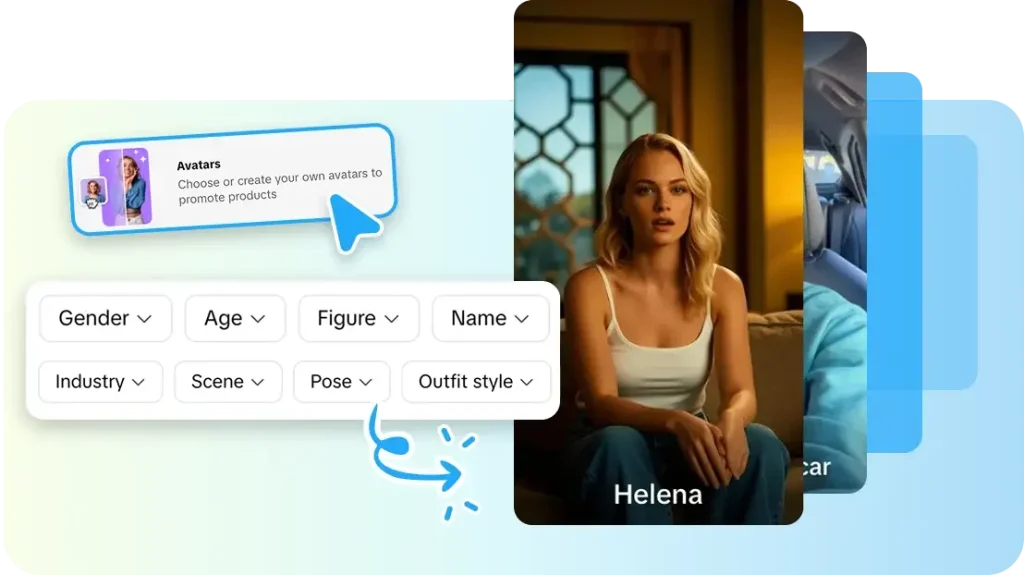
- Filter avatars by gender, age, industry, name, scene, pose, outfit style, or figure.
- Select your avatar and open “Edit script” to build scene-based dialogue flow.
- Input multilingual text and enable lip-sync to accurately match speech.
- Apply “Change caption style” to match captions with scene transitions.
Step 3: Edit transitions, finalize scenes, and export
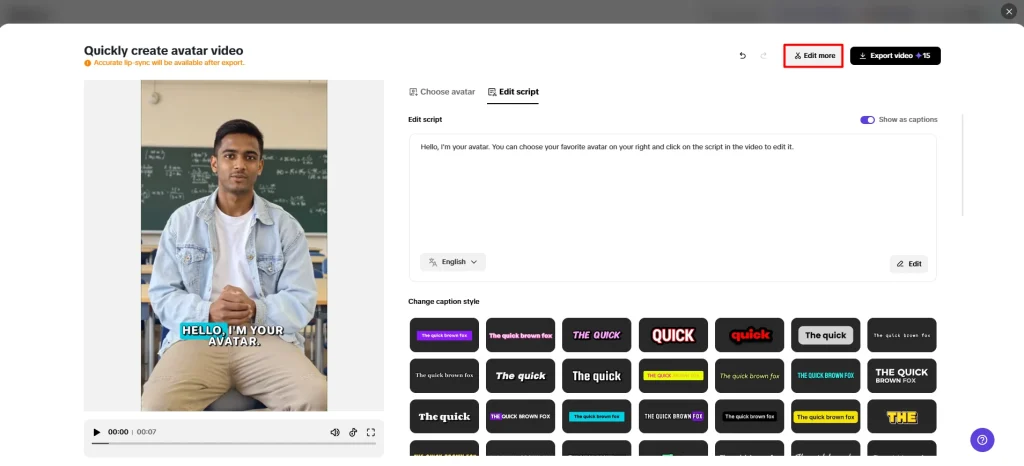
- Click “Edit more” to access scene transition editing features.
- Adjust timing between scenes, transitions, voice pacing, and facial expressions.
- Add overlays and background music to enhance motion effects.
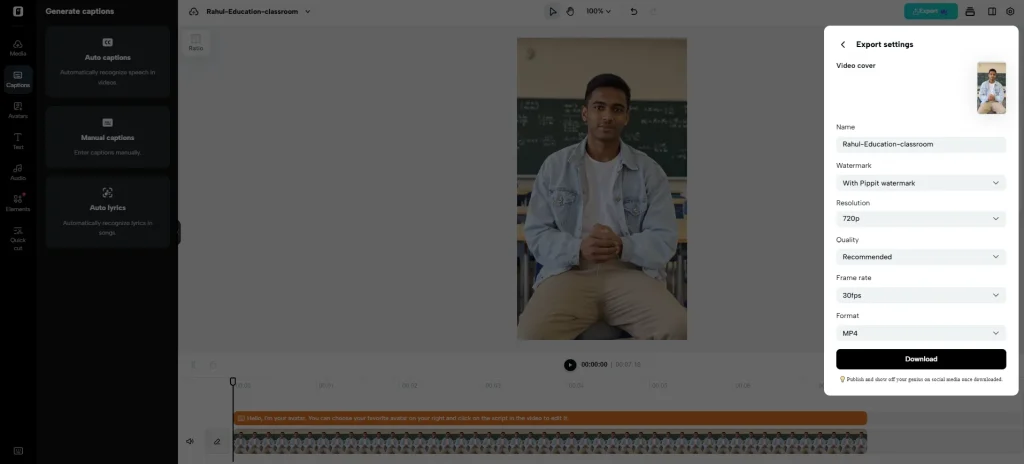
- When ready, click the “Export” tab at the top right.
- Use “Publish” to post to social platforms, or “Download” to save the video with your preferred settings.
Planning Transition Placement for Better Storytelling
Strategic transition placement improves the story’s clarity and strengthens its structure. Transitions should show a change in content, not be random between scenes. Where there are larger changes in topics, there must be stronger links than where the changes are smaller. The right pacing will ensure that the viewer can absorb information without losing interest or focus. There should be a visual continuity between the linked scenes. Excessive transitions can be distracting and can make the messages less effective.
Effective Transition Components
- Timing synchronization: align transitions with the narration’s rhythm; ensure they blend seamlessly.
- Visual continuity: Ensure the appearance of scenes across linked segments is consistent.
- Character positioning: Smoothly move the character between scenes.
- Text integration: Link captions with transitions to make them easier to read.
- Background consistency: Avoid sudden changes of background environment from one scene to the next.
- Audience focus management: Direct the audience’s attention to the key arguments in the visual and/or verbal content.
Enhancing AI Character Scenes with Motion-Based Effects
Video effects are a way to engage people with contemporary video formats when they are given movement. Smooth camera movement simulation for realistic and immersive viewing experiences. The image features multiple layers, creating depth and complexity in the scene’s composition. Dynamic progression helps make content feel continuous rather than fragmented. The Avatar-focused transition techniques emphasize the character during the transition. Background transformations keep viewers engaged in videos. With built-in editing tools for seamless production workflows, Pippit makes these enhancements possible.
Avoiding Common Transition Design Mistakes
Many studios make transition design mistakes that lead to lower video quality and lower viewers’ engagement. Excessive animation can distract from and overload viewers. Rapid scene changes can cause continuity issues and significantly impact clarity. Different transitions are distracting and unattractive. If the pacing is off, the storytelling rhythm suffers, and viewers will not stay. Any unnecessary effects will create visual clutter, which will take away from the important content. Transitions are visually purposeful and balanced from scene to scene, the result of careful planning.
How Pippit Streamlines Transition Creation
Pippit’s integrated editing environments and intuitive controls make transition design easy. The video segments may be flexibly arranged with minimal complexity using scene management. Timing adjustments for proper synchronization of voice and visuals. Multi-layer enhancements help with high-level editing, without needing technical know-how. Optimizing the workflow enables efficient production without compromising output quality. They enable smooth transitions in a more structured story format. Pippit ensures high-quality results for creators and reduces the time spent editing.
Conclusion
Transitions are an important aspect of creating engaging and professional AI avatar videos. They add to the story and to the clarity and engagement of viewers on digital platforms. Good transitions have been used to add impact to the stories and continuity to the pictures. Pippit has several great features that make scene editing and transition management very easy. These features contribute to seamless, polished, and audience-centric video experiences.
