
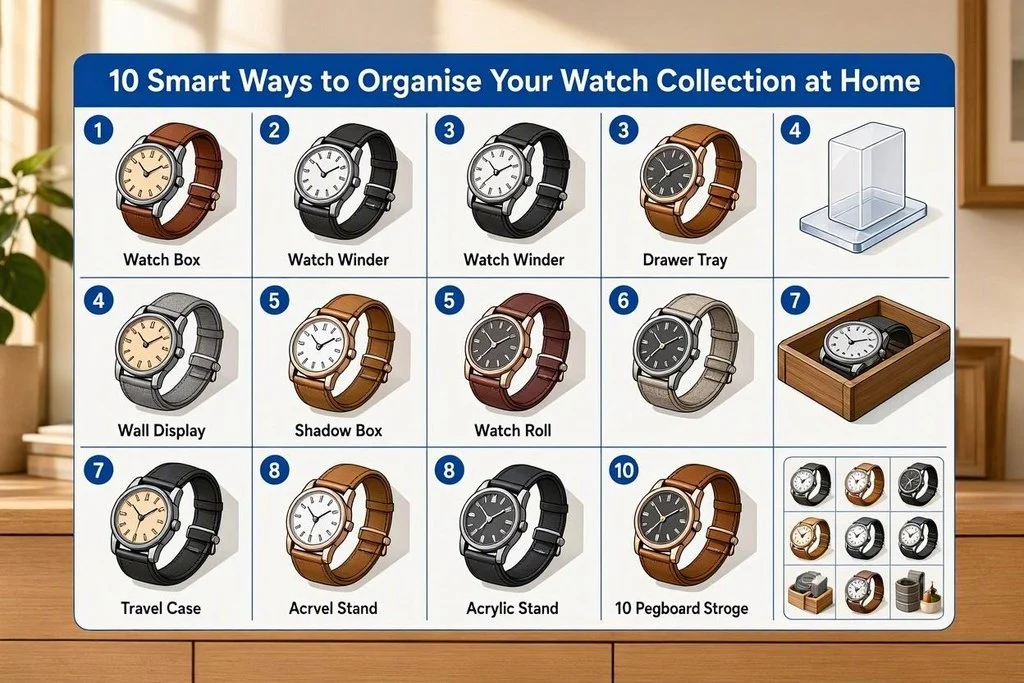
Anyone who owns more than two or three watches knows the problem. Straps tangle in a drawer, dust settles on crystal faces, and finding the right piece for the right occasion turns into a small daily hunt. A watch collection deserves better than a shoebox or a cluttered nightstand drawer.
The good news is that organising a watch collection isn’t complicated once you understand the basic principles: protection, accessibility, and presentation. Below are ten practical ways to bring order to your collection, whether you own three watches or thirty.
1. Start With an Honest Inventory
Before buying storage, count what you actually own and how you wear it. Separate everyday watches from special-occasion pieces, and automatics from quartz or manual-wind models. This sorting step matters because automatics need different care than quartz watches — they run on motion and lose accuracy if left still for weeks.
A quick inventory also reveals gaps. Many collectors realise they have five watches but only one storage spot, which is usually the first sign a proper system is overdue.
2. Separate Daily Wear From Special Occasion Pieces
Not every watch needs the same level of protection. A stainless steel field watch worn daily can live somewhere accessible, like a valet tray on the dresser. A dress watch reserved for weddings and formal events benefits from a more secure, enclosed space.
This is where a valet tray earns its place in the routine. Beyond just watches, everything about valet trays organise your man covers the small daily-carry items — cufflinks, rings, keys — that otherwise end up scattered across counters and pockets. Keeping the daily rotation watch here, right next to wallet and keys, makes the morning routine faster and reduces the chance of a watch getting knocked off a nightstand.
3. Invest in a Proper Watch Box for the Core Collection
Once a collection grows past two or three pieces, a dedicated watch box becomes less of a luxury and more of a practical necessity. A good box does three things: cushions each watch in its own compartment, keeps dust and light away from the crystal, and prevents straps from scratching against each other.
Material matters here too. Wood boxes with soft lining protect against knocks, while a transparent lid lets you see the collection without opening it. For anyone still deciding what to look for, a guide to every watch enthusiast needs breaks down compartment sizing, lining materials, and lid types in more detail.
4. Use a Watch Winder for Automatics You Don’t Wear Daily
Automatic watches rely on wrist movement to keep the mainspring wound. Leave one sitting in a drawer for two weeks and it will stop, meaning the date and time need resetting every time it’s worn — a minor annoyance that adds up.
A watch winder solves this by gently rotating the watch on a set schedule, mimicking wrist movement so the watch stays wound and ready. This matters most for watches with complications like perpetual calendars, where resetting the date can take several minutes of careful crown adjustment. For a two or three-watch automatic rotation, a winder pays for itself in saved time within the first month.
5. Group by Function, Not Just Aesthetics
A common mistake is organising watches purely by how they look on a shelf. It’s more useful to group by function: dive watches together, dress watches together, everyday beaters together. This way, when getting ready for a specific activity or event, the right options are already grouped and easy to compare.
Diving watches, for instance, often share features like unidirectional bezels and higher water resistance ratings. Keeping them together also makes it easier to spot when one needs a service check, since wear patterns tend to be similar across the group.
6. Keep Straps and Bracelets Separate From Watch Heads
Collectors who swap straps regularly — moving between leather for the office and NATO straps for weekends — often end up with a tangle of loose straps in a drawer. A small dedicated tray or case for straps keeps them flat, prevents creasing in leather, and stops metal bracelet links from scratching watch cases they’re stored near.
Labelling straps by lug width (18mm, 20mm, 22mm) saves time when swapping, especially for anyone who owns watches from different brands with different sizing standards.
7. Control Humidity and Light Exposure
Leather straps dry out and crack in overly dry conditions, while excess humidity encourages mould on strap stitching and can fog up watch crystals over time. A stable, moderate environment — away from direct sunlight and heating vents — keeps both leather and metal components in better condition for longer.
Direct sunlight is particularly harsh on dial colours, which can fade unevenly over years of exposure. A closed box or a cabinet with a solid door protects against this far better than an open shelf display.
8. Set Up a Simple Cleaning and Maintenance Routine
Storage solves half the problem; maintenance solves the rest. Wiping down cases and straps with a microfibre cloth after wear removes sweat and oils that can degrade leather or tarnish metal over time. For water-resistant watches, an occasional check of gaskets and seals — usually done by a watchmaker — prevents moisture damage.
According to the Horological Society of London, regular servicing intervals for mechanical watches typically fall between three and five years, depending on usage and movement type. Building this into a routine alongside daily storage habits extends the life of both entry-level and higher-end pieces.
9. Create a Dedicated Display for Statement Pieces
For watches with real sentimental or financial value, consider a small display case separate from the everyday rotation. Glass-topped cases with individual watch pillows not only protect the piece but also make it easier to enjoy the collection visually, rather than keeping it hidden away in a drawer.
This is also a practical safety measure. Watches stored in an obvious, unsecured spot are easier targets in the event of a break-in, whereas a locked display cabinet or safe adds a layer of protection for higher-value pieces.
10. Build a System That Scales With the Collection
The final and most overlooked step is planning for growth. Most collectors add watches over time, and a storage system that only fits the current collection will need replacing within a year or two. Choosing modular storage — trays that stack, boxes with expandable compartments — saves the hassle of a full system overhaul later.
For anyone just starting to build out a proper storage and accessory setup, it’s worth browsing a full range in one place rather than piecing together mismatched solutions. Visit Aevitas UK to see valet trays, watch boxes, and winders designed specifically around these organisation needs.
Final Thoughts
Organising a watch collection isn’t about owning the most expensive box or the flashiest display case. It’s about matching storage to how the watches are actually worn and cared for. A daily-wear watch belongs somewhere accessible, like a valet tray. A rotation of automatics benefits from a winder. Special pieces deserve protection from light, humidity, and dust.
Start small: sort the collection, pick one or two storage upgrades that solve the biggest pain point, and build from there. The system will naturally expand as the collection does.
FAQs
How many watches justify buying a watch box?
Even two or three watches benefit from a proper box, since it prevents scratching between pieces and keeps dust off the crystal. Anyone with more than five watches will find a multi-compartment box makes daily selection noticeably easier.
Do quartz watches need a watch winder?
No. Quartz watches run on a battery and keep time without wrist movement, so a winder offers no benefit. Winders are designed specifically for automatic and mechanical watches.
What’s the difference between a valet tray and a watch box?
A valet tray is an open, shallow tray for daily-carry items like watches, keys, and wallets — designed for quick access. A watch box is enclosed, with individual compartments, built for longer-term storage and protection of multiple watches at once.
How often should an automatic watch be serviced?
Most mechanical and automatic watches need servicing every three to five years, depending on the movement and how often the watch is worn. Skipping servicing can lead to lubricant breakdown inside the movement over time.
Can direct sunlight actually damage a watch?
Yes. Prolonged sun exposure can fade dial colours unevenly and, in some cases, degrade certain strap materials like leather or rubber. Storing watches in a closed box or cabinet away from windows helps prevent this.
