

India is the heart of world cricket, known for its historic stadiums, massive crowds, and high-pressure international matches. From century-old grounds to the world’s largest modern stadium, cricket international grounds in India represent the evolution of the game.
First Cricket Stadium in India?
Eden Gardens in Kolkata is generally considered the first and oldest cricket stadium in India, established in 1864.
Total International Cricket stadium in India.
Currently India has 81 international cricket stadiums/grounds that have hosted at least one international match., out of which 30+ regularly host international matches (Tests, ODIs, and T20Is).
- 🏟️ Oldest international cricket ground in India: Eden Gardens, Kolkata (opened 1864)
- 🏟️ Newest international stadium: Narendra Modi Stadium, Ahmedabad (rebuilt and reopened in 2020)
- 🏟️ Largest cricket stadium in the world: Narendra Modi Stadium (capacity ~132,000)
- 🏟️Biggest cricket stadium in India by boundary, Shaheed Veer Narayan Singh International Stadium in Raipur is often cited as the biggest cricket stadium in India, with an average boundary of about 80 meters.
- 🏟️smallest cricket stadium in India by boundary size, a commonly cited answer is Holkar Stadium, Indore(56 meters).
Indian stadiums are famous for their spin-friendly pitches, batting-friendly surfaces, and electric atmosphere. In this article, you will find deep details of India’s international cricket grounds, including history, renovations, match counts, dimensions, average scores, and pitch behavior. Here below is list of cricket stadium in India.
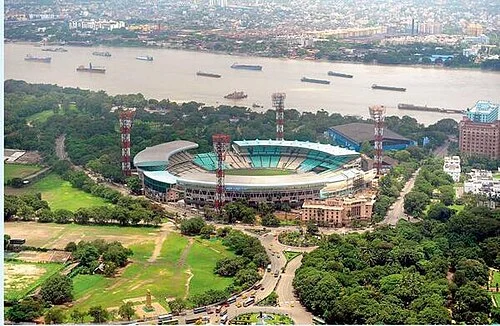
🏟️ Eden Gardens, Kolkata
History & Renovation
Eden Gardens was established in 1864 and is the oldest international cricket stadium in India. It has gone through multiple renovations, with major upgrades before the 2011 Cricket World Cup, improving seating, drainage, and player facilities.
Capacity
- Approximate capacity: 66,000 spectators
International Matches Played (Approx.)
- Test matches: 40+
- ODIs: 35–40
- T20 Internationals: 10+
Ground Dimensions
- Straight boundary: 70–75 meters
- Square boundary: 65–68 meters
- Shape: Oval
Average Scores
- Test (1st innings): 320–340 runs
- ODI (1st innings): 250–260 runs
- T20I (1st innings): 160–165 runs
Pitch Behavior
Traditionally batting-friendly early, with spin playing a big role later. The crowd pressure here is unmatched.
⭐ What Makes Eden Gardens Unique
This is the only stadium in India where over 100,000 fans once packed the ground and famously turned a match atmosphere into a sea of noise, influencing opposition teams mentally.
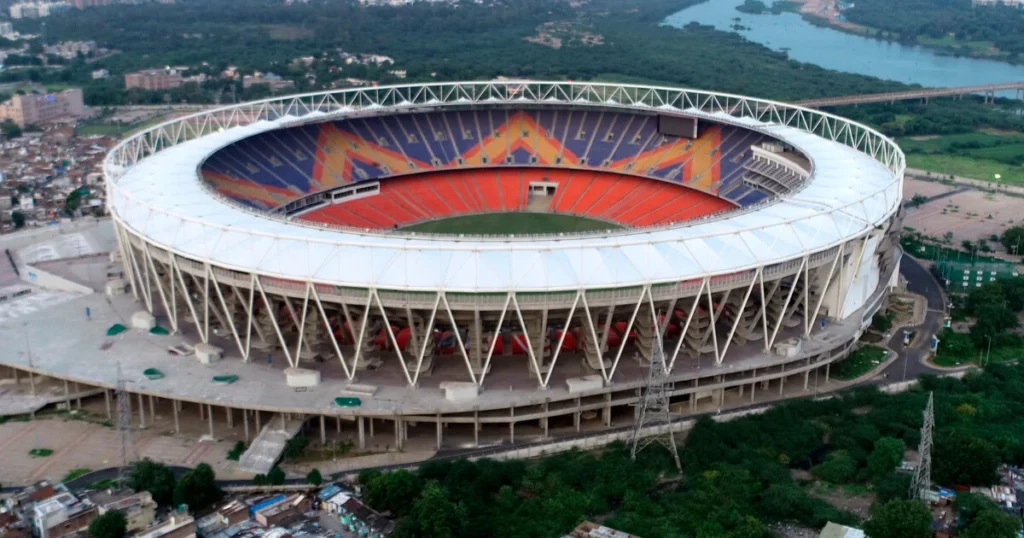
🏟️ Narendra Modi Stadium, Ahmedabad
History & Renovation
Originally opened in 1983 as Motera Stadium, it was completely demolished and rebuilt, reopening in 2020 as Narendra Modi Stadium. It is now the largest cricket stadium in the world.
Capacity
- Approximate capacity: 132,000 spectators (world record)
International Matches Played (Approx.)
- Test matches: 10+
- ODIs: 20+
- T20 Internationals: 15+
Ground Dimensions
- Straight boundary: 75–80 meters
- Square boundary: 65–70 meters
- Shape: Oval
Average Scores
- Test (1st innings): around 300 runs
- ODI (1st innings): 240–250 runs
- T20I (1st innings): 155–160 runs
Pitch Behavior
Known for variable Test pitches (some spin-heavy), while white-ball pitches are generally batting-friendly.
⭐ What Makes Narendra Modi Stadium Unique
This is the only cricket stadium in the world with a separate practice ground for every pitch square and full LED lighting system around the entire seating bowl.
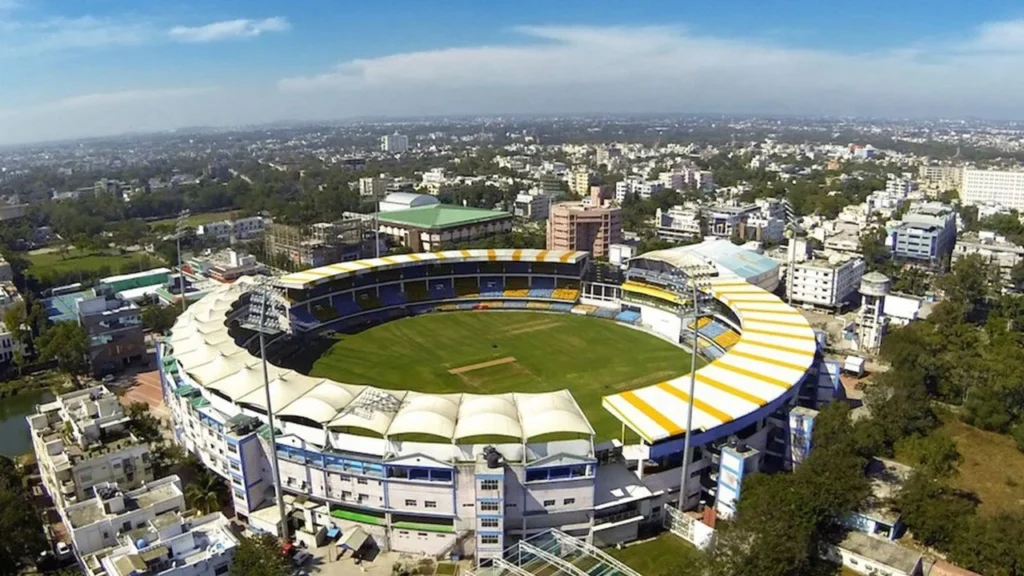
🏟️ Wankhede Stadium, Mumbai
History & Renovation
Wankhede Stadium was opened in 1974 and fully renovated before the 2011 Cricket World Cup. It is one of India’s most emotionally important cricket venues.
Capacity
- Approximate capacity: 33,000 spectators
International Matches Played (Approx.)
- Test matches: 25+
- ODIs: 30+
- T20 Internationals: 10+
Ground Dimensions
- Straight boundary: 68–72 meters
- Square boundary: 62–65 meters
- Shape: Oval
Average Scores
- Test (1st innings): 300–310 runs
- ODI (1st innings): 270–280 runs
- T20I (1st innings): 170–175 runs
Pitch Behavior
A batting paradise, especially in white-ball cricket. True bounce and fast outfield help stroke-play.
⭐ What Makes Wankhede Stadium Unique
This is the only stadium in India where India won a World Cup final (2011) and the winning six was hit in front of a home crowd, creating one of cricket’s most emotional moments.
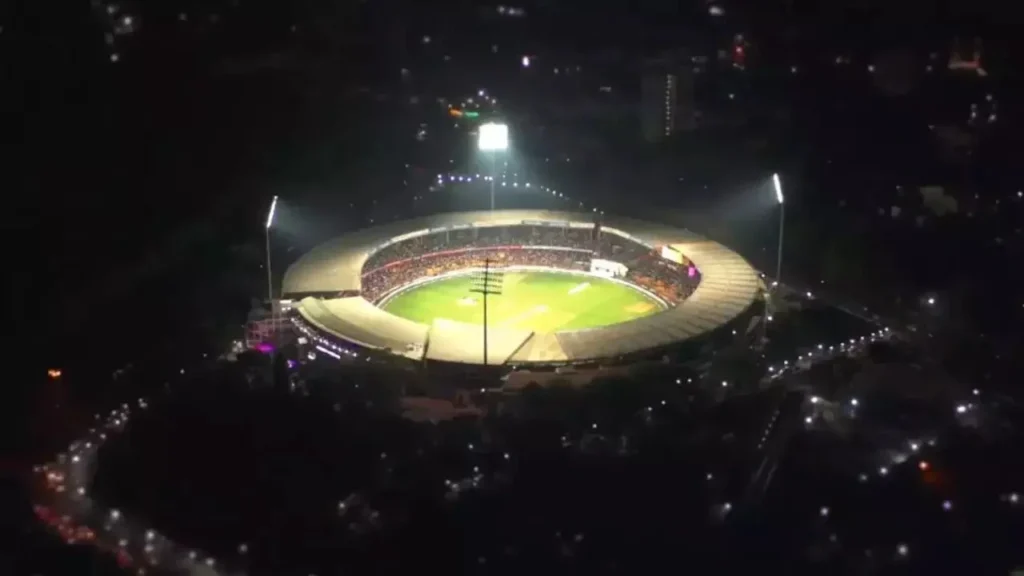
🏟️ M. Chinnaswamy Stadium, Bengaluru
History & Renovation
M. Chinnaswamy Stadium was opened in 1969 and renovated multiple times, with major upgrades for World Cup and IPL, including improved drainage and seating. It is one of India’s most batting-friendly stadiums.
Capacity
- Approximate capacity: 40,000 spectators
International Matches Played (Approx.)
- Test matches: 25+
- ODIs: 35+
- T20 Internationals: 10+
Ground Dimensions
- Straight boundary: 68–72 meters
- Square boundary: 60–65 meters
- Shape: Oval (small boundaries)
Average Scores
- Test (1st innings): around 300 runs
- ODI (1st innings): around 280 runs
- T20I (1st innings): around 180 runs
Pitch Behavior
Very batting-friendly pitch with fast outfield. Bowlers have little margin for error.
⭐ What Makes Chinnaswamy Unique
This is the only major Indian stadium where 500+ runs have been scored in a single ODI match, making it a nightmare for bowlers.
🏟️ MA Chidambaram Stadium (Chepauk), Chennai
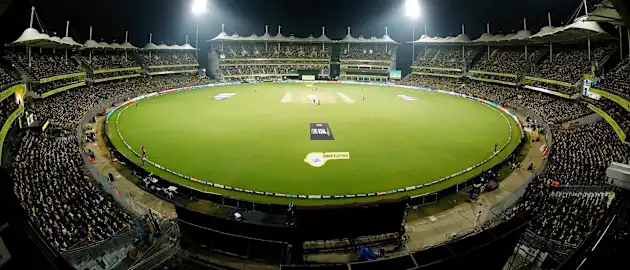
History & Renovation
Chepauk was opened in 1916 and is one of the oldest cricket stadiums in India. It was extensively renovated before the 2023 World Cup, with new stands and modern facilities.
Capacity
- Approximate capacity: 38,000 spectators
International Matches Played (Approx.)
- Test matches: 35+
- ODIs: 30+
- T20 Internationals: 10+
Ground Dimensions
- Straight boundary: 70–75 meters
- Square boundary: 65–70 meters
- Shape: Oval
Average Scores
- Test (1st innings): around 310–320 runs
- ODI (1st innings): around 240–250 runs
- T20I (1st innings): around 160 runs
Pitch Behavior
One of India’s most spin-friendly pitches, especially from Day 3 onwards.
⭐ What Makes Chepauk Unique
This is the only stadium in India where India’s first Test victory (1952) was achieved, making it historically unmatched.
🏟️ Arun Jaitley Stadium (Feroz Shah Kotla), Delhi
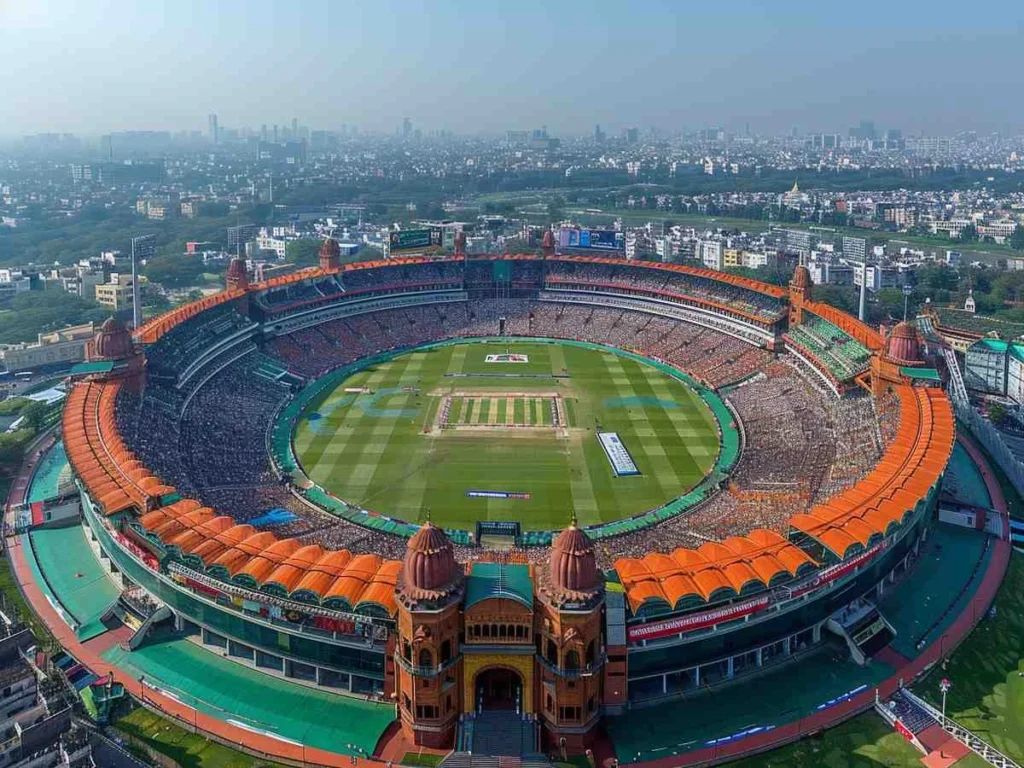
History & Renovation
Originally opened in 1883, this stadium is among the oldest in India. It was renamed Arun Jaitley Stadium in 2019 and renovated to improve seating and infrastructure.
Capacity
- Approximate capacity: 41,000 spectators
International Matches Played (Approx.)
- Test matches: 35+
- ODIs: 30+
- T20 Internationals: 10+
Ground Dimensions
- Straight boundary: 65–70 meters
- Square boundary: 60–65 meters
- Shape: Oval (short boundaries)
Average Scores
- Test (1st innings): around 320 runs
- ODI (1st innings): around 260–270 runs
- T20I (1st innings): around 170 runs
Pitch Behavior
Flat surface with low bounce, good for batters and spinners.
⭐ What Makes Delhi Unique
This is the only Indian stadium where a player has scored a triple century and taken 10 wickets in the same Test match, a rare cricketing feat.
Read More About Cricket Grounds in Sri Lanka: Stadiums, Stats, Dimensions & Records
🏟️ Rajiv Gandhi International Cricket Stadium, Hyderabad
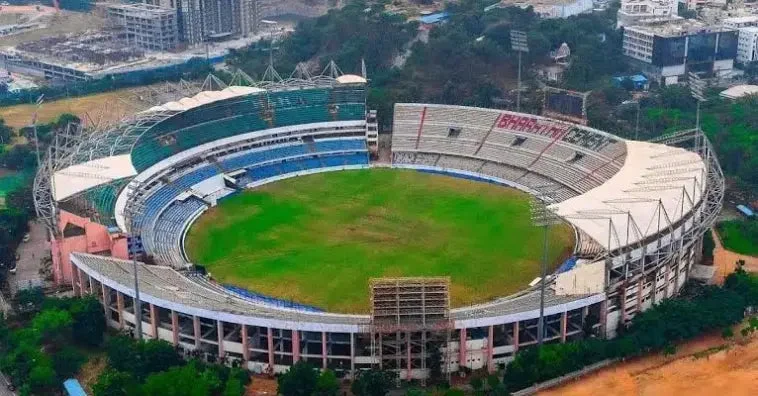
History & Renovation
Opened in 2004, this stadium replaced the old Lal Bahadur Shastri Stadium. It has been upgraded regularly for international and IPL matches.
Capacity
- Approximate capacity: 55,000 spectators
International Matches Played (Approx.)
- Test matches: 10+
- ODIs: 15+
- T20 Internationals: 10+
Ground Dimensions
- Straight boundary: 75–80 meters
- Square boundary: 65–70 meters
- Shape: Oval
Average Scores
- Test (1st innings): around 400 runs
- ODI (1st innings): around 260 runs
- T20I (1st innings): around 165 runs
Pitch Behavior
Usually a batting paradise, especially in Test cricket.
⭐ What Makes Hyderabad Unique
This is the only Indian ground where a single Test match produced two triple centuries, a record still unmatched.
🏟️ Green Park Stadium, Kanpur
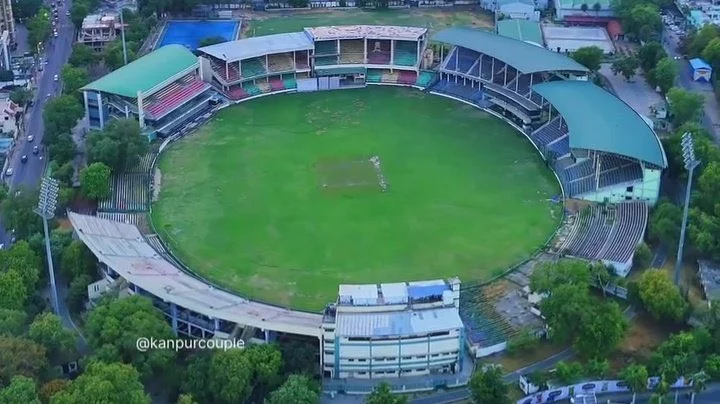
History & Renovation
Green Park Stadium was opened in 1945 and is one of India’s traditional Test venues. Over the years, it has received basic renovations, mainly related to seating and facilities, but it is now used less frequently for international cricket.
Capacity
- Approximate capacity: 32,000 spectators
International Matches Played (Approx.)
- Test matches: 20+
- ODIs: 15+
- T20 Internationals: 1
Ground Dimensions
- Straight boundary: 70–75 meters
- Square boundary: 65–68 meters
- Shape: Oval
Average Scores
- Test (1st innings): around 310–320 runs
- ODI (1st innings): around 240–250 runs
- T20I (1st innings): around 160 runs
Pitch Behavior
A slow pitch that assists spinners, especially in the later stages.
⭐ What Makes Kanpur Unique
This is one of the few Indian grounds where Test matches often end in dramatic final-day finishes due to wearing pitches.
🏟️ IS Bindra Stadium (PCA Stadium), Mohali
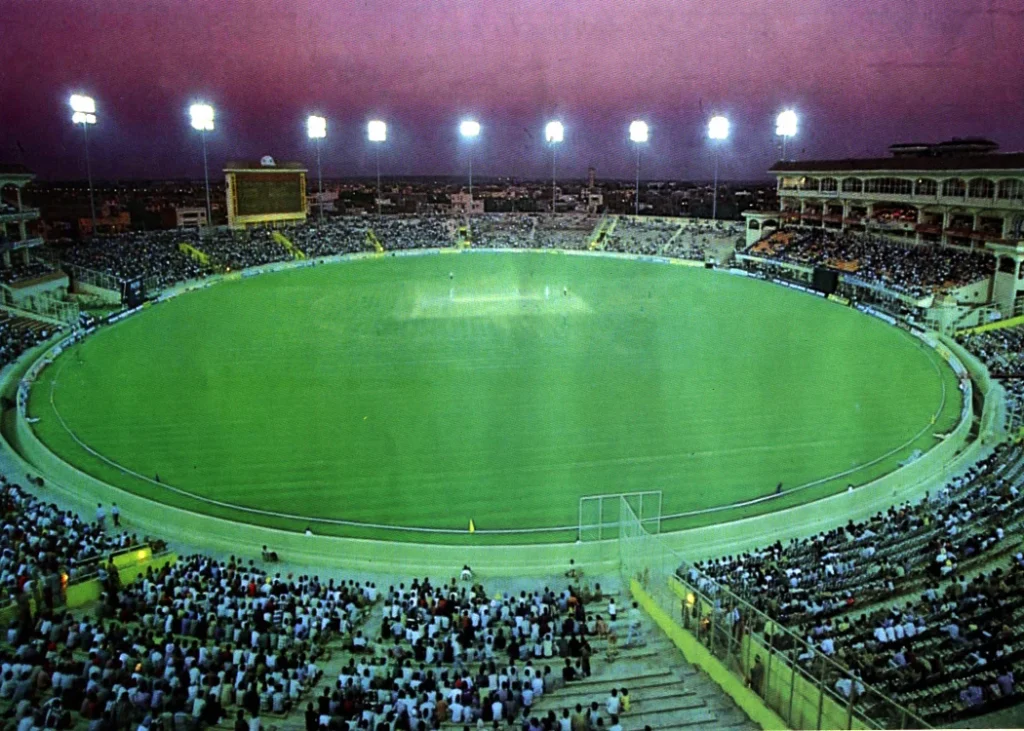
History & Renovation
Opened in 1993, the IS Bindra Stadium quickly became known for its pace-friendly surface. It has been upgraded several times to improve facilities for players and spectators.
Capacity
- Approximate capacity: 26,000 spectators
International Matches Played (Approx.)
- Test matches: 15+
- ODIs: 20+
- T20 Internationals: 10+
Ground Dimensions
- Straight boundary: 75–80 meters
- Square boundary: 65–70 meters
- Shape: Oval
Average Scores
- Test (1st innings): around 330–340 runs
- ODI (1st innings): around 260 runs
- T20I (1st innings): around 165 runs
Pitch Behavior
One of the best fast-bowling pitches in India, offering bounce and carry.
⭐ What Makes Mohali Unique
This is the only Indian ground where a player scored a triple century on Test debut, a truly rare achievement.
🏟️ Himachal Pradesh Cricket Association Stadium, Dharamsala
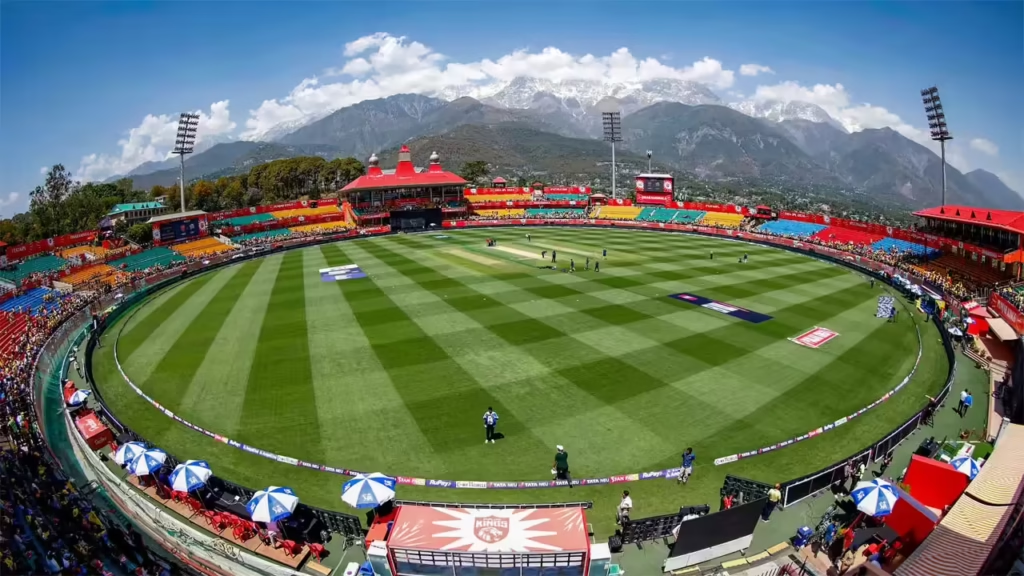
History & Renovation
The HPCA Stadium was opened in 2003 and is located in the Himalayan mountains, making it one of the most scenic cricket grounds in the world. It has been upgraded to host all international formats.
Capacity
- Approximate capacity: 23,000 spectators
International Matches Played (Approx.)
- Test matches: 2
- ODIs: 5
- T20 Internationals: 10+
Ground Dimensions
- Straight boundary: 70–75 meters
- Square boundary: 65–68 meters
- Shape: Oval
Average Scores
- Test (1st innings): around 300 runs
- ODI (1st innings): around 250 runs
- T20I (1st innings): around 160–165 runs
Pitch Behavior
A pace-friendly pitch due to altitude and cool weather.
⭐ What Makes Dharamsala Unique
This is the only Indian international stadium set against snow-covered mountains, giving it unmatched natural beauty.
🏟️ Maharashtra Cricket Association Stadium, Pune
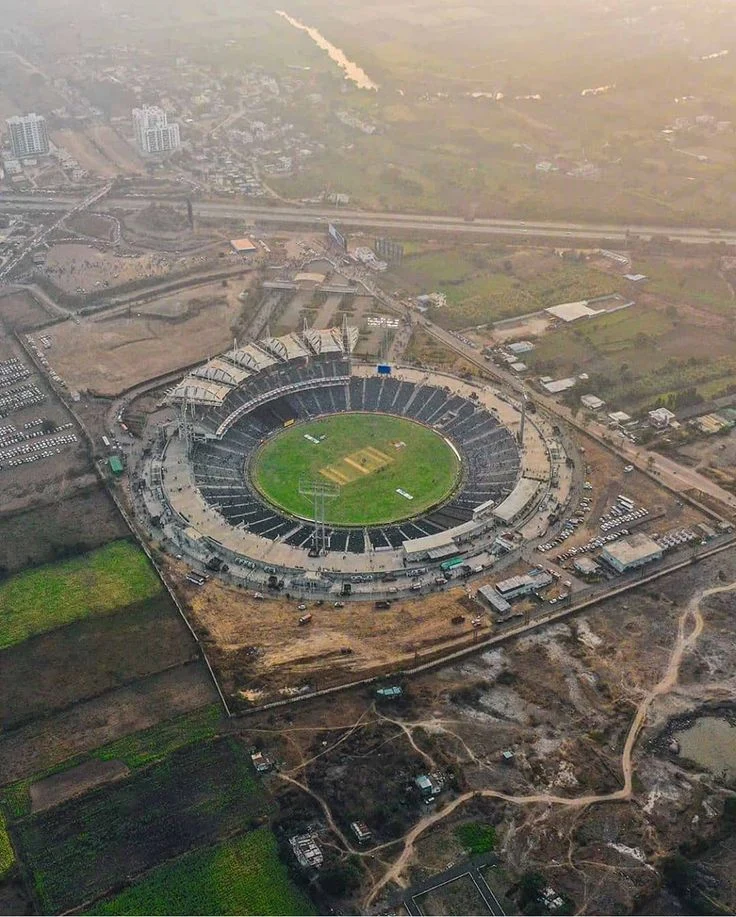
History & Renovation
Opened in 2012, the MCA Stadium replaced the old Nehru Stadium and is one of India’s newest modern venues, built with world-class facilities.
Capacity
- Approximate capacity: 37,000 spectators
International Matches Played (Approx.)
- Test matches: 4
- ODIs: 10+
- T20 Internationals: 10+
Ground Dimensions
- Straight boundary: 75–80 meters
- Square boundary: 65–70 meters
- Shape: Oval
Average Scores
- Test (1st innings): around 330 runs
- ODI (1st innings): around 260 runs
- T20I (1st innings): around 170 runs
Pitch Behavior
A balanced pitch with help for batters and spinners.
⭐ What Makes Pune Unique
This is the only Indian ground where India lost a home Test after more than 400 days, ending a long unbeaten streak.
🏟️ Vidarbha Cricket Association Stadium, Nagpur
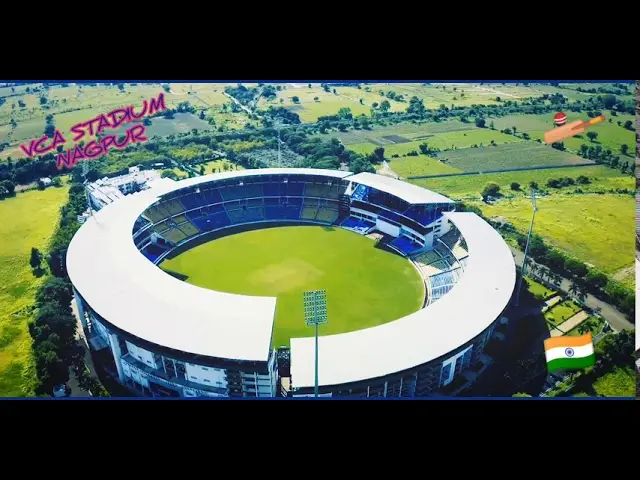
History & Renovation
Opened in 2008, this stadium replaced the old VCA Ground and is now Nagpur’s main international venue with modern facilities.
Capacity
- Approximate capacity: 45,000 spectators
International Matches Played (Approx.)
- Test matches: 8+
- ODIs: 8+
- T20 Internationals: 5+
Ground Dimensions
- Straight boundary: 75–80 meters
- Square boundary: 65–70 meters
- Shape: Oval
Average Scores
- Test (1st innings): around 340–350 runs
- ODI (1st innings): around 250 runs
- T20I (1st innings): around 160 runs
Pitch Behavior
Generally spin-friendly, especially as the match progresses.
⭐ What Makes Nagpur Unique
This is the only Indian ground where a Test match finished inside three days multiple times, due to turning pitches.
🏟️ JSCA International Stadium Complex, Ranchi
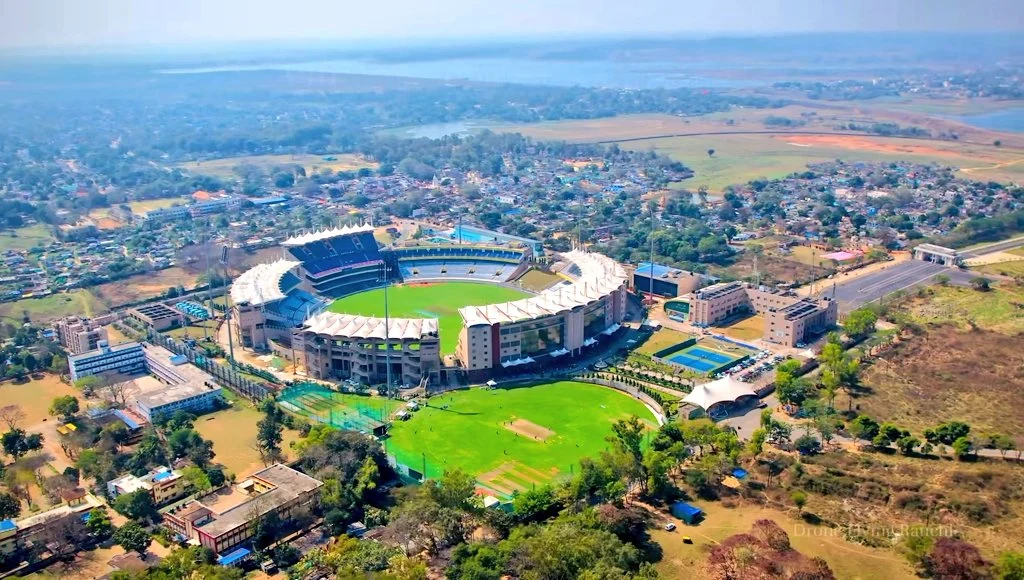
History & Renovation
The JSCA International Stadium was opened in 2013 and quickly became Jharkhand’s main international venue. It is a modern stadium with good drainage and player facilities.
Capacity
- Approximate capacity: 39,000 spectators
International Matches Played (Approx.)
- Test matches: 2
- ODIs: 6–7
- T20 Internationals: 2–3
Ground Dimensions
- Straight boundary: 75–80 meters
- Square boundary: 65–70 meters
- Shape: Oval
Average Scores
- Test (1st innings): around 350–370 runs
- ODI (1st innings): around 260 runs
- T20I (1st innings): around 160 runs
Pitch Behavior
A batting-friendly pitch with consistent bounce. Spinners come into play later.
⭐ What Makes Ranchi Unique
This is the only Indian stadium where a home captain announced his retirement mid-Test match, creating an emotional cricket moment.
🏟️ Barsapara Cricket Stadium, Guwahati
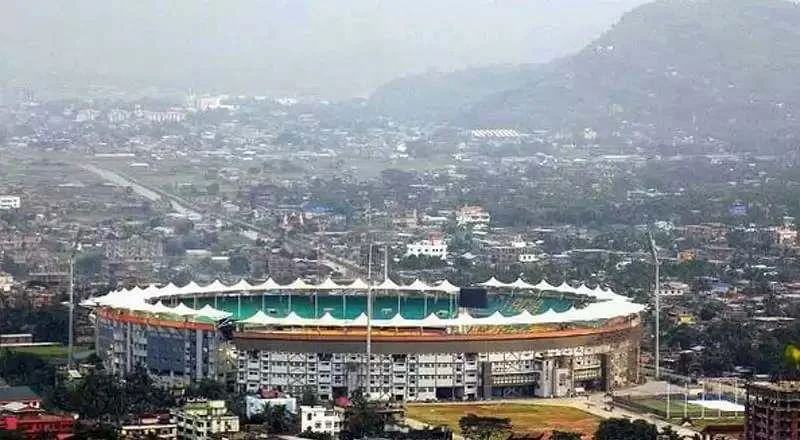
History & Renovation
Barsapara Stadium was opened in 2017 and is the first international cricket stadium in Assam. It is one of the newest venues in India.
Capacity
- Approximate capacity: 40,000 spectators
International Matches Played (Approx.)
- Test matches: none
- ODIs: 4–5
- T20 Internationals: 3–4
Ground Dimensions
- Straight boundary: 70–75 meters
- Square boundary: 65–68 meters
- Shape: Oval
Average Scores
- ODI (1st innings): around 270–280 runs
- T20I (1st innings): around 180 runs
Pitch Behavior
A batting-friendly pitch with fast outfield and short boundaries.
⭐ What Makes Guwahati Unique
This is the only stadium in North-East India to regularly host men’s international cricket matches.
🏟️ Greenfield International Stadium, Thiruvananthapuram
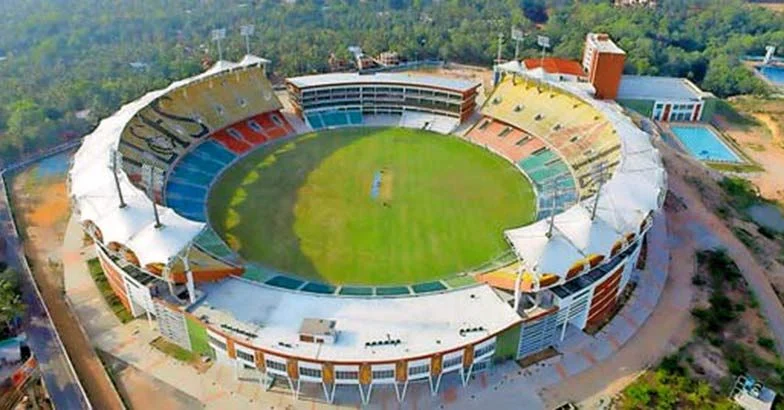
History & Renovation
Opened in 2015, Greenfield Stadium is a multi-purpose international venue and Kerala’s first major international cricket stadium. It has seen continuous upgrades to meet ICC standards.
Capacity
- Approximate capacity: 55,000 spectators
International Matches Played (Approx.)
- Test matches: none
- ODIs: 3–4
- T20 Internationals: 3–4
Ground Dimensions
- Straight boundary: 75–80 meters
- Square boundary: 65–70 meters
- Shape: Oval
Average Scores
- ODI (1st innings): around 260–270 runs
- T20I (1st innings): around 170–175 runs
Pitch Behavior
Generally balanced, with good bounce and even pace.
⭐ What Makes Thiruvananthapuram Unique
This is the only international stadium in India built inside a hill-top sports complex, giving it a different viewing experience.
🏟️ Holkar Cricket Stadium, Indore
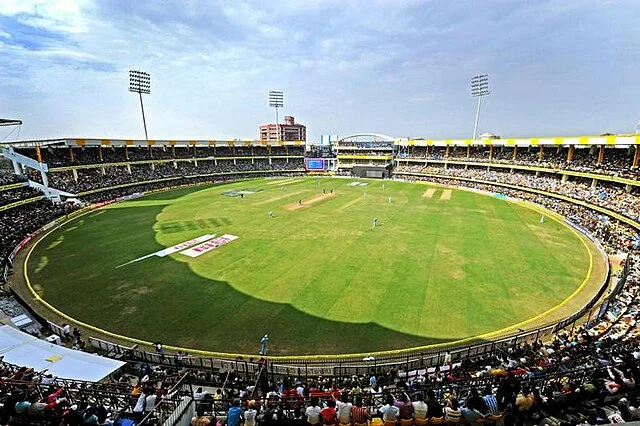
History & Renovation
Opened in 2011, Holkar Stadium replaced the old Nehru Stadium and is known for its excellent drainage and modern design.
Capacity
- Approximate capacity: 30,000 spectators
International Matches Played (Approx.)
- Test matches: 2
- ODIs: 5–6
- T20 Internationals: 4–5
Ground Dimensions
- Straight boundary: 65–70 meters
- Square boundary: 60–65 meters
- Shape: Oval (small ground)
Average Scores
- Test (1st innings): around 360–380 runs
- ODI (1st innings): around 290 runs
- T20I (1st innings): around 190–200 runs
Pitch Behavior
Extremely batting-friendly with quick outfield and short boundaries.
⭐ What Makes Indore Unique
This is the only Indian stadium where international matches have produced some of the fastest run-rates in all three formats.
Apart from these major venues, a few older and less-used stadiums in India have also hosted international matches in the past.
🏟️ Other Indian Stadiums Where International Matches Were Played
🔹 Old / Less-Used International Venues
- Brabourne Stadium
- Nehru Stadium (old)
- Moti Bagh Stadium
- Sector 16 Stadium
- University Ground
🔹 Stadiums That Hosted Only Few International Matches
- Nehru Stadium
- Gandhi Stadium
- IPCL Sports Complex
🔹 Women / Youth / Neutral International Venues
- DY Patil Stadium
- Reliance Stadium
- Sawai Mansingh Stadium
How many cricket stadium in India? India has 81 international cricket stadiums/grounds that have hosted at least one official international match. The compiled venue list says 81 cricket venues in India have hosted international cricket.
India cricket Stadium List
India cricket stadium and all cricket stadium in India refer to the complete list of cricket venues across the country, with each stadium marked as Active or Inactive / Former international venue for easy understanding.
Active international cricket stadiums in India
- Eden Gardens — Kolkata — Active
- M. A. Chidambaram Stadium — Chennai — Active
- Arun Jaitley Cricket Stadium — Delhi — Active
- Brabourne Stadium — Mumbai — Active
- Green Park Stadium — Kanpur — Active
- M. Chinnaswamy Stadium — Bengaluru — Active
- Wankhede Stadium — Mumbai — Active
- Barabati Stadium — Cuttack — Active
- Sawai Mansingh Stadium — Jaipur — Active
- Narendra Modi Stadium — Ahmedabad — Active
- I. S. Bindra Stadium — Mohali — Active
- Reliance Stadium — Vadodara — Active
- ACA–VDCA Cricket Stadium — Visakhapatnam — Active
- Rajiv Gandhi Stadium — Hyderabad — Active
- Holkar Stadium — Indore — Active
- VCA Stadium — Nagpur — Active
- DY Patil Stadium — Navi Mumbai — Active
- MCA Stadium — Pune — Active
- Niranjan Shah Stadium — Rajkot — Active
- JSCA Stadium — Ranchi — Active
- HPCA Stadium — Dharamshala — Active
- SVSP Complex — Greater Noida — Active
- ACA Stadium — Guwahati — Active
- The Sports Hub — Thiruvananthapuram — Active
- Rajiv Gandhi Stadium — Dehradun — Active
- Ekana Cricket Stadium — Lucknow — Active
- Lalabhai Contractor Stadium — Surat — Active
- Veer Narayan Singh Stadium — Raipur — Active
- Shrimant Madhavrao Scindia Cricket Stadium — Gwalior — Active
- Baroda Cricket Association Stadium — Vadodara — Active
List of International Cricket Stadium in India Inactive / Former international cricket stadiums
Dr PVG Raju ACA Sports Complex — Vizianagaram — Inactive / Former
Gymkhana Ground — Mumbai — Inactive / Former
University Ground — Lucknow — Inactive / Former
Lal Bahadur Shastri Stadium — Hyderabad — Inactive / Former
Jawaharlal Nehru Stadium — Chennai — Inactive / Former
VCA Ground — Nagpur — Inactive / Former
Sardar Vallabhbhai Patel Stadium — Ahmedabad — Inactive / Former
Gandhi Stadium — Jalandhar — Inactive / Former
Gandhi Sports Complex Ground — Amritsar — Inactive / Former
Sher-i-Kashmir Stadium — Srinagar — Inactive / Former
Moti Bagh Stadium — Vadodara — Inactive / Former
Nehru Stadium — Indore — Inactive / Former
Keenan Stadium — Jamshedpur — Inactive / Former
Nehru Stadium — Guwahati — Inactive / Former
Country Golf Club Ground — Faridabad — Inactive / Former
Jawaharlal Nehru Stadium — Delhi — Inactive / Former
University Stadium — Trivandrum — Inactive / Former
Nehru Stadium — Pune — Inactive / Former
Sector 16 Stadium — Chandigarh — Inactive / Former
Maulana Azad Stadium — Jammu — Inactive / Former
Madhavrao Scindia Cricket Ground — Rajkot — Inactive / Former
Nahar Singh Stadium — Faridabad — Inactive / Former
Captain Roop Singh Stadium — Gwalior — Inactive / Former
Indira Priyadarshini Stadium — Visakhapatnam — Inactive / Former
Nehru Stadium — Fatorda — Inactive / Former
K. D. Singh Babu Stadium — Lucknow — Inactive / Former
Moin-ul-Haq Stadium — Patna — Inactive / Former
Calcutta Cricket and Football Club — Kolkata — Inactive / Former
Gangothri Glades Cricket Ground — Mysore — Inactive / Former
Karnail Singh Stadium — Delhi — Inactive / Former
Mohan Meakins Cricket Stadium — Ghaziabad — Inactive / Former
Gymkhana Ground — Secunderabad — Inactive / Former
Middle Income Group Ground — Mumbai — Inactive / Former
JMU Ground — Delhi — Inactive / Former
Nehru Stadium — Gurgaon — Inactive / Former
Harbax Singh Stadium — Delhi — Inactive / Former
Jawaharlal Nehru Stadium — Kochi — Inactive / Former
Barkatullah Khan Stadium — Jodhpur — Inactive / Former
Guru Nanak College Ground — Chennai — Inactive / Former
Indira Gandhi Stadium — Vijayawada — Inactive / Former
N2 Stadium — Aurangabad — Inactive / Former
Chemplast Cricket Ground — Chennai — Inactive / Former
Tata Digwadih Stadium — Dhanbad — Inactive / Former
Tau Devi Lal Stadium — Gurgaon — Inactive / Former
Infosys Ground — Mysore — Inactive / Former
Bilakhiya Stadium — Vapi — Inactive / Former
Pithwala Stadium — Surat — Inactive / Former
Mayajaal Ground — Chennai — Inactive / Former
Satindra Mohan Dev Stadium — Silchar — Inactive / Former
Bandra Kurla Complex Ground — Mumbai — Inactive / Former
DRIEMS Ground — Cuttack — Inactive / Former
Top 10 Largest Cricket Stadium in India by Boundary
Top Big-Boundary Cricket Stadiums in India
1. Shaheed Veer Narayan Singh International Stadium, Raipur
This stadium is commonly called one of the biggest by boundary size in India. SportsAdda says it has the longest boundaries in Asia with an average boundary of 80 metres.
2. Ekana Cricket Stadium, Lucknow
Ekana is known for its very large playing area. A widely used venue reference lists its dimensions as 160 x 156 metres, and it is also often described as having very long straight boundaries.
3. Saurashtra Cricket Association Stadium, Rajkot
Rajkot is also known as a ground with big boundaries. A Times of India report said the boundary was around 73 yards from the centre, based on comments from a stadium official.
4. Narendra Modi Stadium, Ahmedabad
This is the largest cricket stadium in India by seating capacity, and because it is a huge venue, it is often included in discussions about large cricket grounds too. But I did not find a strong public source giving it an official top boundary ranking.
5. Eden Gardens, Kolkata
Eden Gardens is one of the most famous and biggest cricket venues in India. It is often mentioned among major large grounds, but again, I did not find a solid public source confirming its exact current boundary ranking.
Simple Table
| Rank | Stadium | City | What it is known for |
|---|---|---|---|
| 1 | Shaheed Veer Narayan Singh International Stadium | Raipur | Average boundary about 80 m |
| 2 | Ekana Cricket Stadium | Lucknow | Very large field, long straight boundaries |
| 3 | Saurashtra Cricket Association Stadium | Rajkot | Commonly known for big boundaries |
| 4 | Narendra Modi Stadium | Ahmedabad | Huge overall venue |
| 5 | Eden Gardens | Kolkata | Major historic large ground |
❓ FAQs – Indian Cricket Stadium Records & Stats
1. Which cricket stadium is the largest in India?
The Narendra Modi Stadium is the largest cricket stadium in India and the world, with a capacity of around 132,000 spectators.
2. Which is the oldest international cricket stadium in India?
Eden Gardens, opened in 1864, is the oldest international cricket stadium in India.
3. Which Indian stadium has hosted the most international matches?
Eden Gardens and Wankhede Stadium are among the most-used international venues in India across all formats.
4. Which Indian stadium is best for batting?
M. Chinnaswamy Stadium is considered one of the best batting grounds due to short boundaries and fast outfield.
5. Which Indian stadium is best for spin bowling?
MA Chidambaram Stadium (Chepauk) is famous for its spin-friendly pitch, especially in Test matches.
6. Which Indian stadium has the highest average T20 score?
Holkar Cricket Stadium has one of the highest average T20 scores in India due to its small boundaries.
7. Which stadium hosted the 2011 World Cup final?
The Wankhede Stadium hosted the 2011 ICC Cricket World Cup final, where India won the trophy.
8. Which Indian stadium is located at the highest altitude?
The HPCA Stadium is India’s highest-altitude international stadium, helping fast bowlers with swing and bounce.
9. Which Indian stadium has the longest boundaries?
By boundary size, Shaheed Veer Narayan Singh International Stadium in Raipur is often cited as the biggest cricket stadium in India, with an average boundary of about 80 meters.
10. Which Indian stadium has hosted the most Test matches?
Eden Gardens, MA Chidambaram Stadium, and Arun Jaitley Stadium are among the top Test venues in India.
11. Which stadium is considered the fastest scoring ground in India?
Holkar Cricket Stadium is known for very high scoring rates in ODIs and T20Is.
12. Which Indian stadium is best for fast bowlers?
IS Bindra Stadium is considered one of the best pace-friendly pitches in India.
13. Which stadium is the newest international cricket stadium in India?
The Narendra Modi Stadium is the newest major international venue, reopened after a full rebuild in 2020.
14. Are all Indian cricket stadiums the same size?
No. Indian cricket stadiums vary in size, but all follow ICC boundary limits, usually between 65 and 90 meters.
15. Why do Indian pitches help spin bowling?
Due to hot weather, dry surfaces, and natural wear, many Indian stadiums naturally assist spin bowlers, especially in Test cricket.
How many international cricket stadium in India?
India has 81 international cricket stadiums/grounds that have hosted at least one international match.
Conclusion
India has one of the largest and most diverse collections of international cricket stadiums in the world. From historic venues like Eden Gardens and Chepauk to modern giants such as the Narendra Modi Stadium, Indian cricket grounds reflect the rich history, passion, and growth of the game.
Each stadium in India offers unique playing conditions. Some grounds are known for high scoring and short boundaries, while others support spin bowling or fast bowlers. Factors like ground dimensions, pitch behavior, weather, and crowd pressure make every Indian stadium different and challenging.
Over the years, these stadiums have hosted iconic Test matches, thrilling ODIs, high-scoring T20Is, World Cup finals, and unforgettable individual performances. Many grounds have also become famous for historic moments that are remembered by cricket fans across generations.
Understanding Indian cricket stadiums, their capacity, match records, and pitch characteristics helps fans, players, and analysts better appreciate how cricket is played in India. Together, these stadiums continue to play a central role in shaping India’s dominance and legacy in international cricket.
Read More About
ICC Under-19 World Cup Winners List 1988–2026 (Full History)
Rules of Replacing the Ball in Cricket (T20, ODI & Test)

Daniel Foster is a senior sports writer specializing in cricket laws and international playing conditions. With extensive experience covering ICC rules, domestic leagues, and tournament regulations, he delivers detailed yet easy-to-read explanations. His work is trusted by readers looking for accurate and up-to-date sports rules.