
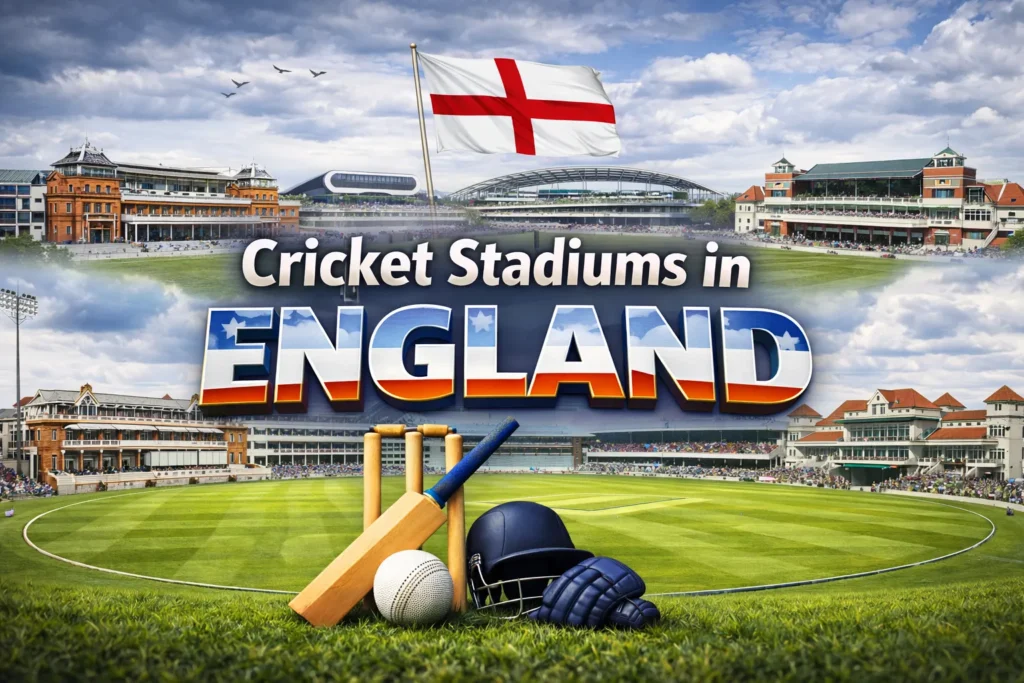
England is the birthplace of cricket and one of the most important countries in the history of the game. From historic venues that hosted the first-ever Test match to modern stadiums used for World Cups and Ashes series, cricket grounds in England represent tradition, skill, and global cricket culture.
Currently, England has 15+ major international cricket stadiums, with 10–12 regularly hosting Test matches, ODIs, and T20 Internationals.
- 🏟️ Oldest cricket ground in England: Lord’s Cricket Ground (established 1814)
- 🏟️ Newest major international venue: Utilita Bowl, Southampton (opened 2011)
- 🏟️ Most famous stadium: Lord’s Cricket Ground (known as the Home of Cricket)
English stadiums are known for:
- Swing-friendly conditions
- Green pitches
- Changing weather
- Historic traditions
In this article, you will find complete details of England’s international cricket stadiums, including history, renovations, capacity, match counts, dimensions, average scores, pitch behavior, and unique moments.
🏟️ Lord’s Cricket Ground, London
History & Renovation
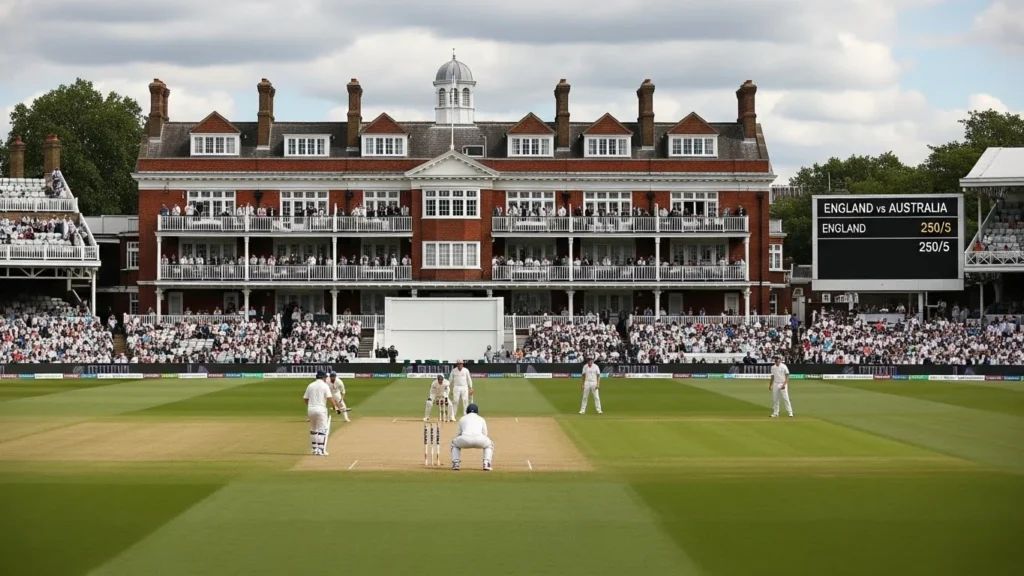
Lord’s Cricket Ground was established in 1814 and is known worldwide as the Home of Cricket. The stadium has undergone several renovations, including the construction of the iconic Media Centre in the early 2000s.
Capacity
- Approximate capacity: 31,000 spectators
International Matches Played (Approx.)
- Test matches: 140+
- ODIs: 150+
- T20 Internationals: 15+
Ground Dimensions
- Straight boundary: 65–70 meters
- Square boundary: 60–65 meters
- Shape: Asymmetrical oval
Average Scores
- Test (1st innings): around 310–330 runs
- ODI (1st innings): around 250–260 runs
- T20I (1st innings): around 155–160 runs
Pitch Behavior
Offers swing and seam movement, especially under cloudy conditions. Batting becomes easier later.
⭐ What Makes Lord’s Unique
This is the only cricket stadium in the world with a museum, honours boards, and the famous Long Room, making it a living cricket heritage site.
🏟️ The Oval (Kia Oval), London
History & Renovation
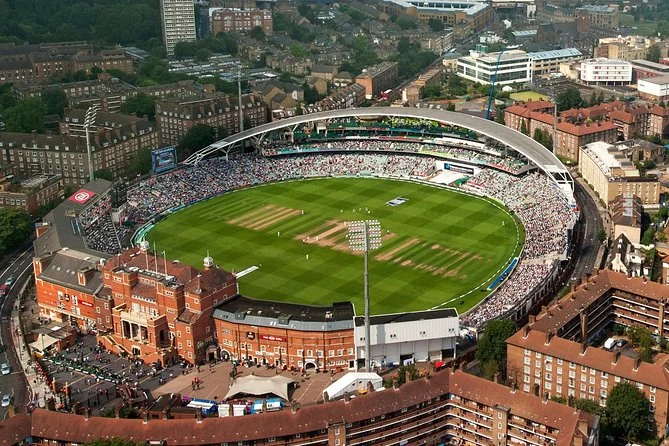
The Oval was opened in 1845 and hosted the first-ever Test match in England in 1880. It has been modernized many times and is now known as Kia Oval.
Capacity
- Approximate capacity: 27,500 spectators
International Matches Played (Approx.)
- Test matches: 100+
- ODIs: 80+
- T20 Internationals: 25+
Ground Dimensions
- Straight boundary: 70–75 meters
- Square boundary: 65–70 meters
- Shape: Oval
Average Scores
- Test (1st innings): around 340–360 runs
- ODI (1st innings): around 260–270 runs
- T20I (1st innings): around 165–170 runs
Pitch Behavior
One of England’s best batting pitches, especially in limited-overs cricket.
⭐ What Makes The Oval Unique
This is the only ground in England to host Test matches in four different centuries.
🏟️ Old Trafford Cricket Ground, Manchester
History & Renovation
Old Trafford was opened in 1857 and has been extensively redeveloped since 2008, transforming it into a modern cricket and events venue.
Capacity
- Approximate capacity: 26,000 spectators
International Matches Played (Approx.)
- Test matches: 85+
- ODIs: 90+
- T20 Internationals: 20+
Ground Dimensions
- Straight boundary: 70–75 meters
- Square boundary: 65–70 meters
- Shape: Oval
Average Scores
- Test (1st innings): around 320–340 runs
- ODI (1st innings): around 255–265 runs
- T20I (1st innings): around 160–165 runs
Pitch Behavior
Provides pace and swing, especially helpful for seam bowlers.
⭐ What Makes Old Trafford Unique
This is the only English ground where a Test match was once abandoned without a single ball bowled due to rain.
🏟️ Edgbaston Cricket Ground, Birmingham
History & Renovation
Edgbaston opened in 1882 and has been heavily redeveloped since 2011, adding modern stands and hospitality areas. It is known for hosting high-intensity Ashes Tests.
Capacity
- Approximate capacity: 25,000 spectators
International Matches Played (Approx.)
- Test matches: 80+
- ODIs: 50+
- T20 Internationals: 15+
Ground Dimensions
- Straight boundary: 70–75 meters
- Square boundary: 65–70 meters
- Shape: Oval
Average Scores
- Test (1st innings): around 300–320 runs
- ODI (1st innings): around 250 runs
- T20I (1st innings): around 160 runs
Pitch Behavior
Often lively for seamers early, then good for batting.
⭐ What Makes Edgbaston Unique
Edgbaston is famous for having one of the loudest and most passionate cricket crowds in England.
🏟️ Headingley Cricket Ground, Leeds
History & Renovation
Headingley began hosting international cricket in 1899. Major upgrades were completed before the 2019 Ashes, improving stands and facilities.
Capacity
- Approximate capacity: 18,000 spectators
International Matches Played (Approx.)
- Test matches: 80+
- ODIs: 45+
- T20 Internationals: 10+
Ground Dimensions
- Straight boundary: 70–75 meters
- Square boundary: 65–70 meters
Average Scores
- Test (1st innings): around 310–330 runs
- ODI (1st innings): around 255 runs
- T20I (1st innings): around 155 runs
Pitch Behavior
Assists swing and seam, especially in cloudy conditions.
⭐ What Makes Headingley Unique
This ground hosted one of the greatest Test chases in history in 2019, making it legendary among cricket fans.
🏟️ Trent Bridge, Nottingham
History & Renovation
Opened in 1841, Trent Bridge is one of England’s most modernized historic grounds, with continuous upgrades to seating and media facilities.
Capacity
- Approximate capacity: 17,500 spectators
International Matches Played (Approx.)
- Test matches: 65+
- ODIs: 60+
- T20 Internationals: 20+
Ground Dimensions
- Straight boundary: 70–75 meters
- Square boundary: 65–70 meters
Average Scores
- Test (1st innings): around 330–350 runs
- ODI (1st innings): around 270 runs
- T20I (1st innings): around 170 runs
Pitch Behavior
Good for batting, with some help for seamers early.
⭐ What Makes Trent Bridge Unique
This is one of the highest-scoring grounds in England, especially in limited-overs cricket.
🏟️ The Rose Bowl (Utilita Bowl), Southampton
History & Renovation
Opened in 2011, the Utilita Bowl is one of England’s newest international stadiums and features an integrated hotel complex.
Capacity
- Approximate capacity: 25,000 spectators
International Matches Played (Approx.)
- Test matches: 10+
- ODIs: 20+
- T20 Internationals: 15+
Ground Dimensions
- Straight boundary: 70–75 meters
- Square boundary: 65–70 meters
Average Scores
- Test (1st innings): around 330 runs
- ODI (1st innings): around 260 runs
- T20I (1st innings): around 165 runs
Pitch Behavior
Balanced surface with good carry for fast bowlers.
⭐ What Makes Utilita Bowl Unique
It is the only major English cricket ground built with a hotel inside the stadium complex.
🏟️ Riverside Ground, Chester-le-Street
History & Renovation
Opened in 1995, the Riverside Ground brought international cricket to North-East England and has been upgraded over the years.
Capacity
- Approximate capacity: 17,000 spectators
International Matches Played (Approx.)
- Test matches: 5+
- ODIs: 20+
- T20 Internationals: 10+
Ground Dimensions
- Straight boundary: 70–75 meters
- Square boundary: 65–70 meters
Average Scores
- Test (1st innings): around 320 runs
- ODI (1st innings): around 255 runs
- T20I (1st innings): around 160 runs
Pitch Behavior
Generally good for batting, with swing under overcast skies.
⭐ What Makes Riverside Unique
This was the first international cricket stadium in North-East England, expanding the game’s reach.
🏟️ County Ground Bristol (Bristol)
History & Status:
Established in 1889, Bristol has hosted internationals mainly in ODIs and T20Is. It’s a traditional county venue that occasionally returns to the international calendar.
Capacity: ~17,500
Internationals (Approx.): ODIs 25+, T20Is 10+
Dimensions: Straight 70–75 m, Square 65–70 m
Average Scores: ODI 255–265, T20I 160–165
Pitch: Generally batting-friendly
⭐ Unique: Known for very high-scoring ODIs, including one of England’s biggest team totals.
🏟️ Sophia Gardens (Cardiff)
History & Status:
International cricket arrived here in 1999. Now a regular limited-overs venue and occasional Test host.
Capacity: ~15,600
Internationals (Approx.): Tests 5+, ODIs 30+, T20Is 15+
Dimensions: Straight 70–75 m, Square 65–70 m
Average Scores: Test 330, ODI 260, T20I 165
Pitch: Balanced, seam early
⭐ Unique: Hosted England’s first home T20 International.
🏟️ County Ground Taunton
History & Status:
Opened in 1881, Taunton has hosted limited-overs internationals and remains a strong county ground.
Capacity: ~12,500
Internationals (Approx.): ODIs 5+, T20Is 5+
Dimensions: Straight 65–70 m, Square 60–65 m
Average Scores: ODI 260, T20I 170
Pitch: Flat, quick outfield
⭐ Unique: One of the smallest international venues in England, often producing fast run-rates.
🏟️ County Ground Derby
History & Status:
A historic county ground that hosted a single Test match in the 1970s; now used for domestic cricket.
Capacity: ~9,500
Internationals: Test 1
Dimensions: Straight 70–75 m, Square 65–70 m
Pitch: Traditional English surface
⭐ Unique: One-off Test venue in England’s Test history.
🏟️ County Ground Hove
History & Status:
Opened in 1872, Hove hosted early Test cricket and later ODIs; now primarily a county venue.
Capacity: ~7,000
Internationals: Tests 3, ODIs 5+
Dimensions: Straight 70–75 m, Square 65–70 m
Pitch: Batting-friendly
⭐ Unique: One of the earliest Test grounds in England.
🏟️ Recreation Ground (Bath)
History & Status:
A historic multi-sport venue that hosted a single Test match in the late 19th century.
Capacity: ~10,000
Internationals: Test 1
Dimensions: Compact oval
Pitch: Historic English conditions
⭐ Unique: Hosted a Test match in the 1800s, making it a rare historical site.
Apart from major international venues, England has many historic, domestic, and occasional international cricket grounds that continue to play an important role in county, women’s, and youth cricket.
🏏 Other Cricket Grounds in England (International + Domestic)
🔹 Grounds That Hosted At Least 1 International Match
(Men / Women / Youth / Neutral)
- Grace Road – ODI / Women
- County Ground Northampton – ODI / Women
- County Ground Chelmsford – ODI / Women
- County Ground Worcester – ODI / Women
- County Ground Scarborough – International / Festival matches
- College Ground – Early internationals
- County Ground Tunbridge Wells – ODI
- Kennington Oval No.2 – Women / Youth
🏟️ Major Domestic-Only County Grounds
(Regular County Championship, One-Day Cup, T20 Blast)
- Edgbaston Community Sports Ground
- Blackstone Academy Ground
- Canterbury Cricket Ground
- County Ground Beckenham
- County Ground New Road
- County Ground Hove
- County Ground Bristol
- County Ground Derby
- County Ground Taunton
- County Ground Trent Bridge No.2
🏫 University / Historic / Festival Grounds
- Fenners
- The Parks
- Arundel Castle Cricket Ground
- Recreation Ground
- Nevill Ground
🏏 Women’s & Youth International Venues (Regular Use)
- County Ground Derbyshire
- County Ground Northamptonshire
- Loughborough University Ground
❓ FAQs
1. How many cricket grounds are there in England?
England has 50+ recognized cricket grounds, including international, county, university, and historic venues.
2. How many cricket stadiums in England have hosted international matches?
Around 25 cricket grounds in England have hosted at least one international match, including men’s, women’s, or youth internationals.
3. Which is the most famous cricket ground in England?
Lord’s Cricket Ground is the most famous cricket ground in England and is known as the Home of Cricket.
4. Which is the oldest cricket ground in England?
Lord’s Cricket Ground, established in 1814, is the oldest major international cricket ground still in use.
5. Which England cricket ground hosted the first Test match?
The Oval hosted the first Test match in England in 1880.
6. Which England cricket stadium is best for swing bowling?
Grounds like Headingley and Old Trafford Cricket Ground are known for swing and seam-friendly conditions.
7. Which cricket ground in England is best for batting?
The Oval and Trent Bridge are considered batting-friendly grounds, especially in limited-overs cricket.
8. Which England stadium has hosted the most Test matches?
Lord’s Cricket Ground has hosted the most Test matches in England.
9. Are there cricket grounds in England that hosted only one international match?
Yes. Grounds like County Ground Derby and Recreation Ground hosted only one Test match.
10. Does England still use old cricket grounds for international matches?
Some historic grounds like County Ground Bristol and Sophia Gardens are still used for ODIs and T20Is.
11. Which England cricket ground is used most for county cricket?
County grounds like County Ground Taunton and County Ground Hove are heavily used in county championships.
12. Are university cricket grounds important in England?
Yes. Grounds such as Fenners and The Parks have hosted historic and development-level matches.
13. Which England cricket grounds are used for women’s internationals?
Several county grounds like County Ground Northampton regularly host women’s international matches.
14. Why are English cricket pitches good for swing bowling?
Due to green grass, cool weather, and moisture in the air, English pitches naturally help swing and seam bowlers.
15. Are England cricket grounds smaller than Australian grounds?
Yes. Most England cricket grounds have shorter boundaries compared to Australian stadiums, which usually have larger playing areas.
Read More About
Cricket Stadiums in India: International Grounds, Capacity, Records & Stats
ICC Men’s T20 World Cup 2026: Full Schedule, Groups, Venues & Match Timings
Cricket Stadiums in Australia: International Grounds, Capacity & Records
Conclusion
England is the birthplace of cricket and home to some of the most historic and influential cricket grounds in the world. From the iconic Lord’s Cricket Ground to modern venues like the Utilita Bowl, England’s stadiums reflect the long tradition, evolution, and global impact of the game.
English cricket grounds are famous for their swing-friendly pitches, green surfaces, and changing weather conditions, which test batters and reward skilled seam bowlers. Each stadium has its own identity — whether it is the tradition of Lord’s, the batting-friendly nature of The Oval, or the dramatic moments created at Headingley and Edgbaston.
Over the years, these grounds have hosted historic Test matches, World Cups, Ashes battles, women’s internationals, and county cricket, making England a central pillar of international cricket. Even older and lesser-used venues continue to play an important role in domestic, youth, and women’s cricket.
Overall, England’s cricket stadiums are not just playing fields — they are living monuments of cricket history, shaping the game from its origins to the modern era.

Daniel Foster is a senior sports writer specializing in cricket laws and international playing conditions. With extensive experience covering ICC rules, domestic leagues, and tournament regulations, he delivers detailed yet easy-to-read explanations. His work is trusted by readers looking for accurate and up-to-date sports rules.